

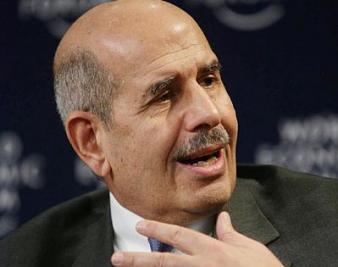
Two years ago in Cairo, Nobel laureate and former International Atomic Energy Agency head Mohamed ElBaradei was the talk of the town. Newly retired from the IAEA, ElBaradei returned to Egypt in February 2010 after living abroad for decades. He began criticizing the Mubarak regime, hinting that he might run for president, and almost overnight he became Egypt’s great liberal hope. And yet when ElBaradei announced last week that he was ending his presidential bid, the news was met with a collective yawn. As one Salafist Nour Party leader said following ElBaradei’s announcement that he would not run for president, “He did not gain the confidence of the majority of the Egyptian people because he did not have any role in the revolution.”
More accustomed to carousing at Davos than campaigning in Dakhaliya, ElBaradei’s aloofness was apparent from the moment he returned to Egypt. Over 1,000 young activists welcomed him when his plane touched down at Cairo International Airport in the winter of 2010, but rather than translating the energy and enthusiasm into action, ElBaradei retreated to his gated suburban villa to host academics and opposition leaders for parlor discussions.
Stay informed.Stay ahead.
Join Washington Examiner for unlimited access to the news, analysis, and commentary that matter most.
Already a member? Log in
