

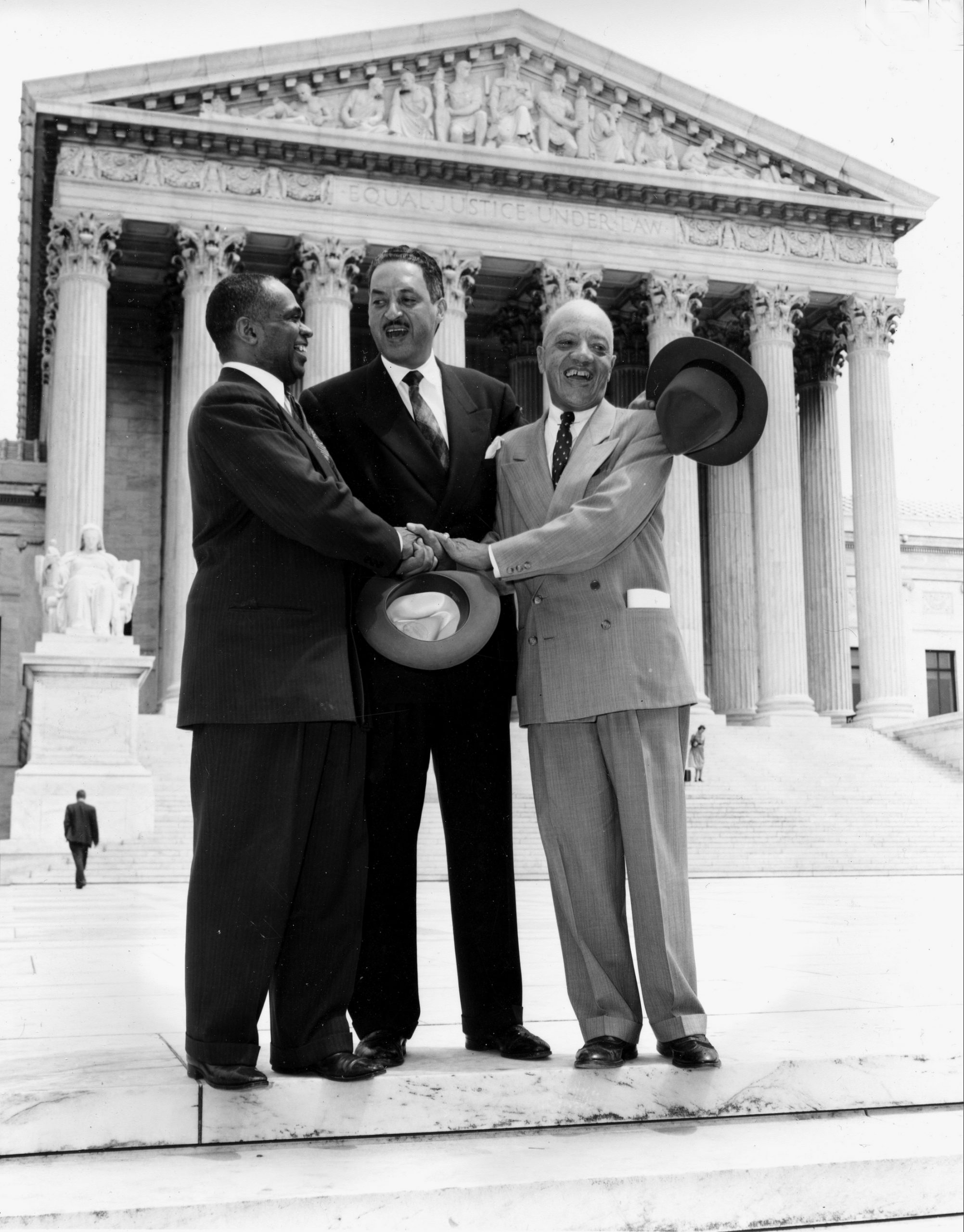
WASHINGTON (AP) — EDITOR’S NOTE: On May 17, 1954, a hushed crowd of spectators packed the Supreme Court, awaiting word on Brown v. Board of Education, a combination of five lawsuits brought by the NAACP’s legal arm to challenge racial segregation in public schools. The high court decided unanimously that “separate but equal” education denied black children their constitutional right to equal protection under the law, effectively removing a cornerstone that propped up Jim Crow, or state-sanctioned segregation of the races.
AP reporter Herb Altschull chronicled the court’s decision and what it meant for segregation, which in 1954 permeated many aspects of American life. Using the style and language of journalists of his era, including a reference to Asians as “Orientals,” Altschull captured the uncertainty hanging over a society on the brink of seismic change. He noted that Dean Acheson, former secretary of state, and Herbert Brownell, the current attorney general, were in the courtroom. He reported the immediate, steely resistance of Gov. Herman Talmadge and Sen. Richard Russell of Georgia, where opposition to integration was strong. He described how Chief Justice Earl Warren departed from procedure and read the decision before distributing copies, and he quoted an optimistic Thurgood Marshall, the “Negro attorney from New York” who argued part of the case, as saying he believed Southerners would honor the Brown decision.
Stay informed.Stay ahead.
Join Washington Examiner for unlimited access to the news, analysis, and commentary that matter most.
Already a member? Log in
