

If Vladimir Putin is to be deterred from reinvading Ukraine, an immediate concern, Putin must believe that the costs of that action are intolerable.
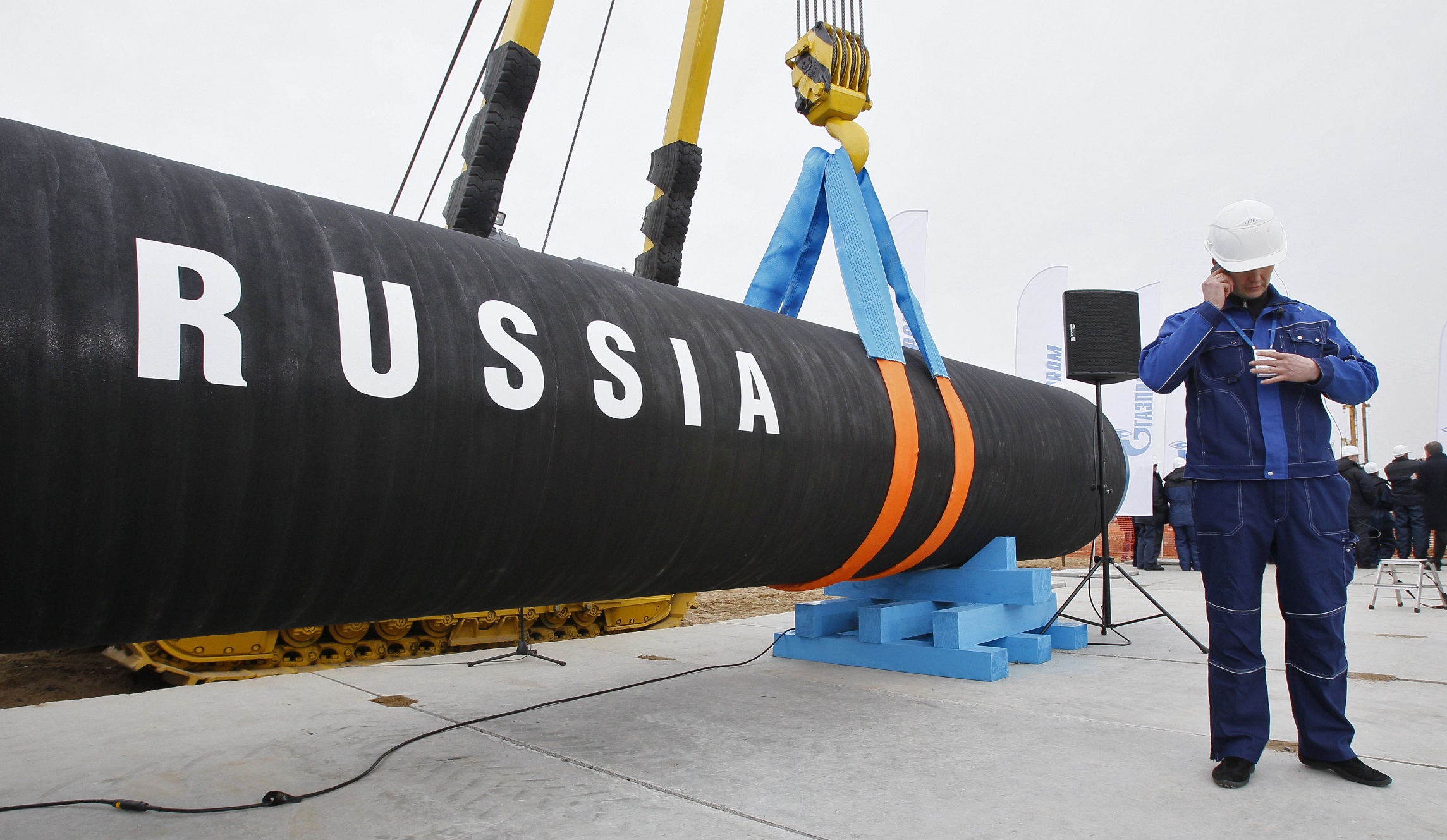
This bears note as senators prepare to vote on a bill by Republican Sen. Ted Cruz of Texas to impose sanctions on companies that do business with Russian’s Nord Stream 2 pipeline. As part of a deal to release Cruz’s hold on Biden administration nominees, the sanctions bill will receive a floor vote before Jan. 14. If the sanctions are approved, they will face a vote in the House of Representatives.
Recommended Stories


But Democrats have a problem.
For all their rhetoric in favor of supporting Ukraine and democratic sovereignty in Europe, the White House remains opposed to the Nord Stream 2 sanctions. Inexplicably beholden to a German government that views its access to cheap gas as sacrosanct and continental security as only a passing concern, President Joe Biden doesn’t want Cruz’s sanctions to enter law. That traps Senate Democrats between the desire to take a stand against Putin and their interest in showing loyalty to Biden. And yet, Democrats are also aware that voting down Cruz’s sanctions wouldn’t look great for a party that spent much of 2020 lambasting then-President Donald Trump’s attempt to shake down Ukrainian President Volodymyr Zelensky.
In turn, as Politico reports, Senate Democrats are hoping to provide political cover for voting against Cruz’s bill by holding a “side by side” vote. This would allow Democrats to first vote on a sanctions bill offered by Sen. Bob Menendez, and only then on Cruz’s bill. While Menendez’s bill does include Nord Stream 2 sanctions, it lacks the speed of action that Cruz’s bill entails. This reflects a broader divergence between Republicans and Democrats on Ukraine. Indeed, Democrats recently employed this same tactic to defeat Nord Stream 2 sanctions proposed by Republican Sen. James Risch of Idaho.
Speed of action matters because Putin is a master of exploiting frictions between Western powers and then using those frictions to weaken collective Western action. Yes, Menendez’s sanctions will hurt Russia. But not to a degree that will stop Putin from carrying out his offensive. By then it will be too late.
In the alternate, Cruz’s sanctions would help consolidate Western deterrent action against Putin. German Chancellor Olaf Scholz and his appeasement-minded Social Democrats would be furious. But Cruz’s sanctions would bolster the position of German Foreign Minister Annalena Baerbock, who believes Nord Stream 2 does too much to assist Putin’s interests.
Cruz’s sanctions would also signal a U.S. willingness to impose unilateral sanctions on Putin, even without European Union support. That would achieve two other objectives. First, ensuring that Putin understands his effort to divide the West and thus dilute any new sanctions regime will be limited. Second, reassuring NATO allies such as the Baltic states and Poland that the United States is being proactive in the face of Russian aggression. Those governments fear that Putin’s unrestrained escalation against Ukraine is a precursor to his future escalation against their own nations.
Senators need to make a choice. Do they want to stop Putin or simply posture? Only Cruz’s sanctions offer the prospect of achieving the former goal.
