

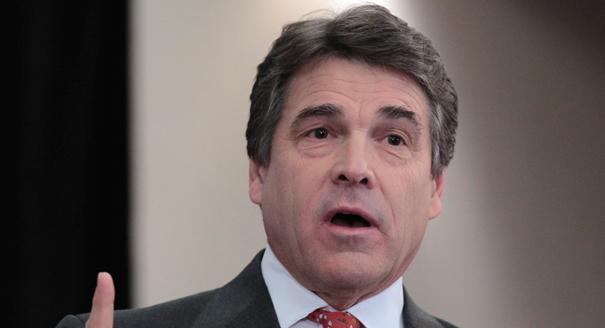
One statistic that we’re likely to be hearing a lot over the next few months, and over the next year if Gov. Rick Perry becomes the nominee, is that Texas has the highest uninsured rate of any state in the nation, with one out of every four residents lacking health coverage (or 25.6 percent). This could be used, by Mitt Romney in the primary and President Obama in the general, to justify their government-centered approach to expanding insurance coverage. (Obviously, this is a trickier task for Romney). So I thought it was worth exploring the following questions: how accurate is the statistic? How much is Perry to blame? What’s special about Texas? And how can he overcome this criticism of his record?
To start with, as I’ve written at length elsewhere, Census data on the number of uninsured are often misunderstood or intentionally distorted. When you hear the number that roughly 50 million people are without health insurance nationwide, that includes the following sub groups: immigrants who are not U.S. citizens; people who qualify for current government health care benefits but haven’t bothered with the paperwork; people who are uninsured for part of the year while between jobs; so called “young invincibles” who don’t buy coverage because they have low insurance costs; and people earning enough to afford insurance, but who choose to go without it. When you eliminate all those subgroups, the actual number is a lot lower. Although it’s hard to pin down, a 2003 Blue Cross Blue Shield study estimated there were 8.2 million uninsured over the long haul even though they wanted coverage.
Recommended Stories


Many of the demographic factors that drive up the rate of uninsured throughout the United States exist disproportionately in Texas. Most significantly, there’s the high proportion of Hispanic immigrants, a community that has a higher than average uninsured rate. In fact, if you look at the Census data on the uninsured, the four states that border Mexico are among the top six states when it comes to the uninsured rate: Texas (1), New Mexico (2), Arizona (5), and California (6). The top 10 included other states in the general neighborhood: Nevada (4) and Louisiana (10); and Florida (3), which also has a high Hispanic immigrant population.
A study by the conservative Texas Public Policy Foundation, which has close ties to Perry*, estimated that in 2006, 29 percent of the state’s uninsured were illegal immigrants.
In a phone conversation, Arlene Wohlgemuth, director of the center’s health care policy department, pointed to another demographic factor that has an impact – that Texas has a younger population than the national average, and as noted above, many young people don’t purchase insurance because they don’t feel they need it. According to the Census data, the median age in Texas is 33.6, which is nearly four years younger than the national median age of 37.2, making it the second youngest state.
Another factor is that despite being a low regulation state in many ways, Texas actually ranks fourth when it comes to mandating insurers offer certain benefits in all of their policies, according to a Council on Affordable Health Insurance report. Texas has 60 such mandates driving up the cost of insurance, such as making sure policies cover in vitro fertilization and morbid obesity treatment. These mandates increase the cost of insurance policies, thus making it less likely that people will purchase insurance, especially the younger residents mentioned above, who have limited health care needs.
J.P. Wieske, who co-authored the CAHI report, said that the state’s demographics are likely a bigger factor in Texas than the benefit mandates. However, Wohlgemuth said the mandates still likely play some role. Asked why Perry didn’t do more to decrease the number of mandates given his positions against government regulation, she said he wanted to, but was thwarted by the legislature.
“Every one of those mandates has its own constituency,” Wohlgemuth said. “It sounds mean to say, ‘We’re not going to have insurance cover X,Y, Z,’ because people who have X, Y, Z start talking to the newspapers and saying ‘they’re excluding us from coverage under health insurance.’”
There have also been other factors cited for why the state’s uninsured rate is high. For instance, according to a 2005 report by the comptroller of Texas, fewer residents have employer-based health insurance compared to the national average, because a higher number of residents are employed in retail and service jobs that don’t offer coverage. This, of course, is also an argument that’s been lodged to indict Perry’s jobs record.
So how much of the Texas uninsured rate is Perry to blame for?
“You could have the most miraculous governor in the world come into Texas, and Texas is going to lead the nation with the highest uninsured rate, no matter what you do,” Weiske said, citing the demographic factors.
While this may true from a policy standpoint, this is unlikely to get Perry off the hook politically. For one, as you can see from this detailed post, the factors contributing to Texas’s uninsured rate are complicated to explain in a quick sound bite. Furthermore, Perry won’t be able to have it both ways. If he wants to claim credit for Texas’s job growth, he won’t be able to disclaim responsibility for its high uninsured rate.
Obama would use the Texas uninsured rate to try and make the case for his own health care law. “In Rick Perry’s Texas, one out of every four residents is uninsured – it’s a text book example of why we did the right thing by passing national health care legislation,” Obama would likely argue, in some form or another, and spend millions of dollars running ads to that effect.
So how could Perry respond? One important way is to shift the debate away from the number of uninsured, which is really a limited way of looking at the problems in our health care system. As we can see, there’s a lot of noise in the uninsured numbers. What’s more important is that we bring down costs, which would improve access, boost the economy by lowering the burden on businesses, and help us tackle our long-term fiscal crisis. As I write in my column today, the national health care law does not contain costs, as even Obama himself now tacitly acknowledges.
But it’s crucial that Perry have more to offer on health care than simply calling for the repeal of Obamacare. He has to get to the “replace” part, and make the case for his alternative. The Perry argument would have to be something to the effect of: “When I was governor, I was limited in what I could do, because my hands were tied by all sorts of federal laws and regulations. Obamacare would make them worse. But my reforms would remove barriers to competition and give states more flexibility to bring down costs and expand access.” Ideas that would fit into this general argument would include block-granting Medicaid to the states, ending the discrimination in the tax code against individuals purchasing insurance on their own, and other proposals to facilitate a consumer-driven approach to health care. Tort reform, which Perry enacted in Texas, could clash with his federalist principles if imposed at the national level, and there are widely conflicting studies on how much money it could actually save. Though in Texas, it likely attracted more physicians into the state.
But whatever Perry’s ultimate answer is on this topic, he should be under no illusions. It will become a big deal for him – especially if he wants to run against Obamacare.
*Proceeds of Perry’s book, Fed Up, went to the Center for Tenth Amendment Studies at the Texas Public Policy Foundation. The Dallas Morning News also notes that the think tank was “founded by a major Perry financial contributor, school-voucher supporter James Leininger of San Antonio.”
