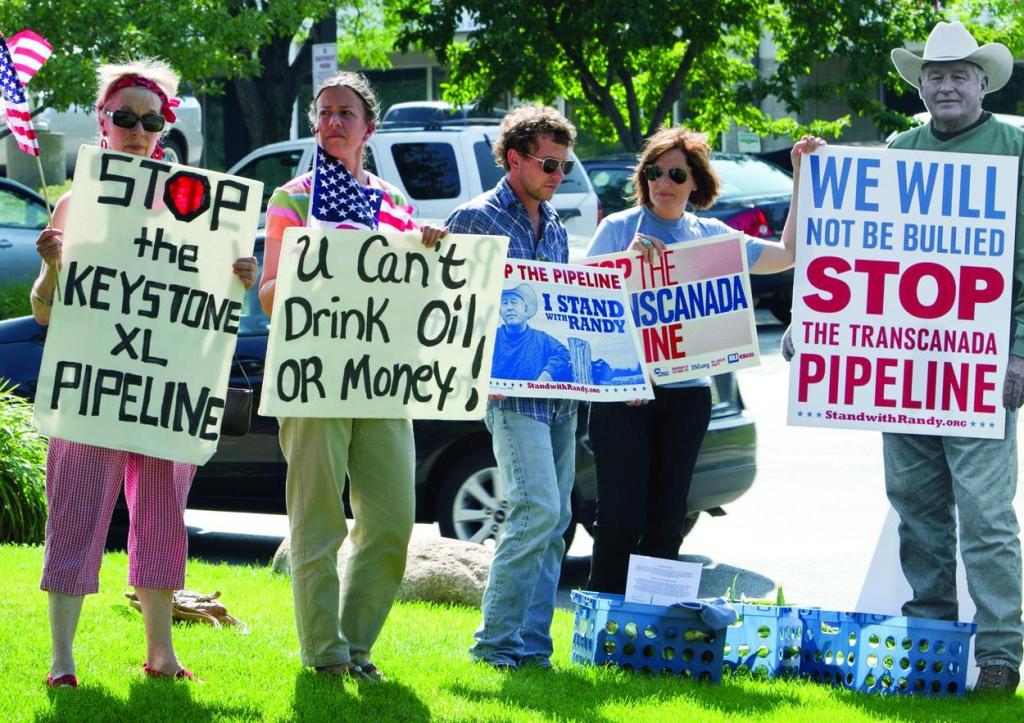
President Obama lamented recently that Americans have “lost our ambition, our — our imagination, and — and — our willingness to do the things that built the Golden Gate Bridge.” There are at least two facts that must be pointed out here. First, the Golden Gate Bridge was built by private enterprise, not government. If anything, government was the biggest obstacle to the bridge, thanks to opposition from the Department of Defense and the mistaken opinion of a San Francisco city engineer that the ground under the bay to be spanned would never support such a structure. It’s also worth noting here that Bank of America founder and president A.P. Giannini, a member of the much-maligned one percent, stepped forward at a critical moment after the Stock Market Crash of 1929 to provide critically needed private financing to complete the project. The bridge was finished in 1937, 16 years after architect Joseph Strauss first began the project. He completed the project $1.7 million under its total budget of $35 million. Second, Obama is almost certainly correct in doubting that grand projects like the Golden Gate Bridge could be done today, but not for the reasons he would want to acknowledge. For proof, we need look no further than the proposed Keystone XL pipeline that TransCanada first proposed in 2008. The company wants to spend $7 billion in private capital to build the pipeline. It would transport crude oil produced in Canada’s Alberta tar sands region to refineries in Texas. Not only would U.S. dependence on OPEC nations for oil be significantly reduced, building the pipeline would also, according to the Canadian Energy Research Institute, create as many as 435,000 jobs in the U.S. by 2035.
But incessant delays since 2008 caused by the cumbersome permitting process and environmental impact assessments have put the project in jeopardy. Even if federal officials, including Secretary of State Hillary Clinton, U.S. Environmental Protection Agency Administrator Lisa Jackson, Secretary of the Interior Kenneth Salazar, and, finally, President Obama, ever get around to approving the project, TransCanada will then face additional years of costly litigation by extraordinarily well-funded Big Green environmental groups. As The Examiner’s Conn Carroll points out on page 27, such groups are empowered by the National Environment Protection Act (NEPA) to stop any project so long as they can find an un-dotted “i” or improperly crossed “t” in an Environmental Impact Statement and a sympathetic federal judge to issue an injunction.