

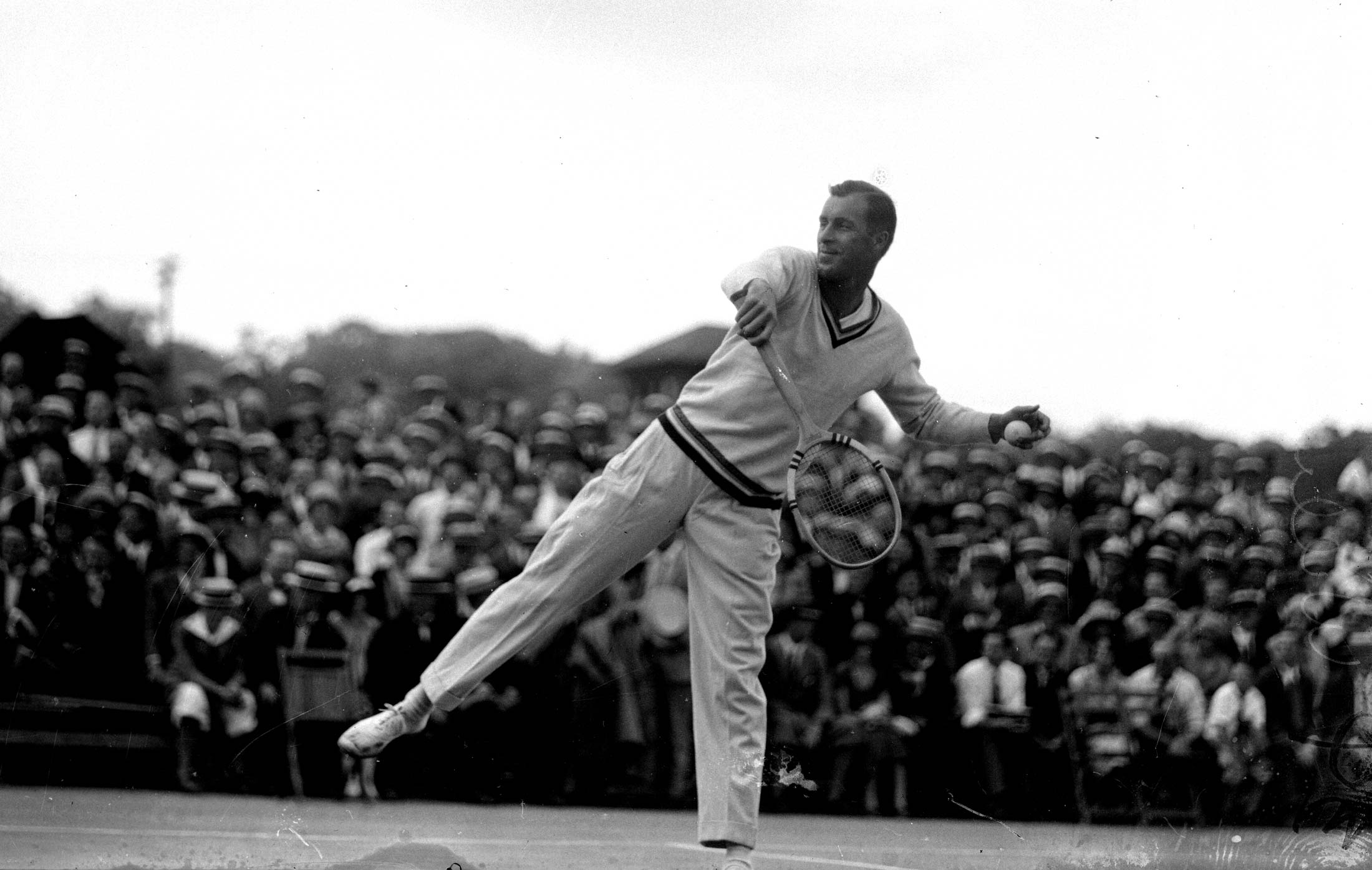
At the death in 1953 of Bill Tilden, generally acknowledged to have been the best tennis player in the history of the game, the sports columnist Red Smith wrote: “And so it ends, the tale of the gifted, flamboyant, combative, melodramatic, gracious, swaggering, unfortunate man, whose name must always be a symbol of the most colorful period American sports have known.” That period, the 1920s and early ’30s, was a time when, in their various sports, Babe Ruth, Jack Dempsey, Jim Thorpe, Bobby Jones, and Red Grange were also in their glory. While the fame of these other athletes was largely American, Tilden’s was international. Great as Ruth, Dempsey, Thorpe, Jones, and Grange were, only Tilden changed the nature of the game he played. Al Laney, a sportswriter famous in his day, called Bill Tilden “our greatest athlete in any sport,” tout court. In a 1950 Associated Press poll of the nation’s top sportswriters and broadcasters, he was selected as the best tennis player of the first half of the 20th century—and by a far wider margin than any of the athletes selected for other sports.
The reason that Red Smith, always a careful writer, ended his list of seven adjectives with “unfortunate” has to do with the scandal that marked Bill Tilden’s last years and marred much he had accomplished on the courts. One likes to think that achievement outlives scandal, that the former is permanent, the latter ephemeral, but in Tilden’s case it is far from certain that this has been so. In an otherwise storied life, the Fates wrote Bill Tilden a dark last chapter.
Stay informed.Stay ahead.
Join Washington Examiner for unlimited access to the news, analysis, and commentary that matter most.
Already a member? Log in
