

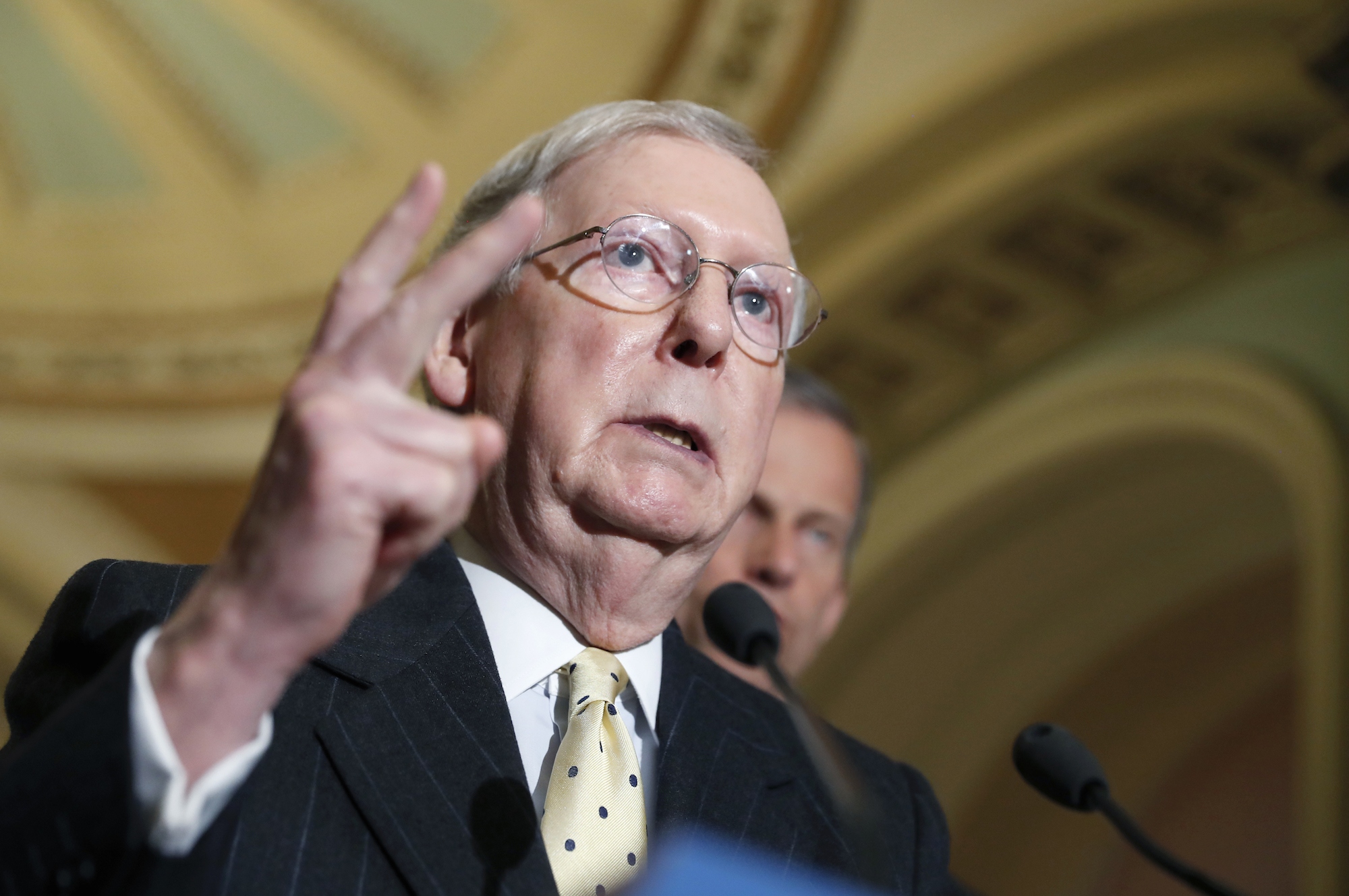
Tax reform should not add to the federal debt, Senate Majority Leader Mitch McConnell, R-Ky., said Tuesday, adopting a stance that conflicts with the Trump administration’s tax outline.
Recommended Stories



McConnell cited the national debt in saying that tax reform “will have to be revenue-neutral” in an interview on Bloomberg TV, using a term meaning that the tax reform legislation would not reduce tax revenue.
A revenue-neutral plan would be one in which the reduction in tax rates is offset by eliminating tax deductions, credits and other breaks.
Trump’s tax reform outline likely would cut revenue significantly, based on outside assessments of its effects. The administration has said the overhaul will pay for itself when economic growth is taken into account, but some components of Trump’s plan likely would have to change for that to be true.
Whether and how much the legislation could add to the debt is one of the major questions that lawmakers must determine in moving a bill through the Congress to Trump’s desk.
House Speaker Paul Ryan, R-Wis., and top tax-writers in the House have said that tax reform should be revenue-neutral, partly to allow the legislation to proceed through the budget process known as reconciliation. Reconciliation allows legislation to pass the Senate with only 51 votes and bypass a filibuster.
Trump’s team, in comparison, has indicated that it would accept a temporary tax cut that added to deficits.
Other top tax-writing senators have suggested that they might be open to a revenue-losing tax cut.
In Tuesday’s comments, McConnell said he was confident tax reform would get done. However, he declined to commit to it being passed in 2017, a goal for House Republicans.
