

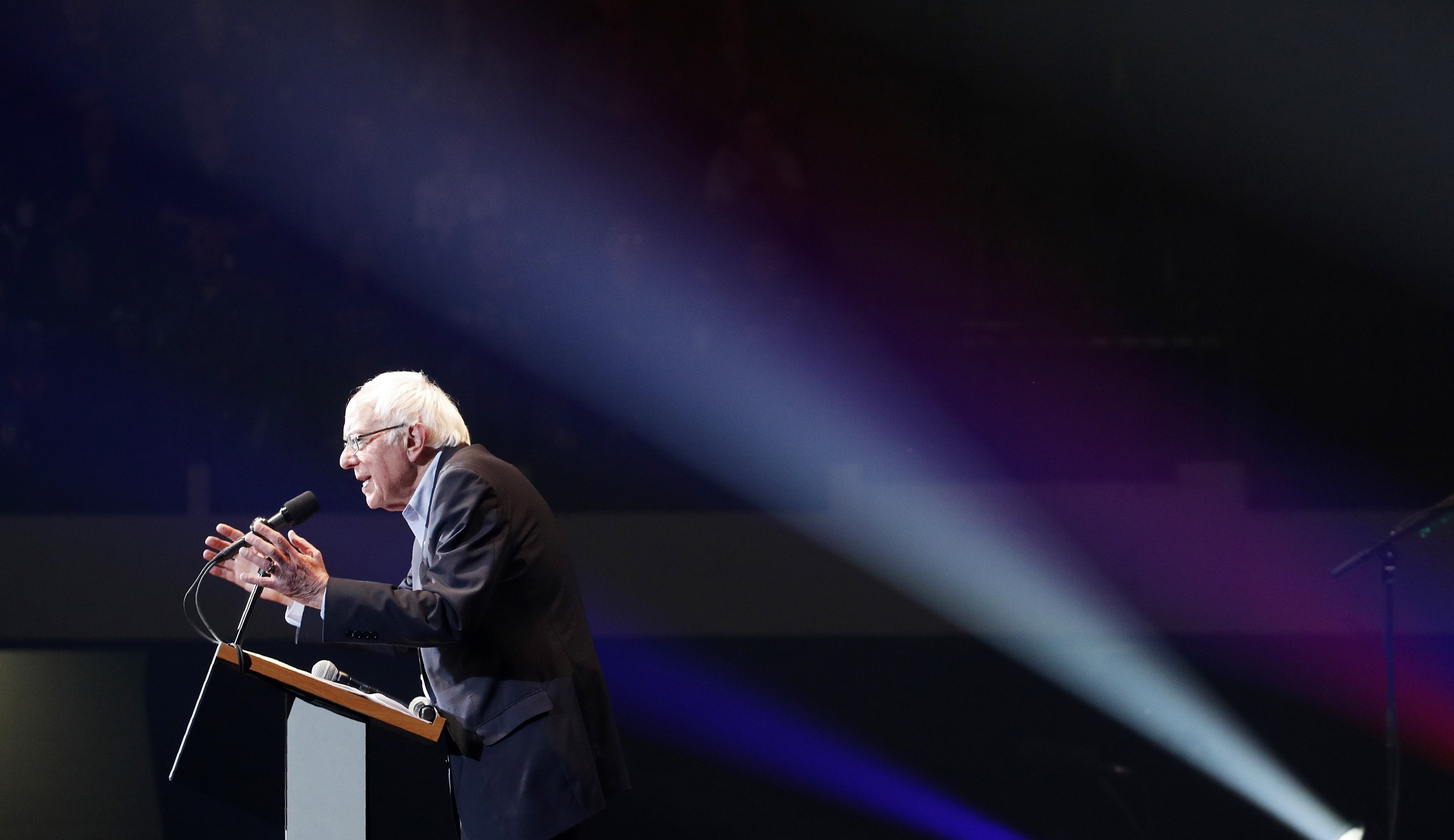
In 1981, when Bernie Sanders was serving as mayor of Burlington, Vermont, the current front-runner for the Democratic presidential nomination shocked the crowd gathered to kick off the annual Chittenden County fundraising drive for the United Way when he declared, “I don’t believe in charities.” The mayor, according to a New York Times account, went on to take issue with the “fundamental concepts on which charities are based,” asserting that government should instead be the provider of social services.
What was then a fringe view (in a country that would give more than $400 billion to charities in 2018) would take on the force of tax law, were a Sanders administration to prevail. That’s thanks to the candidate’s proposals to hike tax rates on the affluent and, crucially, to impose for the first time a tax on assets (a “wealth tax”) in addition to one on income. The combination would deeply wound charitable and philanthropic giving, which is dominated by the well-off. It would not only leave less income for potential charitable gifts but would tax wealth that has been pledged but not yet transferred to foundations, universities, or any other nonprofit organization. Like so many other Sanders proposals, it would make the United States look more like Western Europe, where charitable giving (as in Germany) is less than a third of that here. And it’s premised on a false equivalency — that government can and would do the same things and do them as well as charitably funded civil society.
Stay informed.Stay ahead.
Join Washington Examiner for unlimited access to the news, analysis, and commentary that matter most.
Already a member? Log in
