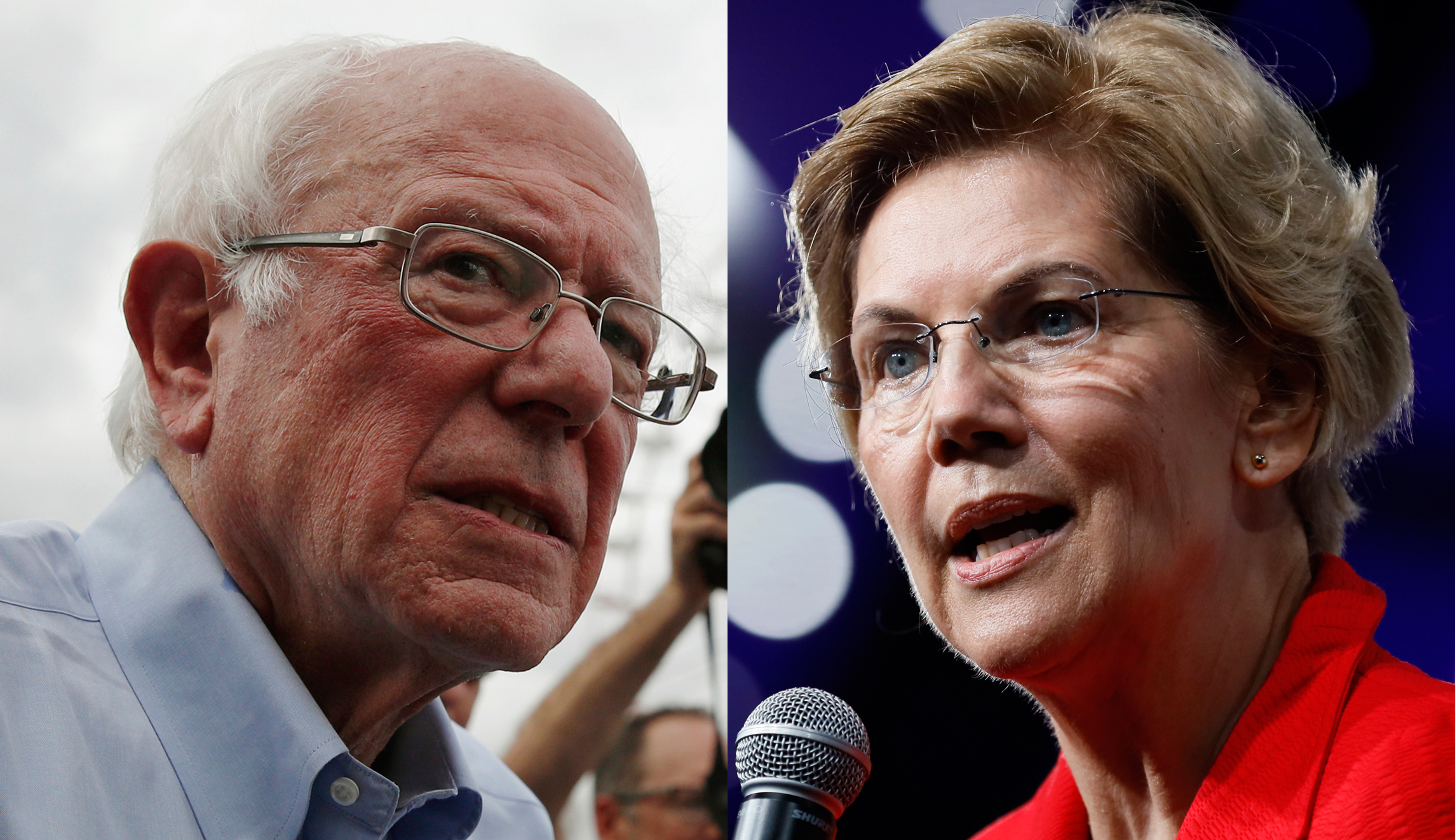
Wealth tax proposals from Democratic presidential candidates, Sens. Elizabeth Warren of Massachusetts and Bernie Sanders of Vermont, are underpinned by the idea that the economy is rigged in favor of the wealthy, and new data from two liberal economists claim the richest 400 Americans had a lower tax rate in 2018 than the poorest among us. This makes for sensational headlines and good stump speeches, but this narrative of extreme inequality has been roundly disputed in the economic community, and policymakers should steer clear of thinking that there’s a gold mine of untaxed wealth.
Economists Emmanuel Saez and Gabriel Zucman’s new book, The Triumph of Injustice, is the source of these explosive claims. The headline-making data are well outside the mainstream of the economics professions’ due to questionable assumptions made by the two economists. Their results differ substantially from those of government agencies such as the Congressional Budget Office and the Joint Committee on Taxation that have evaluated the same issue.
Recommended Stories
According to Saez and Zucman, who have consulted for Warren’s and Sanders’s presidential campaigns, the bottom 10% of households paid approximately a 25% effective rate in federal, state, and local taxes in 2018. This calculation, however, leaves out key tax provisions that drive down tax rates for the poor. The federal (and some states’) tax code provides generous tax credits for low-income individuals, chief among them the Earned Income Tax Credit and the Child Tax Credit. These credits are so generous that some households can receive refunds in excess of their income tax liability, making their effective income tax rates negative. These refundable provisions are in the tax code specifically to offset the regressivity of other taxes, such as payroll taxes.
Saez and Zucman do not include the refundable portion of these credits in their methodology, arguing the credits are government transfers. But claiming the poor pay too much in taxes while ignoring a striking reduction in their tax liability is hiding the ball.
This choice skews the picture considerably. The Congressional Budget Office, which does accounts for refundable provisions, estimated that the lowest quintile of households had a total federal tax liability of just 1.7%, a fraction of Saez’s and Zucman’s estimate. Even adding in state and local taxes, which are more regressive than the federal tax code, can’t reconcile a 23-point gap.
At the other end of the income spectrum, Saez and Zucman make the breathtaking claim that the top 400 households had an effective tax rate of only 23% in 2018. Here, again, their results do not stand up to robust critique because they exaggerate income levels among the superrich. Since effective rate calculations compare taxes paid to income, artificially high income makes effective tax rates appear artificially low. Using a more accurate income calculation, the effective rate for the top 0.1% jumps from approximately 30% to 50%.
Their data suffers from other issues as well. Saez and Zucman assume the corporate income tax is borne entirely by shareholders, which is at odds with the Congressional Budget Office, the Joint Committee on Taxation, and other outside scorekeepers such as the Tax Policy Center and Tax Foundation. This assumption makes it seem that the ultrarich have received much larger tax cuts over time than lower-income individuals and that workers and consumers receive no benefit from recent corporate rate reductions. Using the methodology of any of these other groups would produce a less dramatic conclusion.
Saez and Zucman argue their results shouldn’t be compared to the Congressional Budget Office because they include state and local taxation, which is an important difference. But Jason Furman, the former chairman of President Barack Obama’s Council of Economic Advisors, layered the Congressional Budget Office’s data with outside state and local tax data from the left-leaning Institute on Taxation and Economic Policy to find that the combined federal, state, and local tax codes are still progressive. The rich pay more than lower-income individuals.
These are not Saez and Zucman’s first methodological critiques this year. In April, the pair were criticized by former Clinton and Obama administration official Larry Summers and professor Natasha Sarin, who pointed out a number of issues with Saez’s and Zucman’s revenue estimates for Warren’s wealth tax.
With the release of their book next week, Saez’s and Zucman’s research will be front and center. It fits nicely into the rhetoric of the Democratic presidential candidates who proclaim the rich are getting richer and gobbling up all the tax cuts over the last 50 years, leaving the poor behind. But their questionable assumptions and unique methodology make them an outlier in the tax community. Lawmakers should tread carefully in accepting these results as gospel and voters should raise a questionable eyebrow at the candidates touting these economists’ work.
Nicole Kaeding (@NKaeding) is the vice president of policy promotion and an economist with the National Taxpayers Union Foundation.
