

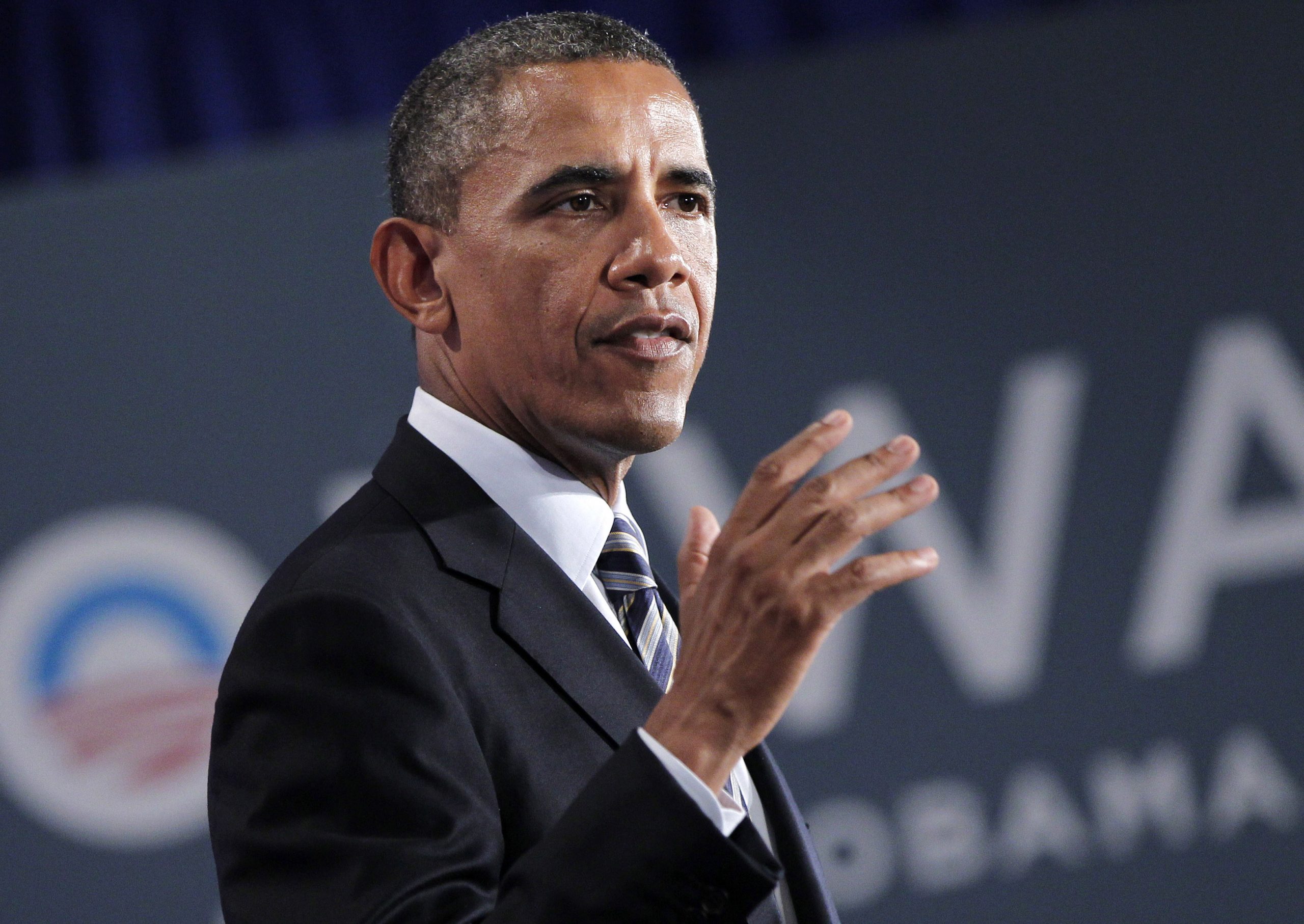
President Obama is sometimes beyond parody — especially when he plays the populist.
Last week, Obama headlined a $32,000-a-plate fundraiser at the $26 million Greenwich, Conn., estate of a real estate mogul. During that dinner I noticed an email from Obama in my inbox warning me that “If Republicans win, we know who they’ll be fighting for. Once again, the interests of billionaires will come before the needs of the middle class.”
Recommended Stories


Obama has played this populist game unceasingly since he began his presidential run in 2007. He spoke as if he were being outspent while demolishing John McCain in fundraising. He declared war on lobbyists before hiring more than 100 of them and recruiting many as his top fundraisers. His top adviser at the White House — millionaire Valerie Jarrett — proclaimed that their administration was busy “speaking truth to power.”
It’s easy to attribute Obama’s populist rhetoric to dishonesty. But things like that anti-billionaire email sent hours before a Greenwich fundraiser (did I mention Obama’s host was named Rich Richman?) suggest an odder explanation for Obama’s behavior: complete lack of self-awareness.
Obama and his allies may actually believe they are the party of the people, and the GOP is the party of the billionaires — despite evidence that, many evenings, is literally right in front of their faces.
It would go too far to declare Democrats the “party of the rich.” Both parties are the parties of the rich. Wealthy donors have too much sway over Republicans and Democrats. Both parties pursue the interests of the elites too much, to the detriment of the regular guys.
But slice it any number of ways and there is at least as much reason to tag Obama’s party — as opposed to the GOP — with the “party of the rich” label.
Presidential ballots don’t include a field for net worth or adjusted gross income, and so we depend on imprecise measures to see how the wealthy vote. Here are some estimates:
The richest county in America, according to IRS data on mean household income, is Teton County, Wyo., home of Jackson Hole. It’s the only Wyoming county Obama won in 2012. And Obama won it big — by 12 points, while losing the rest of the state by more than 40 points.
Seven of the 10 richest counties in America voted for Obama, from Manhattan to Marin. Three sparsely populated counties in Texas made the top 10, and all three voted for Mitt Romney.
Divide up the country by congressional district and you get the same story. Of the 10 richest congressional districts, Democrats represent seven in the House of Representatives. As with counties, congressional districts can be rich in different ways: maybe everyone who lives there is wealthy; maybe the few rich people are extremely rich; maybe there’s just not many poor people.
So, I used three different measures of wealth in comparing congressional districts, and got similar results. Mean household income takes the total income made by everyone in the district and divides it by the number of households. On this count, California’s 18th District in Silicon Valley is the wealthiest with a mean household income of $145,779, according to the Census Bureau’s American Community Survey. Democrat Anna Eshoo represents it, and she won easy re-election last cycle with more than 70 percent of the vote.
Obama’s host Rich Richman shouldn’t feel too inadequate — his district is second richest with a mean household income of $142,933. Democrat Jim Himes represents Connecticut’s 4th District. Himes, who took the seat in 2008, was a Goldman Sachs banker before the people of Greenwich, Cos Cob, Darien, and surrounding towns sent him to Washington as their representative.
By this measure, seven of the nation’s 10 richest congressional districts are represented by Democrats. (That number 7 is a theme here.)
Measure a congressional district by median household income and you get a slightly different result. You get the median by lining up every household by order of income and taking the middle one. The richest district by this count is a Republican district — Virginia’s 10th District, in the Washington suburbs, represented by Frank Wolf, who is retiring.
Second place in this category is Eshoo’s 18th District, followed by the neighboring 17th District (Democrat Mike Honda), and then Virginia’s 11th District, which includes closer-in D.C. suburbs and is represented by Democrat Gerry Connolly. Again, Democrats represent seven of the 10 districts with the highest median household income.
Here’s another way to count an area’s wealth: What portion of a district’s households earn over $150,000? Take the top 10 districts and you see the same thing: Seven of 10 are Democratic seats. It’s the same if you make the cutoff $200,000.
Here’s another measure: Ten members of Congress have a net worth more than $40 million — and seven of them are Democrats.
While the people of Northern Virginia get rich off of stimulus, and the people of Greenwich bank their bailouts and government loan guarantees, they can sleep well at night knowing they contributed to Obama. They may still be rich, but they’re different rich.
This thought can comfort Obama, too.
