

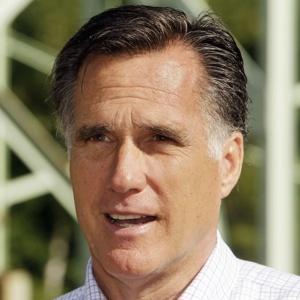
During his radio show yesterday, Examiner contributor Hugh Hewitt complained about what he termed as my “vitriolic” criticism of Mitt Romney. This shouldn’t come as a major shock, because I’ve been a vocal critic of Romney, and Hewitt has been a long-time booster who published an adoring book promoting Romney’s candidacy the first time he ran for president. Yet at no point did Hewitt challenge the substance of anything I’ve actually written. Instead, he took issue with the very idea that I, as a conservative commentator, would be so critical of a Republican candidate.
“Mitt Romney won the debate,” Hewitt said (audio available by subscription). “Mitt Romney’s likely to be the nominee. And Mitt Romney can win the general election. Why do so many conservatives hate him?”
Recommended Stories



When his guest, Townhall’s Guy Benson, said that “hate” was a strong word, Hewitt singled out my name.
“The virulence out there, and Philip Klein is just one example of many, …I am stunned by.”
I completely reject the premise of Hewitt’s complaint — that somehow because Romney has a good shot of being the Republican nominee it’s time for me and other conservatives to simply fall in line and become more positive about him.
Hewitt said my criticisms of Romney had “certainly” crossed over into being “vitriolic” – “By any definition of vitriolic, go look it up in your dictionary: excessive, unbroken, undisturbed by any acknowledgement of anything redeeming or good, that’s fine. But I think that that’s crazy for Republicans to do for any of (the candidates).”
Hewitt continued, “I just don’t understand the punditocracy when they refuse to recognize all of these people are legitimate national leaders with center-right credentials tending to conservative, not as conservative as Rick Perry is for example, but tending to conservative, and it’s just crazy to gnaw on our legs this way.”
Though he acknowledged that some criticism was okay, he said, “It’s also important for conservative commentators to say, ‘I might like Herman Cain, I might like Rick Perry, but you know, Mitt Romney is okay if he’s the nominee.’”
Couldn’t disagree more. I don’t think of myself as a political operative whose goal is to advance the Republican Party. I’m a conservative journalist whose primary concerns are my principles and the truth. My conservatism tells me the health care law Romney championed in Massachusetts is an affront to small government principles, and as a journalist I feel an obligation to correct his repeated distortions about the legislation. I’m not going to go out of my way to say it’s “okay if he’s the nominee,” because that’s not what I believe. Should he, or anybody else become the nominee, my approach to my job won’t change. Nor will it change if one of the Republican candidates becomes president.
One of the major failings of conservative commentators during the Bush administration was that they didn’t make enough of a fuss when he pursed a big government agenda. Too often, he was excused when betraying conservative principles because he was supposedly “one of us.” Hewitt clearly has a different view than me about the relationship between conservatives and Republican presidents, something that was abundantly clear when he scolded those on the right who rebelled against Bush’s pick of Harriet Miers to the U.S. Supreme Court. I hope this attitude changes the next time a Republican is president. And I’ve said this before. Back when Texas Gov. Rick Perry was being hailed as a savior in August, Michelle Malkin took heat for attacking him on the Gardasil issue, and I came to her defense, arguing that conservatives should keep Perry at arm’s length.
What we need among conservative pundits is more criticism of Republican politicians, not less.
