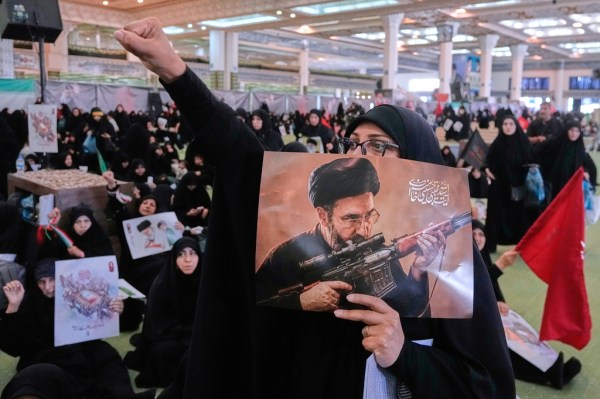
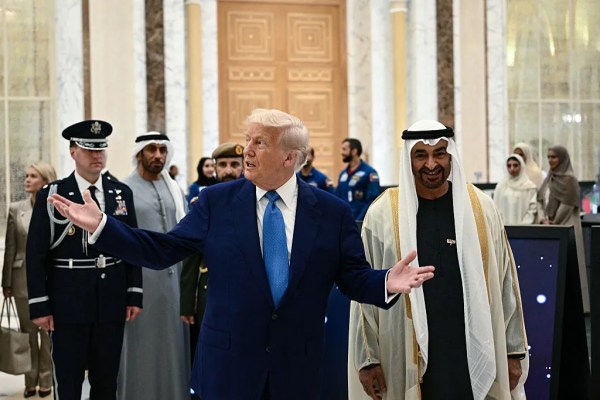
Relying upon the current ceasefire to prevent resumed U.S. and Israeli strikes against its territory, Iran is simultaneously seeking to degrade the confidence of America’s Sunni Arab allies. Launching attacks on the United Arab Emirates, Iran wants the UAE and Saudi Arabia to question the value of America’s protective umbrella.
Iran launched drone attacks on support facilities (though not the plant directly) for the UAE’s Barakah nuclear plant on Sunday. This latest attack follows a major May 4 missile and drone barrage on UAE energy facilities. The nuclear target was likely chosen for two reasons.
Recommended Stories
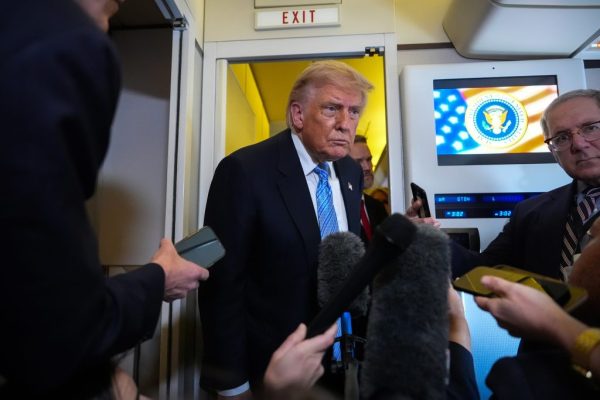
First, as a warning to the Trump administration that any resumption of full-scale hostilities risks Iran conducting more aggressive attacks. Tehran knows that President Donald Trump wants to avoid greater regional destabilization and global economic uncertainty. Second, to make the UAE and Saudi Arabia question whether the United States is willing to protect their interests. There has been widespread reporting, after all, that the UAE and Saudi Arabia have pushed Trump to maintain his military campaign until Tehran is willing to make massive concessions above and beyond its nuclear program.
Moments of occasional and always fragile detente notwithstanding, the Sunni monarchies view Iran’s Islamic revolutionary regime as their defining ideological nemesis. In turn, the undergirding foundation of the U.S.-Saudi/UAE alliance has centered on a simple yet broadly effective exchange. In return for American security guarantees, the kingdoms have provided reliable energy supplies and significant investments in the U.S. economy. This dynamic was especially well-emphasized during Trump’s Middle East visit in May 2025. This transactional approach has broadly offset other challenges in the relationship, such as the UAE’s sharing of U.S. intelligence officer identities with Russia.
Trump has long been favored by the Sunni Arab monarchies for his deference to their political cultures, his appreciation for their massive purchases from the U.S., and his tough stance toward Iran. This stands the president in stark contrast to his two predecessors, Barack Obama and Joe Biden, who were seen as overly appeasing of Iran and overly fixated on matters such as the killing of Saudi dissident Jamal Khashoggi.
BELTWAY CONFIDENTIAL: ANGELA MERKEL FOR UKRAINE WAR MEDIATOR? FORGET IT
Still, Iran is plainly testing the president here. Trump must be astute to it.
The president rightly wants to negotiate a speedy end to the war by seeing Iran accept strict limits to its nuclear program and reopen the Strait of Hormuz energy chokepoint. In return, Tehran would receive sanctions relief. But Trump cannot continue to allow the Iranians to keep pummeling U.S. allies without riposte. Doing so will only encourage future Iranian aggression while undermining America’s alliances.