

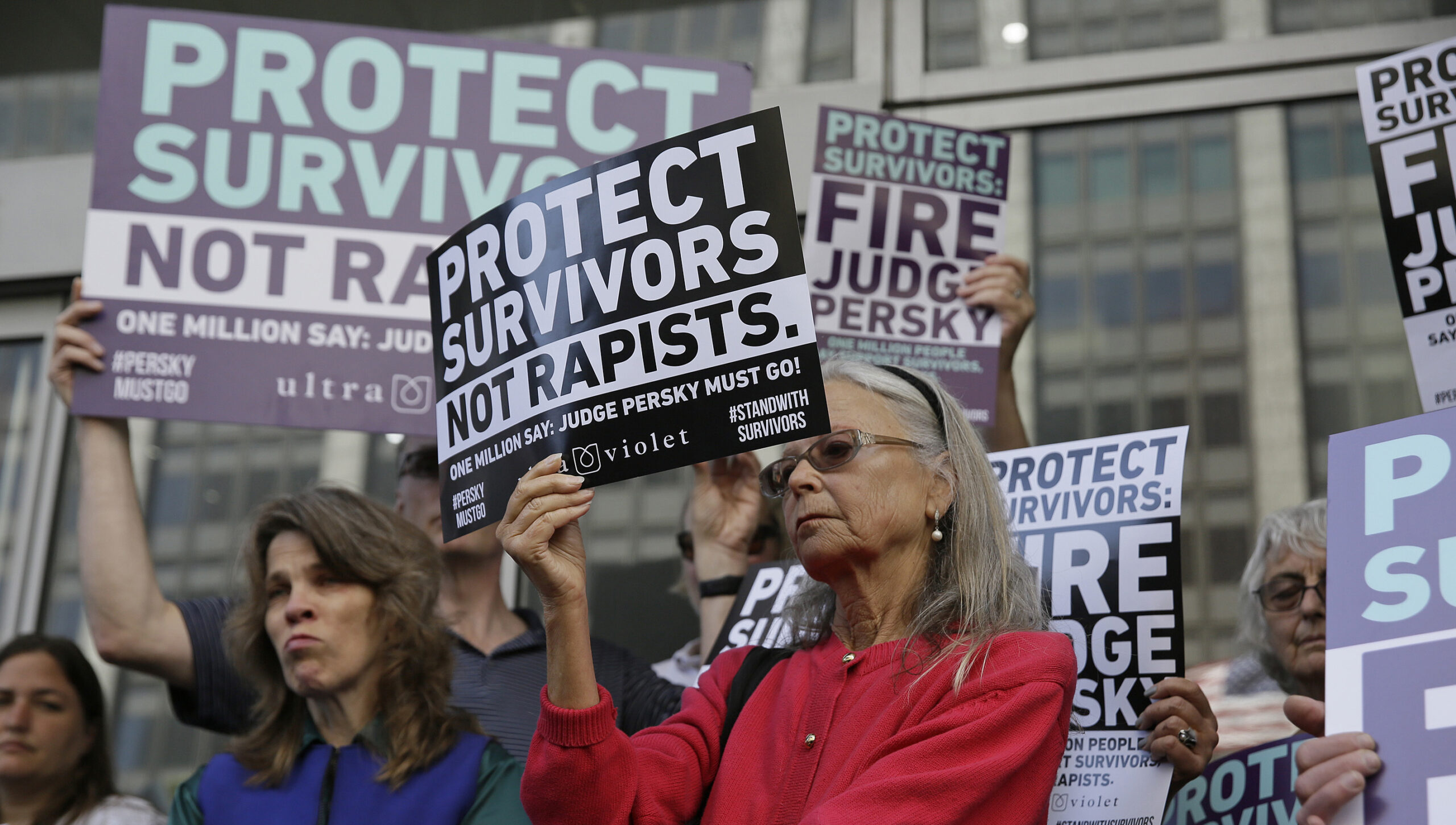
California voters haven’t forgotten about Brock Turner.
Two years after Santa Clara County Judge Aaron Persky sparked widespread outrage for sentencing the Stanford University swimmer to only six months in jail, he was tossed from office in a recall election.
Recommended Stories



Persky’s recall, decided by voters on Tuesday, marks the first time a judge in the Golden State has met that fate since 1932. His sentencing of Turner, who was convicted of sexually assaulting an unconscious woman outside a Palo Alto fraternity house, sparked an uproar back in the summer of 2016, fueled by the victim’s viral reaction to it. Turner was convicted that spring of sexual penetration with a foreign object of an intoxicated person, sexual penetration with a foreign object of an unconscious person, and intent to commit rape, and prosecutors had sought a six-year sentence (the maximum was 14 years). Per his own request, Persky subsequently stopped hearing criminal cases to mitigate distractions amid the intense public backlash.
But even among legal experts who understood concerns that Turner’s sentence was too light, there was apprehension about the recall efforts. Writing in Vox on Wednesday, Oakland public defender Rachel Marshall argued, “Long before this week’s vote, the recall campaign’s impact had been felt in courtrooms across the country, where judges became increasingly cautious about exercising discretion, worried that they might be punished for leniency.”
“When judges are looking over their shoulders, worried about losing their jobs if they enrage the public, the fairness of our system is compromised. Judicial independence is especially important because the public is often wrong, particularly on a local level,” Marshall contended.
In a 2016 statement, Santa Clara County District Attorney Jeff Rosen said, “While I strongly disagree with the sentence that Judge Persky issued in the Brock Turner case, I do not believe he should be removed from his judgeship. I am so pleased that the victim’s powerful and true statements about the devastation of campus sexual assault are being heard across our nation. She has given voice to thousands of sexual assault survivors.”
As the Los Angeles Times reported this week, “The legal community has largely opposed the recall, calling it a threat to judicial independence.”
“More than 90 California law professors, including 20 from Stanford’s law school, have signed a statement opposing it,” according to the Times. “They say it will encourage judges to give tougher sentences and perpetuate mass incarceration.”
Persky was cleared of misconduct by an independent state agency in 2016.
Dueling letters from Turner’s victim and his father created a powerful juxtaposition at the time of his sentencing, fanning the flames of outrage. While Turner’s father framed his son as a victim, the actual victim wrote that Turner “pushed me and my family through a year of inexplicable, unnecessary suffering, and should face the consequences of challenging his crime, of putting my pain into question, of making us wait so long for justice.”
Sixty percent of voters on Tuesday cast ballots to recall Persky, with 40 percent voting in his favor.
