
There are some tremors of optimism rumbling through the Republican Party these days. The generic ballot for the 2010 congressional elections is about even, and Democrats are preparing for a defensive cycle after eight years on offense. The gleam has come off President Barack Obama, now seen as a conventional politician, not a transcendent figure. But Republicans are still very worried, and with good cause. The Democrats’ loss has not become their gain.
Voters still have misgivings about the party that gave them the Iraq war and runaway deficits. Sticker shock at the fiscal recklessness of the Democrats hasn’t erased the bad memories of the GOP’s big-spending ways under President George W. Bush. The fallback story for incurious national reporters remains trying to identify the leader of the party. Will Sarah Palin be queen or kingmaker? Who will be the Southern candidate in 2012 after Mark Sanford’s midlife meltdown?
Recommended Stories

Voters still have misgivings about the party that gave them the Iraq war and runaway deficits. Sticker shock at the fiscal recklessness of the Democrats hasn’t erased the bad memories of the GOP’s big-spending ways under President George W. Bush. The fallback story for incurious national reporters remains trying to identify the leader of the party. Will Sarah Palin be queen or kingmaker? Who will be the Southern candidate in 2012 after Mark Sanford’s midlife meltdown?
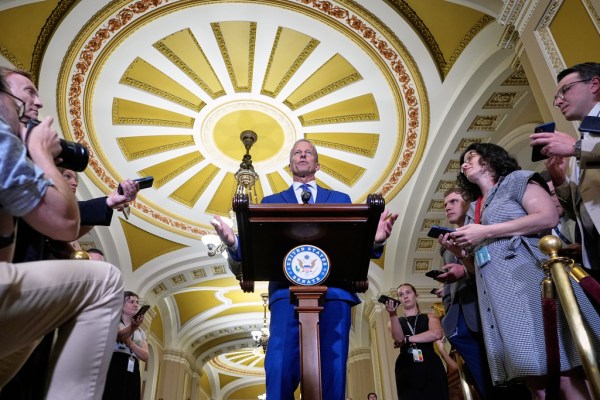
Sen. John Thune of South Dakota knows something about the leadership guessing game, having been the subject of some hot and heavy vice presidential speculation before John McCain shocked the nation with his Palin pick.
Thune seemed to be a logical choice for shoring up some of McCain’s weak spots. At 48, he is only seven months older than Barack Obama. Thune is also an evangelical Christian and has a near-spotless conservative voting record.
McCain threw the Hail Sarah pass instead, and a year later she is a former governor Twittering her way across the political tundra. Thune, meanwhile, has spent most of his time fighting the Democrats’ audacious agenda. And to him, poll questions about who really runs the Republican Party are media-generated distractions.
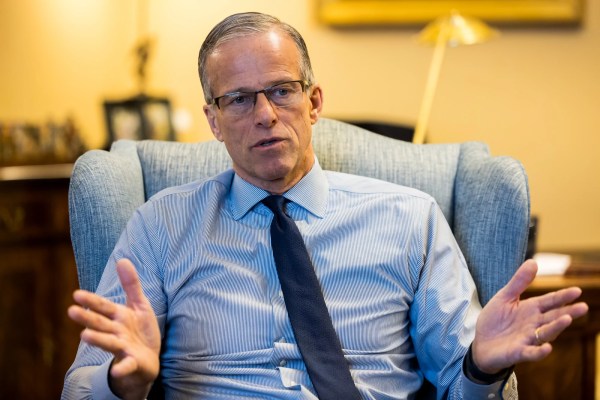
“For right now, we’ve got to put it all on the message,” Thune said, his long frame folded into a wingback chair in his Senate office. “If we can’t make the case that the Republican Party has better answers on economic and fiscal issues, then it really doesn’t matter that much who’s in charge.” For Thune, son of a teacher and a librarian from Murdo, S.D., the answer for the GOP isn’t about finding its own Obama, but rebuilding a brand that was a victim of its own success. “We have to go about in a very workmanlike way and build this party back up, brick by brick,” Thune said. “We have to show voters that we are worthy of their trust.”
That process started with resisting the Obama stimulus, and continues with fighting cap and trade and a government-run health plan. Democrats misunderstood their mandate and tried White House Chief of Staff Rahm Emanuel’s smash-and-grab legislative approach. Now Thune and his fellow Republicans are trying to use that overreach against the Obama agenda. “They’re a government party. We’re a freedom party,” Thune said. “We’re not going to win back the support of the American people by saying that we can run big government better than the Democrats can. And the scope of what the majority party is doing right now gives us a chance to highlight the real difference between the two approaches.”
Thune rose to the No. 4 slot in the Republican Senate hierarchy — the head of the Republican Senate Policy Committee — after John Ensign stumbled out of the leadership. In a party deeply in the minority, crafting policy means picking your battles.
When Democrats added an amendment to a defense bill to give special status to crimes targeting gay people, Thune responded with an amendment of his own proposing that a gun permit issued to a resident of one state had to be honored in every state.
The hate-crimes amendment passed and Thune’s was narrowly defeated, but it forced Democrats to spend valuable time cajoling votes out of senators not looking to get on the wrong side of the NRA. It also forced some red-state Democrats to cast risky votes.
Nothing to Twitter about, maybe. But it’s part of the approach to politics and government Thune learned as a Hill staffer, as a worker bee in the Reagan administration, as a three-term House member, and now as a senator who upset then-Majority Leader Tom Daschle in 2004.
So while other rising Republicans are talking to Iowa consultants and pumping up their political action committees, Thune is trying to build a wall against the Democratic onslaught one brick at a time.
“It’s a matter of how you spend your time, talent and treasure,” Thune said. “You can tell what you need to know about a person by where they put their energy.”