

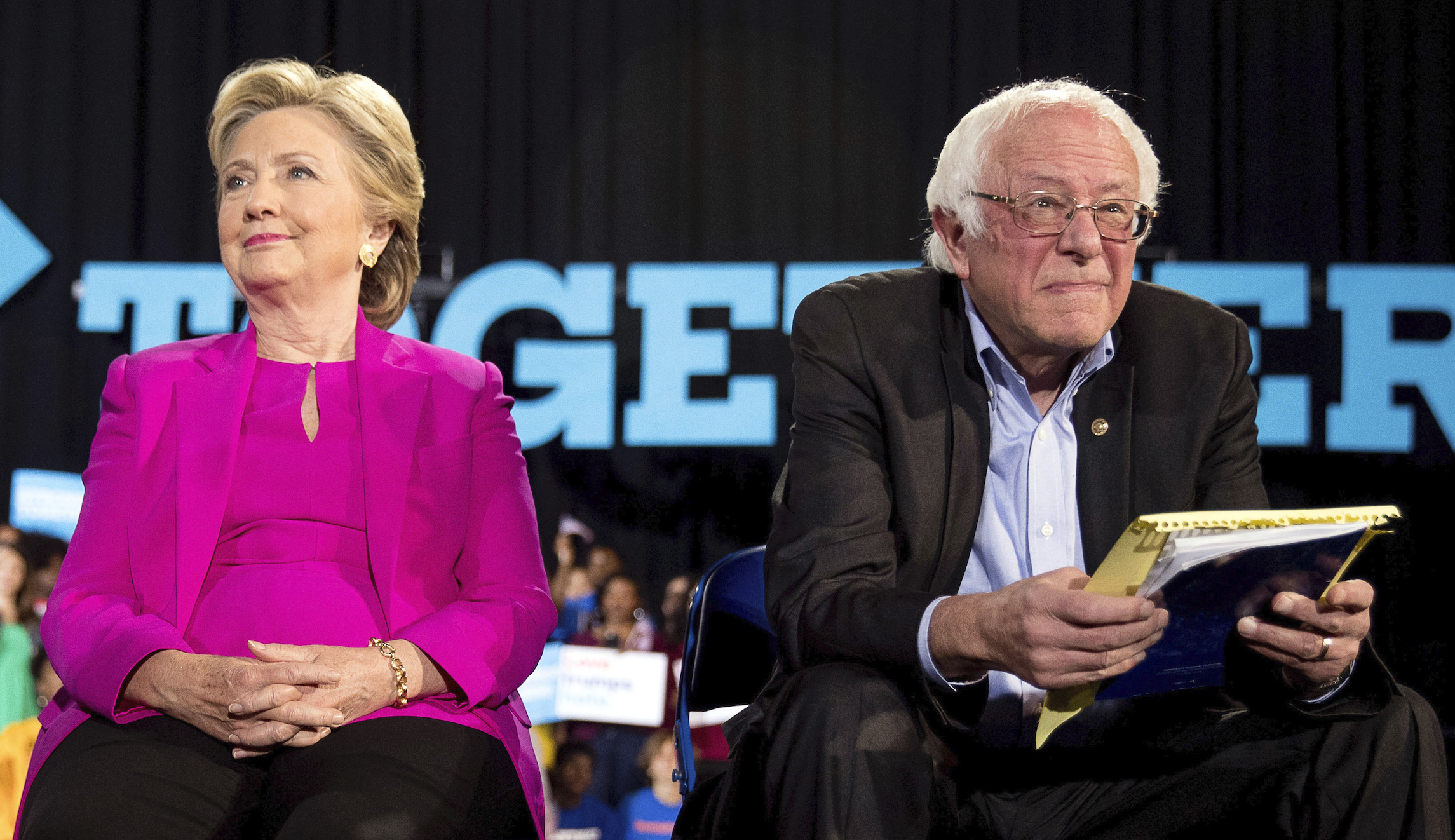
Bernie Sanders rejected George Stephanopoulos’s claim that he has been inconsistent in his support for the convention’s rules since becoming the 2020 Democratic front-runner.
Sanders has been criticized by many of his competitors for arguing that the nomination should be given to whichever candidate has the plurality of delegates, even if he or she does not have a clear majority. During ABC’s This Week on Sunday, Stephanopoulos confronted the Vermont senator about this argument by airing footage of him making the opposite argument in 2016 while competing against Hillary Clinton.
Recommended Stories


“I hope that we will win the pledged delegates,” he said in 2016. “But at the end of the day, the responsibility that superdelegates have is to decide what is best for this country and what is best for the Democratic Party, and if those superdelegates conclude that Bernie Sanders is the best candidate, the strongest candidate to defeat Trump, yes, I would very much welcome the support.”
Sanders claimed that the clip was taken out of context, explaining, “George, that was in May. California, the last primary was in June. And what I said is, at that point, if I can create momentum and if we win the California primary, then I think superdelegates might want to rethink where we are at. That was before the end of the process.”
He continued, “What you’re asking me now, is if at the end of the entire democratic process, a candidate, maybe Bernie Sanders, ends up with more votes than anybody else, and we go into the convention, and the Democratic establishment and the superdelegates say, ‘Hey yeah, Bernie won more votes than anybody else. He won state after state after state, but we don’t want him.’ Do you know what that will do to the Democratic base in this country?”
Stephanopoulos argued that Sanders had contested the results against Clinton “on several occasions,” but the two-time presidential candidate pushed back, saying, “After Hillary Clinton won the pledged delegates, I did not go to any superdelegates. It was over. We conceded the election, and then we supported Hillary Clinton. So, that is my point. I’m not being inconsistent with what I said in 2016.”
Sanders added that a contested convention could destroy any remaining unity within the party, adding, “We need unity. If you reject the candidate who has the most votes from the people and you win it through superdelegates and the Democratic establishment and the corporate wing of the Democratic Party, do you think you’re going to have the energy and the excitement of a grassroots movement to defeat Donald Trump? I honestly don’t think you will.”
A contested convention has become the most likely result of the Democratic primary, according to FiveThirtyEight. In one convention rule change from 2016, the Democratic superdelegates will not be allowed to cast votes in the first delegate count, but they can participate in any subsequent votes.
