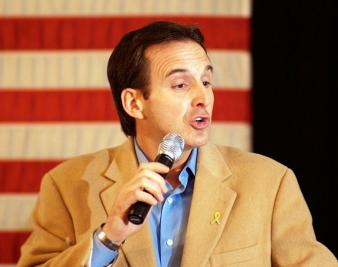
In the pre-reform age of presidential nominating politics (1831-1968), when the quadrennial convention was actually a meeting of party leaders to select a nominee, a guy like Tim Pawlenty might have been an ideal compromise choice between various factions of the Republican party. Here is a two-term governor from a historically Democratic state, one who managed to govern as a conservative and still win reelection in a bad year for Republicans (2006). Even then he might not have been a first ballot winner – he’s a folksy Midwesterner without much flash, and it’s possible that he wouldn’t have had the broad base of popular support to steamroll a convention like that. But even so, it’s still easy to imagine a convention working out for him, though it might have taken a round or two.
Of course, those days are long since gone. After the 1968 convention debacle in Chicago, the McGovern-Fraser Commission of the Democratic party demanded an open nomination process, one that was instituted in advance of the 1972 election. The Republican party slowly but surely followed suit. Today, party nominations are decided via a byzantine and arbitrary process of caucuses and primaries. The original reformers never anticipated the mess that their rule changes have created. They hoped for an open and truly participatory party system, but instead we have gotten a nomination scheme that has rewarded divide-and-conquer strategies, favored parochial interest groups and bloodless campaign professionals, vitiated the traditional party organizations, and facilitated the rise of a permanent electoral campaign.