The Trump administration defended Medicaid work rules in federal court Thursday in a dispute that ultimately centered on defining what the purpose of the program should be.
The changes the Trump administration approved to Medicaid, which provides government-funded medical coverage, test the limits of the administration’s authority to alter the program from its Obamacare expansion, and will have rippling effects in states.
At issue were rules the Trump administration approved in Arkansas and Kentucky that obligate people to work, volunteer, or take classes for 80 hours a month as a condition of being allowed to remain in Medicaid. The Trump administration has let states implement the rules, but plaintiffs say they are illegal.
By the end of the oral arguments, Federal Judge James Boasberg of the U.S. District Court for the District of Columbia agreed that the two cases were linked and said he planned to issue a decision on the cases before April 1. The decisions may be appealed and eventually make it to the Supreme Court.
The administration argued that Medicaid, a program that is jointly funded by states and the federal government, could go beyond providing healthcare coverage and instead help beneficiaries improve their lives by earning more money and securing private health insurance coverage. The plaintiffs, people who said they were harmed by Medicaid rules, argued that the purpose instead was to extend healthcare coverage.
The Trump administration asked Boasberg to dismiss the challenge against work rules in Arkansas on the basis that doing so would be too disruptive to the state.
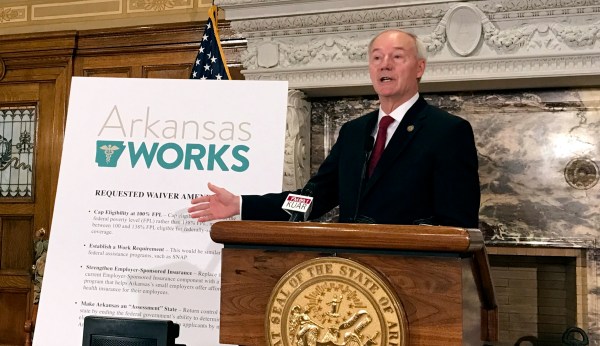
“It would wipe out all the work that has been done this past year,” said James Mahoney Burnham, the attorney representing the Trump administration. Arkansas is the only state that has made its work program official, and the Trump administration said it would like to see the program continue so that it could receive data on how well the idea worked.
Burnham said the state had already done a lot of work to get the word out about the requirements, and that putting a hold on the program and then possibly allowing it to go into effect later would be disruptive.
But the plaintiffs and Boasberg raised the fact that the Arkansas program had resulted in 18,000 people being kicked off Medicaid within seven months. Ian Heath Gershengorn, the attorney representing the plaintiffs, also noted that beginning this year, the requirements to work or train for work will apply to even more Medicaid beneficiaries because they will be extended to people between the ages of 21 and 29.
“There is massive harm,” Gershengorn said of the Trump administration approving work requirements. “It is not speculative.”
When the Trump administration was up again and stressed the program was intended to help people improve their lives, Boasberg shot back, “That’s not the purpose of Medicaid.”
For Kentucky, the Trump administration’s argument centered on the fact that the commonwealth’s Republican governor, Matt Bevin, had threatened to end the Medicaid expansion if the work rules were not to go into effect. Unlike Arkansas, Kentucky’s program will not start until July 1.
In this case, the Trump administration said that if the purpose of approving changes to Medicaid would be to expand coverage, then striking down the work requirements could have the effect of kicking even more people off health insurance. Allowing the work requirements to stay in place, Burnham said, could help to prevent coverage losses that would occur otherwise.
The Trump administration noted that other states, such as Virginia, had arranged a political compromise in which they would let expansion move forward as long as work requirements were also attached to the program. Further, Kentucky has said that moving people off the program and into jobs would let them fund more medical services for those who remain on the Medicaid program.
Gershengorn countered that it wasn’t necessarily a guarantee that Kentucky would undo its expansion. He said the entire legislature, not just the governor, would have to make the decision, and also noted that the governor was up for re-election and that such decisions on Medicaid may be politically unpopular.
Boasberg, an appointee of former President Barack Obama, blocked a previous version of Kentucky’s Medicaid work rules from going into effect last year. He concluded that the Trump administration didn’t adequately consider whether the rules would help bring medical care to patients. The Trump administration sought more feedback about the waiver and then re-approved it in November.
The work requirements the Trump administration approved are in reaction to Obamacare’s changes to Medicaid. Under Obamacare, states were allowed to expand coverage to people under the $17,000 a year income threshold, regardless of other factors such as disability status or whether they are working.
Republican lawmakers and the Trump administration ideologically disagree with Democrats about who Medicaid should cover. They contend coverage should not extend to adults capable of work, many of whom became newly eligible under Obamacare, and instead should be limited to the most vulnerable groups, such as people with disabilities, children, and older adults who need specialized care.
The work requirements don’t need to be followed for the majority of people on the program, including caregivers, parents, or those receiving addiction treatment, but critics say the requirements are ineffective at their goal of getting people into private coverage and instead increase the number of uninsured.
Officials have defended the work requirements as fulfilling Medicaid’s duty to help patients get healthier, pointing to studies that show people who are working are also likely to be in better health. They say the goal of the program should be to move low-income people into a higher income bracket or help them get a job that will provide private health insurance coverage.