

Washington Post columnist Ruth Marcus called Super PACs “a dangerous new weapon” yesterday, writing:
…
The rise of these groups erodes the twin pillars of a functional campaign finance system: limits on the size of contributions and timely information about who is writing the checks.
“The establishment of the candidate-specific super PAC is a vehicle to completely destroy candidate contribution limits,” says Fred Wertheimer, president of the campaign finance reform group Democracy 21, which is releasing a report on the phenomenon. “It is a vehicle that will spread to Congress and it will lead us back to a system of pure legalized bribery, because you will be back, pre-Watergate, to unlimited contributions that are going for all practical purposes directly to candidates.”
…
“I view the super PAC as the evil twin of the candidate’s campaign committee,” Federal Election Commission member Ellen Weintraub told me. … “How can it possibly be true that to give more than $2,500 to a candidate is potentially corrupting but to give millions to an outside group that is acting on the candidate’s behalf is not?” Weintraub asked.
Weintraub’s question is dead on: How can you reconcile a system that labels a $2,501 donation as ‘corruption’ but considers million dollar donations protected speech? You can’t. But the problem isn’t the million dollar donations. The problem is the absurd limits on campaign donations in the first place.
Recommended Stories


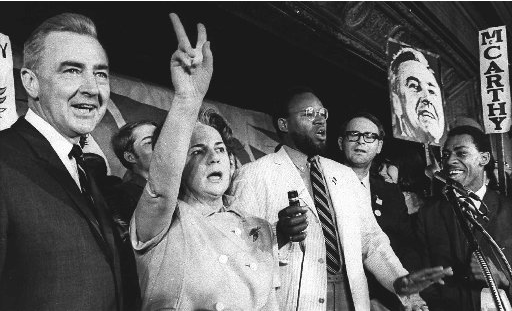
In 1968, philanthropist Stewart Mott spent $210,000 bankrolling Eugene McCarthy’s challenge against President Johnson. That would be over $1 million today. Does anyone realy believe Mott bought McCarthy’s opposition to the Vietnam War? Of course not. The more money Super PACs spend, the more voices and information voters get to hear.
And to the extent that people do believe that those giving millions to Romney’s Super PAC are buying favorable policy from him, his opponents are perfectly free to attack him for it. Jon Huntsman is doing just that. He told The Huffington Post yesterday:
The answer to ‘bad’ speech is not government regulatation of speech. It’s more speech. The Supreme Court will eventually revisit Buckley v. Valeo, in which Mott was a co-plaintiff, and get the First Amedment right.
