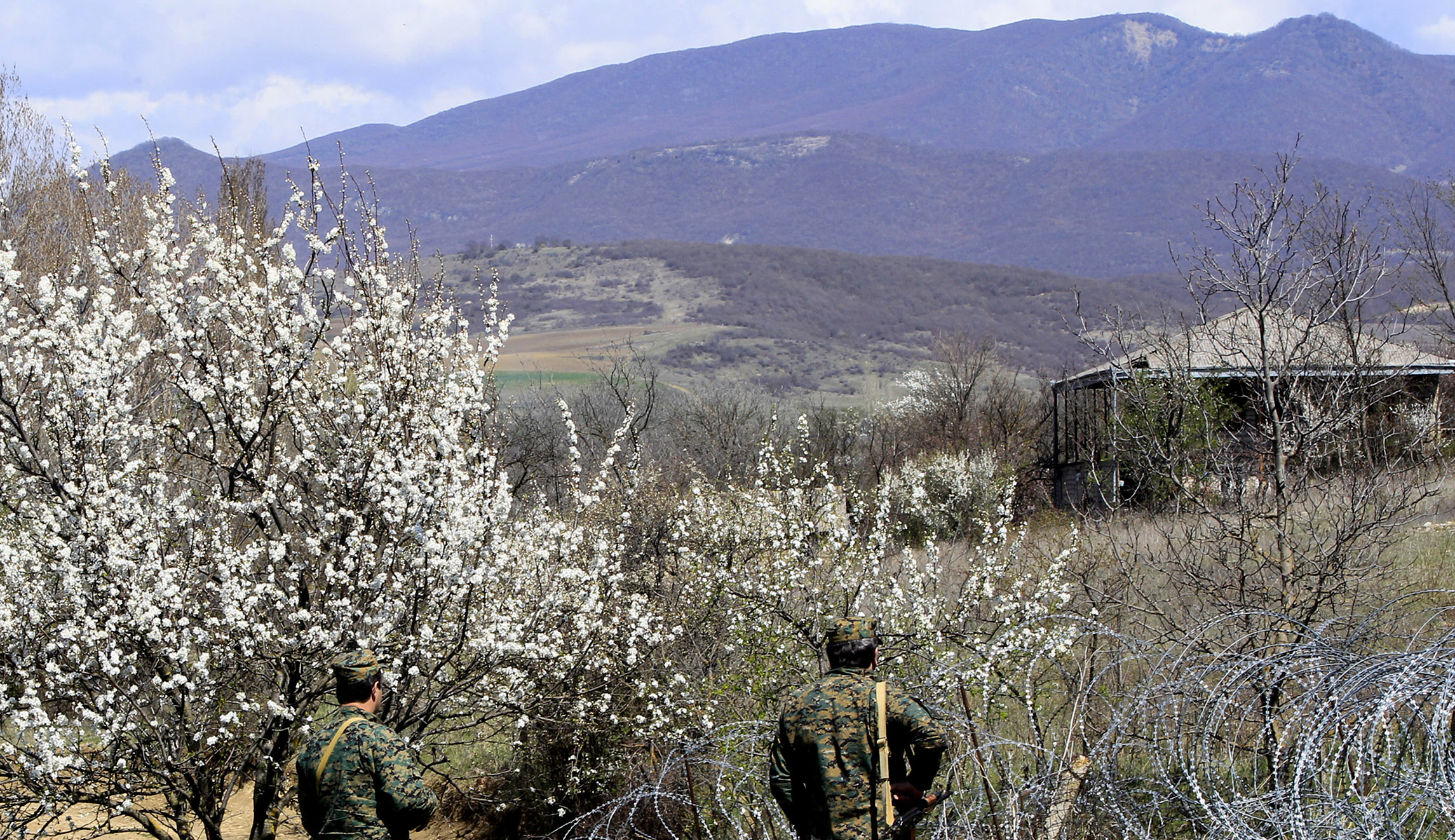
In a surprise emergency statement on Friday, the State Department warned of a “military buildup” in the Russian-controlled South Ossetia area of Georgia’s Shida Kartli region. What does this mean?
Probably either that Russia is intimidating the Georgian government into backing away from the South Ossetian border line or that Moscow is preparing for a new offensive.
First off, some context.
Along with the western Georgian province of Abkhazia, South Ossetia has been controlled by Russian proxies since the 2008 Russo-Georgian war. But while tensions between Georgia and Russian proxies in South Ossetia have been growing, the State Department’s warning almost certainly means the U.S. intelligence community has verified Georgian reports that Russian or Russian-supported military forces are now massing in unusually large numbers.
In turn, the Russian foreign ministry is calling for calm. It says that a newly constructed Georgian security checkpoint on South Ossetia’s southwestern periphery is responsible for the tensions. This is a false excuse: Russia has been expanding its frontier control over South Ossetia for the past few weeks.
Russia retains final control over militia forces in South Ossetia. If it wants to, Moscow can get any military force in South Ossetia to back down. If the Russians do not intend to launch a new offensive, they might simply be warning Tbilisi to back away from the areas just bordering South Ossetia.
Yet, the broader political context here also cannot be ignored. In June, a Russian nationalist parliamentarian, Sergei Gavrilov, sparked huge protests in Georgia after sitting in the Georgian parliamentary speaker’s chair without permission. Voice of America’s Ani Chkhikvadze suggested to me that the South Ossetian buildup might be a precursor to a limited Russian incursion, designed to show Georgians Moscow’s dissatisfaction with the Gavrilov protests. Put another way, Russia may be trying to show Georgia who is boss.
This is certainly something that would play well with Russian President Vladimir Putin’s nationalist base, especially at a time where the Russian leader is witnessing an unprecedented decline in his (admittedly still strong) approval ratings.
When you’re dealing with Putin, unpredictability is the rule. We’ll just have to wait and see what happens next.
