

China will keep a close watch as the Taliban overrun Afghanistan to see whether it can gain economic or strategic capital by working with the militant group.
Kabul, the capital of Afghanistan, fell to the Taliban in a matter of days rather than the weeks expected by many outside observers. The Taliban have sowed violence across the country and, as of Monday, have effectively dissolved the Afghan Armed Forces as the United States withdrew.
Recommended Stories


On Monday, a Chinese government spokesperson said the country is gearing up for “friendly and cooperative” relations with the Taliban and “welcomed” the opportunity for Beijing to grow its economic and political ties with Kabul.
“The Taliban have repeatedly expressed their hope to develop good relations with China and that they look forward to China’s participation in the reconstruction and development of Afghanistan,” said Foreign Ministry spokeswoman Hua Chunying.
CHINA LOOKS FORWARD TO ‘FRIENDSHIP’ WITH TALIBAN BUT DOESN’T RECOGNIZE THEIR RULE — YET
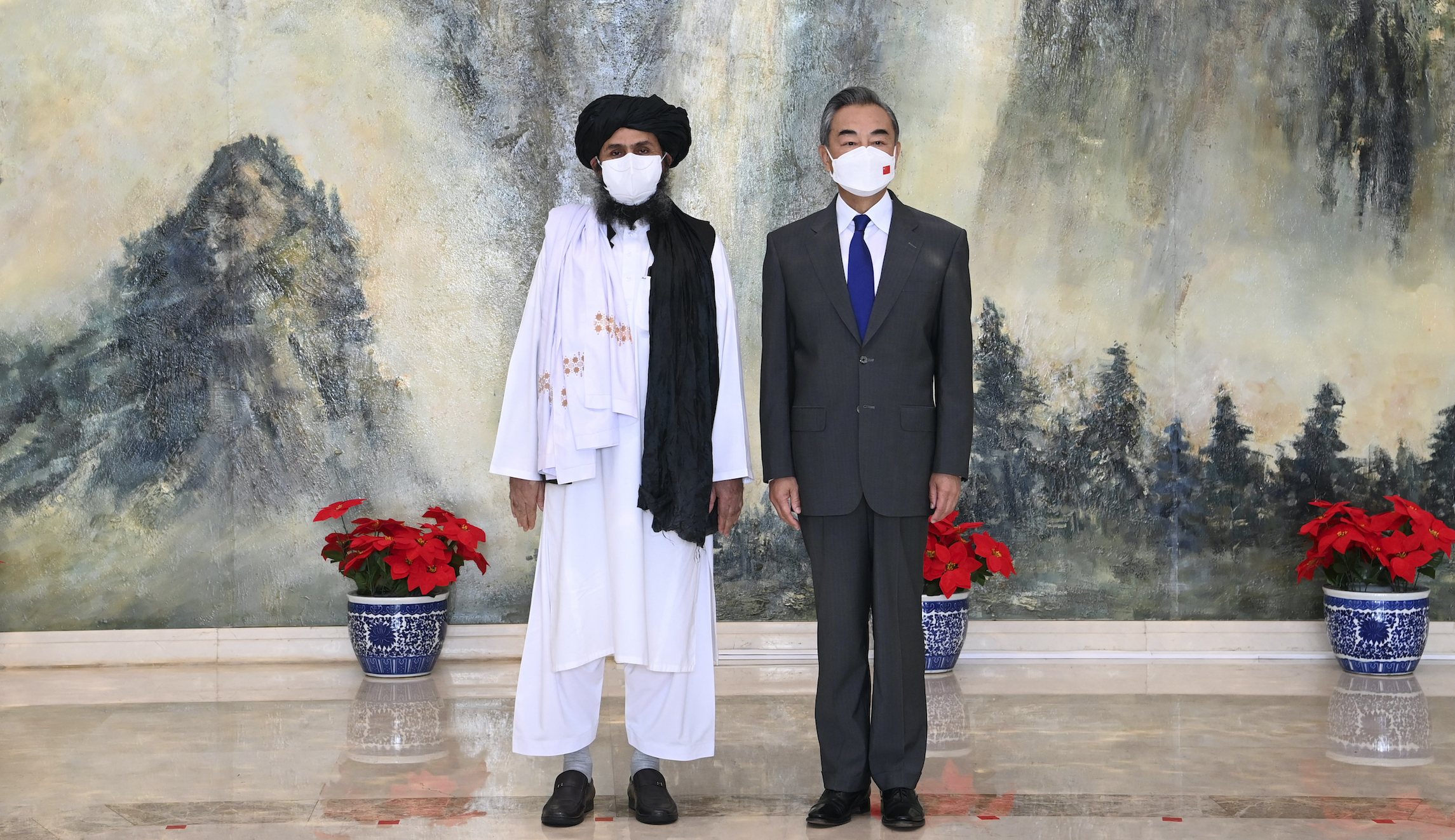
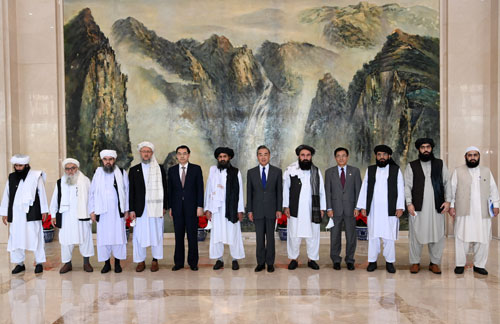
China also appeared to be planning for the likelihood that U.S. withdrawal would precipitate Afghanistan’s return to Islamist rule and recently hosted top Taliban officials in Tianjin. The Taliban delegation met with Chinese Foreign Minister Wang Yi and was led by Mullah Abdul Ghani Baradar, who now occupies Kabul’s presidential palace.
Wang characterized the Taliban as “a crucial military and political force in Afghanistan that is expected to play an important role in the peace, reconciliation, and reconstruction process of the country.” A Taliban spokesman said after the meeting, China said it would not interfere with Afghan matters but “will help to solve the problems and restoration of peace in the country.”
While not as vast as some other Asian countries, the economic opportunities for China in Afghanistan are still sizable. For example, the country holds an estimated $1 trillion to $3 trillion worth of minerals. Some reports also indicate it houses one of the world’s largest deposits of rare earth elements, which are used to produce military weaponry, batteries, and other high-tech goods.
Chinese investment in Afghanistan will depend on whether China perceives the Taliban’s hold on the country as stable.
It is risky for a company — for example, a mining operation — to send workers into a country wracked with civil war and violence. There are also existing Chinese projects, such as oilfields in Faryab and Sari Pul, that have seen little progress in past years amid fighting between the Taliban, Islamic State, and Afghan forces.
“For the time being, I think they’re going to dance around and see what plays out, and then if the Taliban does end up on top, they will do some negotiation with the Taliban,” said Matthew Schmidt, a University of New Haven associate professor of national security and political science.
Schmidt predicted the chaos in Afghanistan splashed across TV screens will subside as Taliban rule takes hold, as the militants are willing to use extreme violence to crush dissent and bring about fearful stability.
“The Taliban regime will be terrible, but a relatively stable regime,” he said, drawing parallels to North Korea.
CHINA IS CAPITALIZING ON AFGHAN DEBACLE
If China does invest in Afghanistan and further its relationship with the Taliban, it has the potential to not only bring increased influence and resources to Beijing but also could provide the ruling Taliban the one thing it needs most to hold on to power: hard currency.
The flow of Chinese funds into the pockets of Taliban leaders could pose a threat to the U.S. and its interests, according to Schmidt, who pointed out the hard currency could be used to buy equipment and plan operations. He emphasized, though, that “there is no indication that the Taliban has any interest in international terrorism.”
Instead, he said, it is more likely they would use it to build up the state and line their own pockets.
Chinese has decadeslong plans, named the Belt and Road Initiative, to develop infrastructure and invest in dozens of countries. China has already invested heavily in neighboring Pakistan as part of the China-Pakistan Economic Corridor.
Discussions between China and the Taliban are likely to continue this week even as other countries evacuate their citizenry. Hua, the Foreign Ministry spokesman, said on Monday that while most Chinese nationals had returned to the mainland, the Chinese Embassy in Afghanistan is “operating as usual.”
Meanwhile, amid bipartisan criticism over the U.S. withdrawal, Biden defended the decision to pull out during an address to the nation where he asserted the mission in Afghanistan was “never supposed to have been nation-building.”
