

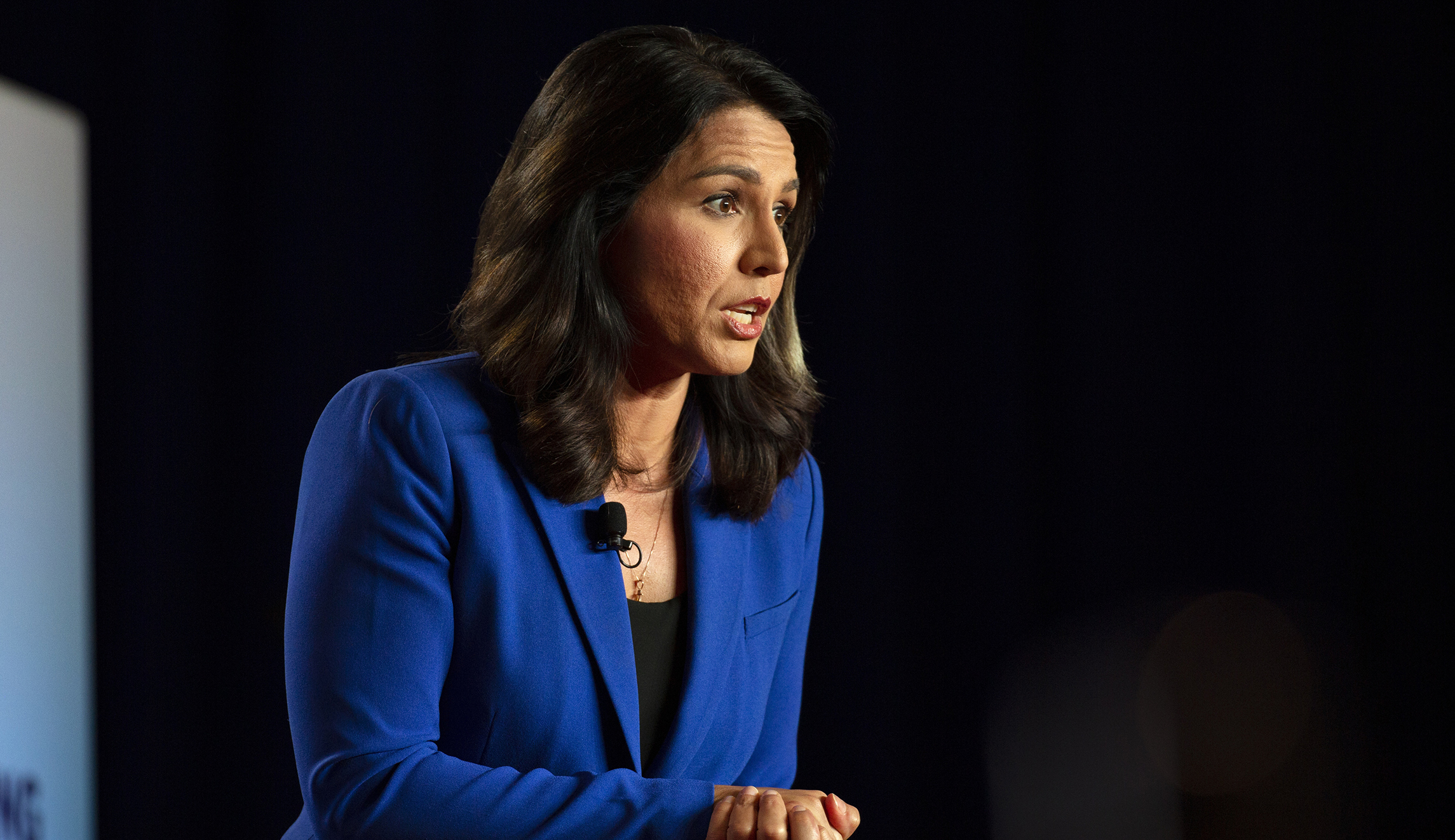
Everybody knows the Democratic establishment hates Tulsi Gabbard. But few of us, until now, considered that big tech could be in on the game to tilt the 2020 Democratic presidential primary against the Hawaii congresswoman.
On July 25, the Gabbard campaign filed an explosive lawsuit in federal court against Google, alleging that the tech company violated the candidate’s constitutional rights and committed fraud. Gabbard seeks $50 million in damages, claiming that Google has irreparably harmed her candidacy.
Recommended Stories


Her case seems to lack legal merit, but calls attention to an important issue nonetheless — whether companies such as Google are handling their increasingly concentrated power over our democracy responsibly.
After the first Democratic presidential debate in early July, Gabbard made quite the splash: She was the most-searched candidates for hours after programming ended. Her campaign was prepared for this, and was using Google Ads to reach people interested in Gabbard’s candidacy. But Google arbitrarily, and without warning, suspended Gabbard’s Google Ads account right as searches for her name spiked.
The lawsuit reads:
Obviously, this caused her campaign tremendous harm in missed publicity and campaign donations. Google’s actions were clearly harmful, but were they illegal?
The courts will ultimately decide, but at first glance, it seems like the answer is no. The Gabbard campaign’s claims that Google violated her First Amendment and California state constitution free speech rights rest on the weak and unprecedented assumption that Google, a private company, is somehow a state actor. Their claim that Google violated California civil rights law, too, ignores that political affiliation is not a protected category under the statute in question.
I read the Gabbard campaign’s complaint against Google. It has standing problems, constitutional problems, state law problems, and a CDA § 230 problem.
It has so many problems it’s hard to know where to begin. If you would like, you can read it here: https://t.co/zNFLfi0GLe
— Gabriel Malor (@gabrielmalor) July 25, 2019
But Google does have a moral obligation to be transparent with consumers, and so far, it looks like that’s not the path they’ve chosen. After all, they claim to be neutral in their Google Ads program. Google Spokeswoman Riva Sciuto said “We are proud to offer ad products that help campaigns connect directly with voters, and we do so without bias toward any party or political ideology.”
Both their treatment of Gabbard and leaked evidence showing how Google employees sought to ban right-wing website Breitbart from Google Ads suggest this might not be the case.
Even more importantly, this lawsuit reveals just how much power and influence Google could have over our elections. As Gabbard’s lawsuit points out:
The idea that a private company with a near-monopoly wields that much power over our democracy is downright disturbing. It only increases Google’s ethical responsibility to make sure that these kinds of mistakes or abuses, such as their treatment of Gabbard and potential algorithmic bias, don’t ever happen.
If Google fails to act as a responsible steward of the public trust, it may unfortunately fall victim to the growing chorus of populist voices, both left and right, that seek to hamstring the digital entrepreneur with heavy-handed regulation. For that, they’d largely have their own misconduct to blame.
