No one likes to open their Baltimore Gas & Electric Co. bill these days. The prices cause many people to gasp for air. But as Peter Van Doren of the Cato Institute and University of Maryland Baltimore County professor Timothy Brennan said at a Maryland Public Policy Institute forum Thursday, no simple solutions exist to lowering electricity prices in either a regulated market or a partially deregulated market like Maryland.
We like to offer readers clear solutions. And the vast majority of the time, that means allowing the free market to work. But electricity markets may be “different” than other markets, largely because electricity must be used as it is generated. It?s not a pair of jeans that can be stored in a warehouse and shipped to a store with low inventory. It must be used right away. And it can only go where lines provide it access.

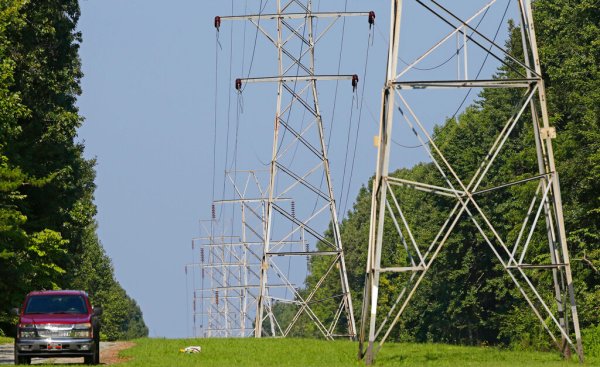
So even in “deregulated” states, supply is limited by the number of lines that can carry it, prohibiting a truly free market. And because of environmental and aesthetic preferences, building more lines and plants will be difficult. As Van Doren said, “Once you get rich enough, people don?t want anything anywhere.” And Maryland is the wealthiest state, according to the census data on household income, so we can expect fights over new electricity projects.
Another issue is state governments do not control commodity prices. Macroeconomic forces shape those, and prices will be passed on to consumers in both regulated or deregulated markets. Over time, consumers pay about the same in both environments, so calling for a switchover to a regulated market in Maryland is not a panacea. Nor are long- or short-term contracts locking in a certain price, as invariably some contracts will lock in cheap prices and others will force consumers to pay peak prices even if the market sends commodity prices lower.
So where do we have control? Over our own use. But we don?t have full control because power companies charge us one rate for electricity use even though prices fluctuate widely depending on the time of day and year. The Public Service Commission and power companies should push to give us that control. This means power companies should start charging consumers based on the cost of electricity at the time used. That way, families and businesses have the ability to limit power use at peak hours and shift it to cheaper off-peak times. This would require new interactive meters that allow customers to see real-time prices and ultimately software for home computers to help regulate appliance use. California is starting to test this system.
The Public Service Commission should watch this experiment closely and study what it would cost to shift to real-time meters. Giving consumers more control over their bills should be a no-brainer for both parties.