Recently, activist students who conceive of themselves as fighting for the rights of transgender people disrupted a scheduled event of Stanford University Law School’s Federalist Society chapter, preventing a federal judge from speaking. When he appealed to Associate Dean of Diversity, Equity, and Inclusion Tirien Steinbach to restore order, she proceeded instead to read six minutes worth of her own pre-written comments, hectoring the jurist for his “opinions from the bench,” which she characterized as “literally denying people’s humanity.” Explaining her behavior over protests from the invited speaker, Steinbach admonished: “if it was just words that would be one thing, but you have authority … [to] impact the lives of millions.” She concluded by reminding students that, though they were free to stay and listen, they were also free to walk out in protest — implicitly, they should do so.
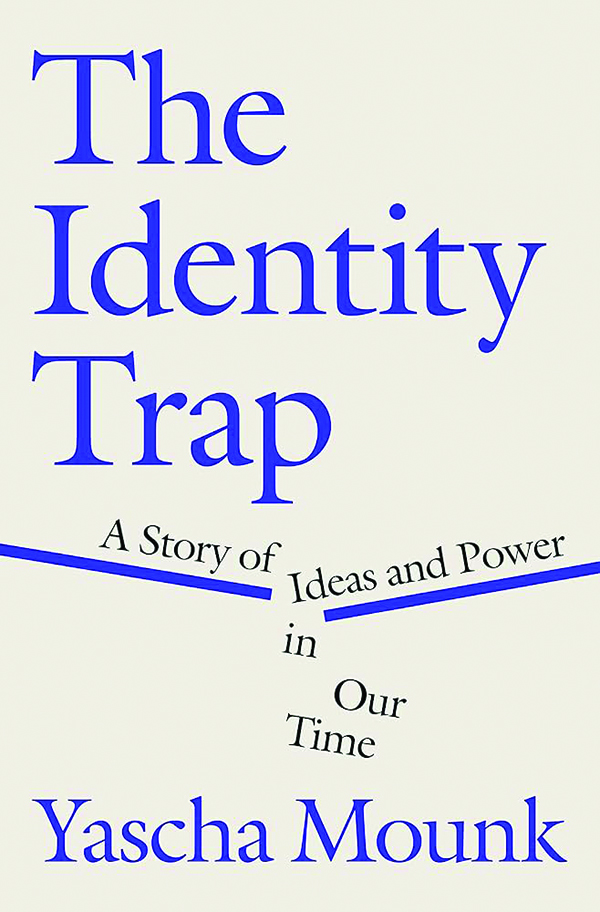
This episode perfectly dramatized the impulses, ideas, vocabulary, and consequences of what political scientist Yascha Mounk calls “the identity synthesis.” Mounk’s latest book, The Identity Trap, begins with an intellectual genealogy of the “seven fundamental propositions” uniting identity synthesis scholarship. These include a postmodernist “skepticism about objective truth”; postcolonialist “discourse analysis” that (somewhat contradictorily) rejects essentialist racial labels as oppressive fabrications while making “strategic” use of them to politically organize groups; race-critical rejections of Western societies as structurally oppressive with calls for race-conscious policy prescriptions; and “intersectional” denial that “members of different identity groups [can ever] understand each other.” The precision, clarity, and brevity of this survey suggest the deep fluency with relevant academic literature we should expect from an associate professor at Johns Hopkins. But The Identity Trap is not a scholarly work as such. The chief virtue of this timely book is the accessible style characteristic of a popular writer regularly published by outlets such as the Atlantic and Slate.