

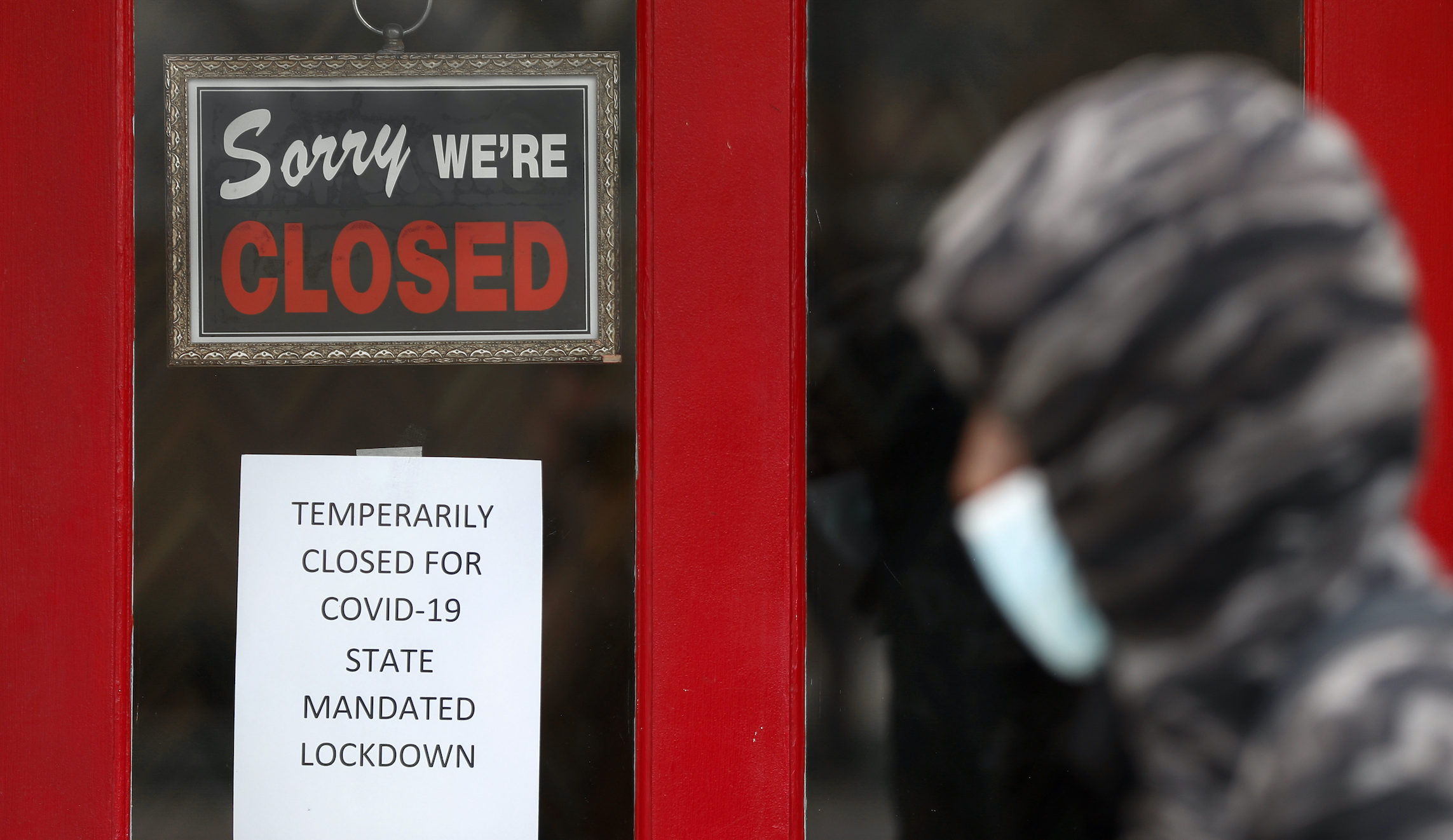
The economy lost 20.5 million jobs in April, the Labor Department reported on Friday, as the coronavirus wreaked a historic amount of havoc on employment.
The unemployment rate also skyrocketed to 14.7% in April, up from 4.4% in March.
Recommended Stories



President Trump told Fox News that the job numbers were “totally expected” and that “there’s no surprise.” He also said that he will “bring it back.”
Unemployment rates rose to record highs across most categories of workers, including for men, women, teenagers, whites, Hispanics, and Asians. Almost two-thirds of all jobless workers consider themselves to be temporarily unemployed and hope to return to their jobs soon, illustrating the danger facing the country if the pandemic is not controlled and workers cannot take back their old jobs.
Friday’s report is the worst on record. The federal government has never reported more monthly job losses since it began charting them in 1939. There has also not been a higher monthly unemployment rate since it began tracking it in 1948. The highest annual unemployment rate was 24.9% in 1933, during the Great Depression.
April’s job losses exceed the number of positions that have been created since 1998.
“This has got to be the most heartbreaking day in the history of the job market,” said Austan Goolsbee, a former economic adviser to President Barack Obama, speaking on CNBC.
“We have to hope that this is not a normal business cycle and that it’s not going to take more than a decade to work this thing back down,” he said.
Two of the sectors hardest hit by the virus are the travel and tourism industries. Flight cancellations, closed hotels, and shuttered attractions because of the virus are expected to cause the loss of 8 million jobs in the United States and more than 100 million worldwide, according to a report by the World Travel and Tourism Council.
The restaurant industry has also taken it on the chin. The sector is projected to lose $80 billion in sales by the end of April, according to the National Restaurant Association.
Friday’s jobs report also shows that hourly wages ticked up in April, to $30.01 from $28.67 in March. This is a result of more low-wage workers losing their jobs than higher wage earners, meaning there were relatively more higher wage earners included in the wage calculation.
The country faces the risk that shutdowns meant to slow the spread of the virus could, if extended long enough, generate a depression. A new Society for Human Resource Management survey shows that 12% of small-business owners said their businesses could not last another month, and 52% said they would close within six months.
Washington has enacted a series of bills totaling more than $2.5 trillion to provide relief. The House is expected to vote on an additional piece of legislation when it returns next week.
