

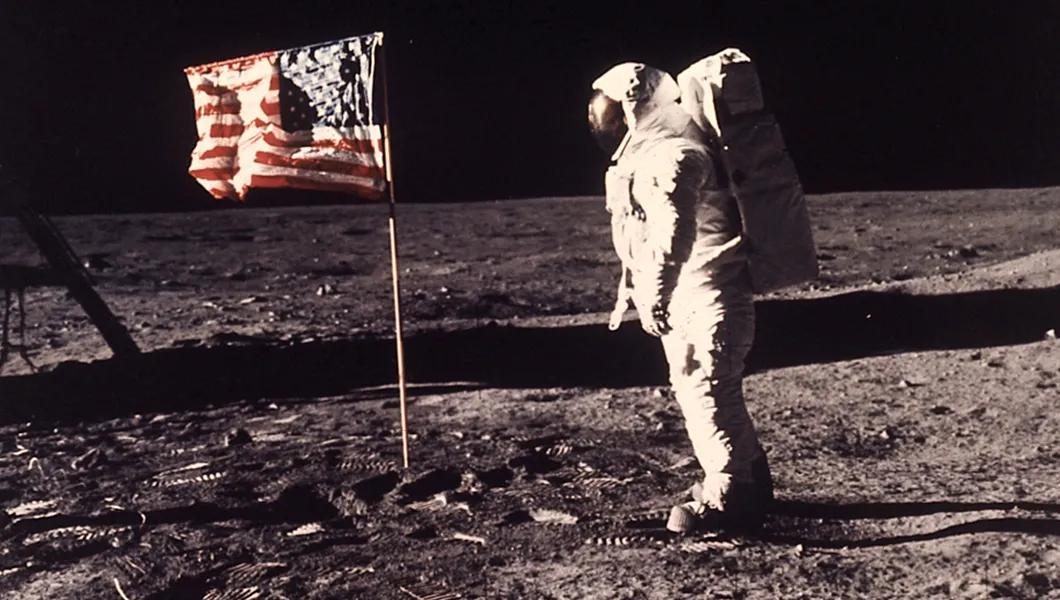
In July 2019, the country marked the 50th anniversary of two historic events.
On July 16, 1969, a Saturn V rocket blasted off from a launch pad at Cape Canaveral, bound to fulfill President John F. Kennedy’s goal of safely landing astronauts on the moon and returning them to Earth before the decade was out. Three days after the launch, the late president’s brother, Sen. Ted Kennedy, drove his car off a bridge in Chappaquiddick, Massachusetts, leading to the death of 28-year-old Mary Jo Kopechne.
Recommended Stories


Both events still elicit strong emotional responses.
As a rookie in the news business at that time, I remember how the media covered those stories. We covered them largely the way we had been taught to cover all news: down the middle, sticking to the official facts, explaining clearly and leaving opinionated speculation to the editorial pages and columnists. There was more respect for authority and less partisan skepticism on the part of reporters. This dynamic shaped the way people consumed both news stories for the better and the worse.
“We Walk on Moon: ‘A Leap for Mankind’” proudly read the front-page headline of The Buffalo Evening News, the newspaper I worked for at that time. That day’s editorial cartoon showed an American flag firmly planted among the craters on the pock-marked surface of the moon. Its caption read, “So Proudly We Hail.” The only somewhat negative story found in the paper was one that said Congress is unlikely to give NASA a “blank check” for further space exploration.
Compared to the moon landing, the Kennedy tragedy received restrained media coverage. “Kennedy Passenger Dies in Car Plunge,” read the front-page headline in the July 20, 1969, Washington Post. Even in Washington, D.C., the story appeared below the main headline, “Apollo in Orbit, Set for Landing.”
In today’s highly charged news and social media atmosphere, it is quite unlikely we would cover those events so straight. On Apollo, liberal reporters would likely raise gender equity and cost issues, tarnishing the glow of the moon story. There would be criticism about how all three of the astronauts were white males, as were most of the scientists and engineers on the ground.
Stories about privilege and the discrimination against women and minorities would run alongside pieces detailing the accomplishment. Then, there would be articles about how much taxpayer money the president was wasting on the space program when so many Americans were lacking good-paying jobs, adequate healthcare, housing, nutrition, and effective education. Astronauts and their lily-white, story-book families would be ridiculed and harassed on social media.
The Kennedy coverage would have veered even more rapidly into hysteria. A media horde would swarm Martha’s Vineyard to do live-on-the-spot reporting from the Chappaquiddick bridge. They would build mock-ups of how the car was positioned in the water, how deep the water was, and bring in diving experts to speculate whether Kennedy could have saved Kopechne. TV talk shows would impanel pundit juries and focus on whether he was guilty or not. There is no way inquisitive reporters would have accepted Ted Kennedy’s flimsy excuses about why he had a single woman in his car at 12:30 in the morning.
By the end of the first week, if not within days, media and political calls for Kennedy’s resignation and prosecution might have reached deafening proportions. In the #MeToo era, there’s no way he would have considered and won reelection.
Clearly, the news media have great power in shaping how the public thinks about and reacts to the happenings of the day. Now, with media at our fingertips every waking second, that power has exponentially exploded. The media in 1969 were more respectful and dignified, more naïve and willing to overlook scandalous behavior. Over the last five-plus decades as a reporter, I have watched the situation evolve and slowly grow more adversarial and agenda driven.
Times have definitely changed. Reporters would not let Ted Kennedy get away with alleged murder if Chappaquiddick occurred yesterday, which is good. But the modern press corps has lost the ability to produce the unified and uplifting coverage that captivated the country when Apollo 11 reached the lunar surface, and that is very unfortunate.
Richard Benedetto is a retired USA Today White House reporter and columnist. He teaches political science and journalism at The American University and in The Fund For American Studies program at George Mason University.
