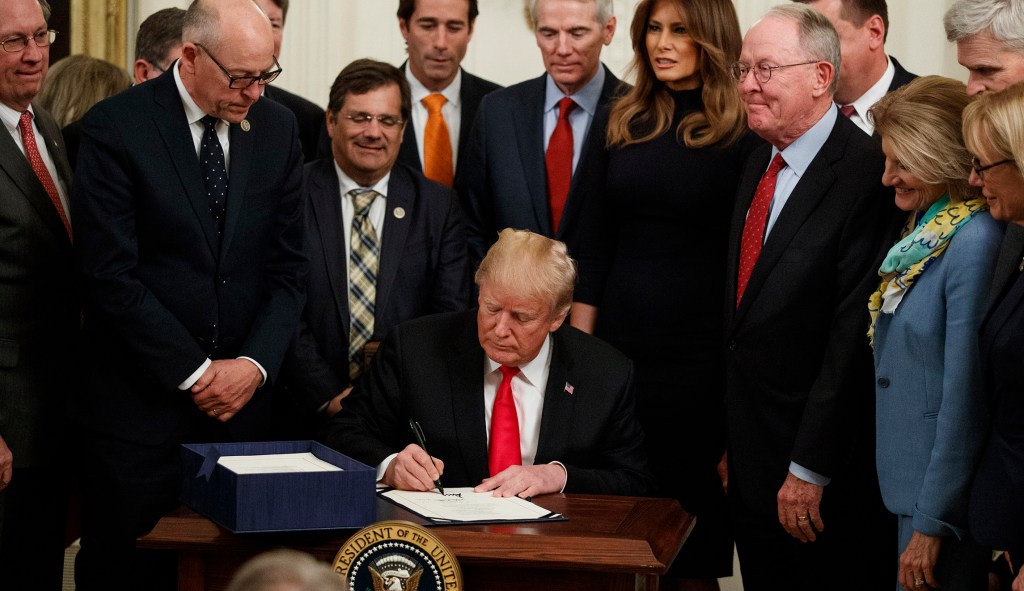
On Wednesday, President Trump signed an omnibus opioid crisis bill that Rep. Greg Walden, R-Ore., the bill’s author, called “the most significant congressional effort against a single drug crisis in history.” Known as the SUPPORT for Patients and Communities Act, it’s a conglomeration of more than 60 bills that appropriate billions of dollars to a plethora of House Energy and Commerce Committee actions. Just in time for the midterms, some congressmen can now say they “addressed the opioid crisis.” But given that the bill bolsters many prior and dangerous interventions, we should only expect the crisis to get worse because of it.
In the last decade, the media failed to discuss the opioid crisis, although regulators started to notice a steady rise in opioid-related deaths and opioid prescribing. As early as 2002, this observation prompted federal funding for state-level prescription drug monitoring programs (PDMPs), which are electronic databases that allow the government to surveil its citizens’ medical prescribing history. At first, PDMPs were an optional service for doctors, but as opioid overdoses rose more than 180 percent between 1999 and 2012, many states started mandating various forms of doctor participation.