

Now that President Biden has signed the $1.9 trillion COVID-19 spending package into law, House and Senate Democrats are gearing up for a sweeping infrastructure package likely to come with an even higher price tag.
Democrats have been meeting with President Biden about the future package, which they hope will address the nation’s crumbling infrastructure as well as climate change concerns that are also a top party priority. Senate and House committees have started working on proposals, and Democratic aides said they anticipate legislation as early as May.
Recommended Stories



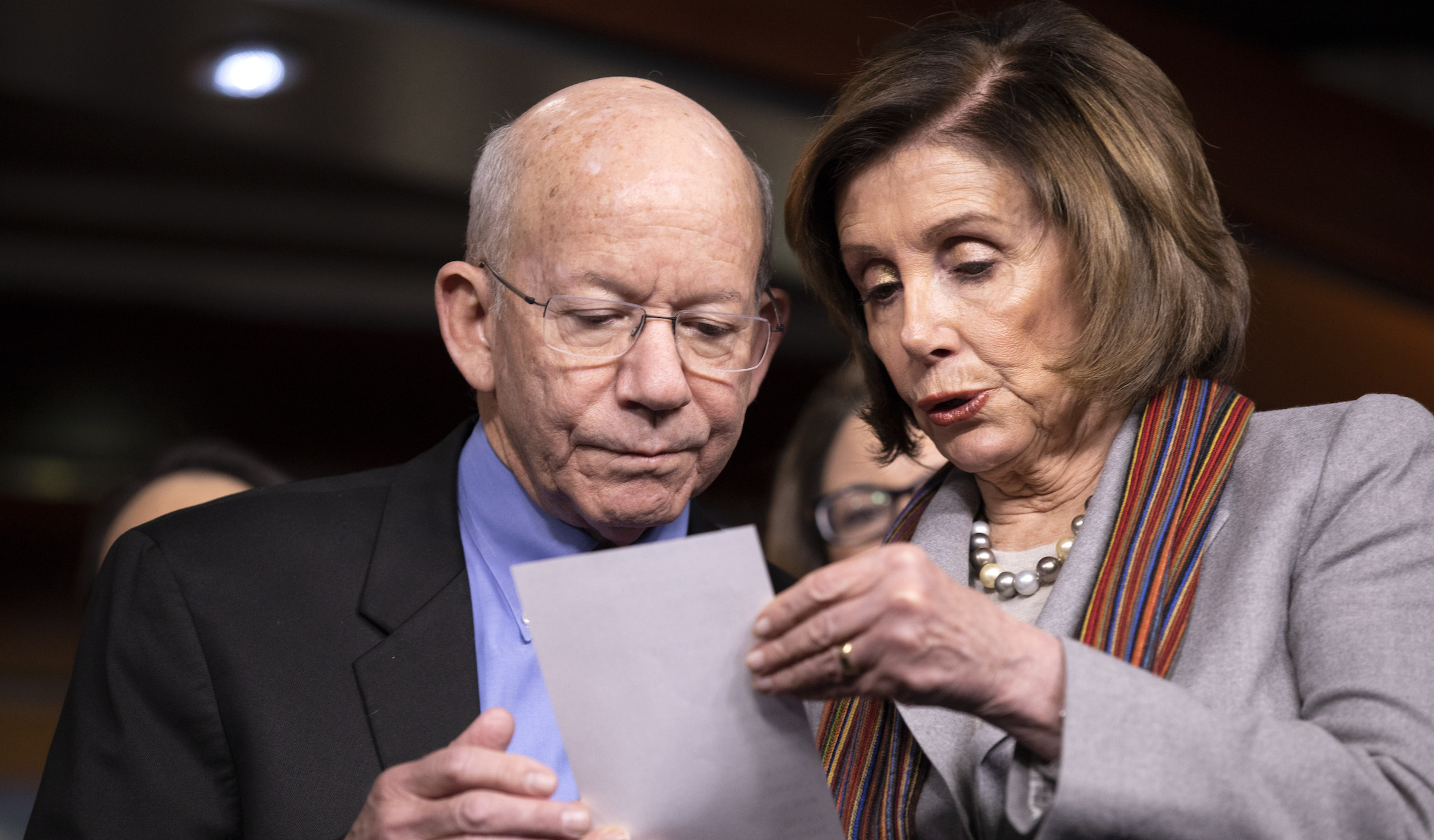
“He wants to move as quickly as possible,” House Transportation and Infrastructure Committee Chairman Peter DeFazio, an Oregon Democrat, said after meeting with Biden recently. “He wants it to be very big, and he feels that this is the key to the recovery package.”
The size and scope of the bill, while still unknown, is likely to run in the multitrillion-dollar range and will almost certainly run afoul of Republicans.
Democrats are planning to try to circumvent a likely GOP Senate filibuster by using a special budgetary tactic that would allow them to pass the bill with only 51 votes instead of the usual 60. Senate Democrats employed the same process to pass the COVID-19 aid spending bill, which did not earn a single Republican vote.
For now, Biden and key centrist Democrats are eager to try to craft a package that can win GOP votes. Republicans, like Democrats, view infrastructure as a critical need, but they differ dramatically on how to pay for and repair the nation’s crumbling roads and bridges.
The Democratic-led House last year passed a $1.5 trillion infrastructure bill that included many clean energy and zero-emissions provisions as well as language bolstering labor unions.
Only three of the 188 Republicans in the House supported it, and the GOP-led Senate ignored the measure.
Republicans who met last week with Biden said to win GOP support, the infrastructure bill can’t add to the deficit, and they won’t back legislation loaded with green energy provisions and other liberal wish list items.
“A transportation bill needs to be a transportation bill that primarily focuses on fundamental transportation needs, such as roads and bridges,” said Rep. Sam Graves of Missouri, who is the top Republican on the Transportation panel. “Republicans won’t support another Green New Deal disguising itself as a transportation bill.”
Across the Capitol, Republicans are eager to have a say in the package and want to work out a bipartisan deal, despite the increasingly frayed relationship between the two parties.
“This is really the best chance to do something together,” said Sen. Lindsey Graham, a South Carolina Republican and member of the Senate Environmental and Public Works panel. “It may be the only chance.”
While Biden campaigned on a $2 trillion, climate-focused infrastructure package, he has not produced a specific proposal since taking office. House and Senate Democrats are building a framework.
The price tag could be in the $2 trillion to $4 trillion range and like the House infrastructure bill that passed in 2020, will center on green energy jobs and moving the nation toward zero carbon emissions.
The legislation will include improvements not only to roads and bridges but also water infrastructure and expanding access to broadband technology.
Democrats haven’t decided how to pay for the bill but are mulling a gas tax or reversing energy tax breaks and some of the Trump-era tax cuts.
Speaker Nancy Pelosi, a California Democrat, could not provide details about the bill when reporters asked her about it on Thursday but suggested it will be a significant package.
“We’ll have to pay for some of it,” Pelosi said. “But there’s no question. The most expensive maintenance of our infrastructure is no maintenance. It only just gets worse. So we see this as a tremendous opportunity all across America, creating jobs, promoting commerce, cleaning the air, improving quality of life. And we hope that it will be bipartisan.”
