

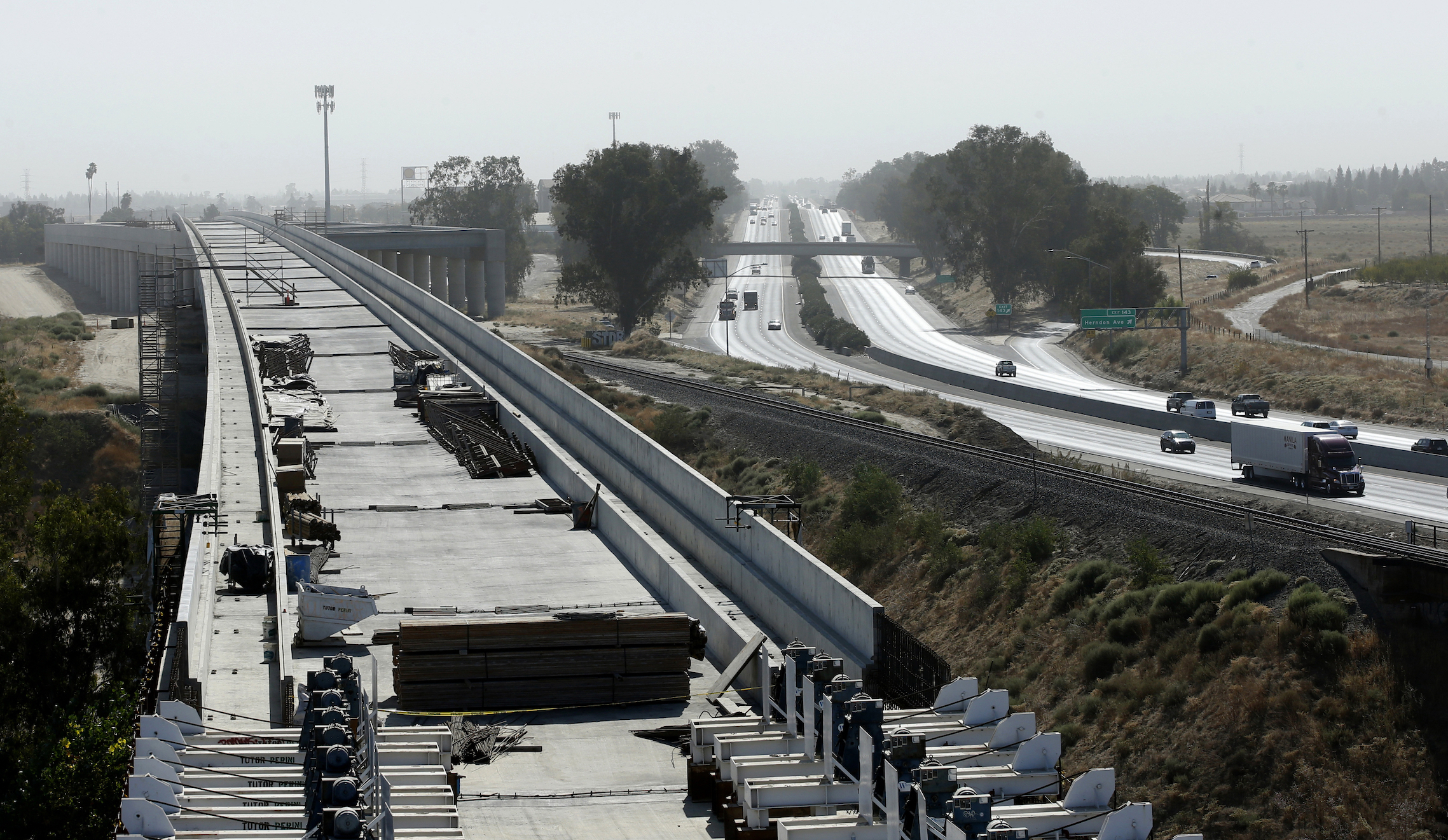
The House voted to pass a $715 billion transportation infrastructure and green energy measure that Democrats plan to use to negotiate a larger deal with the Senate and White House.
The measure passed 221 to 201, with all Democrats and two Republicans supporting it. The bill centered on mitigating climate change by reducing fossil fuels and directing more people to mass transit, electric cars, and other modes of transportation.
Recommended Stories


“The largest single source of fossil pollution is transportation in this country,” said House Transportation and Infrastructure Committee Chairman Peter DeFazio, an Oregon Democrat. “But where the world is moving to electric, like the corporations in America are moving to electric, but we’re stuck in the past.”
While the bill dedicates $343 billion to upgrading the nation’s crumbling roads and bridges, it provides $109 billion for transit, and $95 billion to passenger and freight rail. The measure would spend nearly $170 billion on water infrastructure projects.
BIDEN MAY POLITICIZE MIAMI CONDO DISASTER DURING VISIT
The measure includes new policy directives aimed at reducing fossil fuel use. One provision would require municipalities to first repair existing roads and bridges that need work before dedicating funding to building new ones.
The measure sets surface transportation spending levels for the next five years after a current authorization expires on Sept. 30.
But the bill will play a much larger role, Democratic leaders said, by serving as a starting point in the negotiations with the Senate and White House on a much larger infrastructure and social program spending package they hope to pass in the coming months.
Across the Capitol, a small, bipartisan group of senators reached a deal with President Joe Biden on a narrow infrastructure spending package that would spend $1 trillion on traditional infrastructure and far less on climate change initiatives.
Democrats want the narrow deal to be contingent on their own party unilaterally passing a much larger bill that would cost up to $5 trillion and would pay for universal preschool, free community college, money for caregivers, and massive spending on green energy initiatives.
Biden touted the bipartisan deal this week in La Crosse, Wisconsin, and said it would create millions of jobs while providing more mass transit and fixing crumbling roads and bridges.
DeFazio was less enthusiastic.
“The Senate bipartisan deal is an outline,” he said. “And it has good numbers, except I find them deficient on rail, but they’re within shouting distance.”
DeFazio also decried the lack of policy provisions in the bill, such as those in the House measure aimed at reducing fossil fuels.
“I’m suggesting that substantial amounts of the policy in our bill should be negotiated by the White House and the Senate and the House, to be part of that bipartisan proposal,” DeFazio said.
Most House Republicans voted against the bill. They argued Democrats wrote it without their input, although the measure includes GOP earmarks.
Rep. Garret Graves, who is the top Republican on the Transportation and Infrastructure panel, argued Democrats produced a partisan bill that cannot pass the Senate, where bipartisan compromise is needed to avoid a filibuster.
Graves, of Louisiana, said the measure “ties the hands of states that need to build roads and new capacity, even if that is their most critical need.”
The measure increases the size of the federal government by adding 41 new federal transportation programs, Graves added.
Republicans also oppose massive spending on climate change.
Graves said the bill spends half of all federal dollars on “the Green New Deal agenda” and wastes money by lifting a ban on spending money to decorate transit stations with artwork.
CLICK HERE TO READ MORE FROM THE WASHINGTON EXAMINER
“It’s insane, given the infrastructure needs we have in this country,” Graves said. “This bill is going to waste critical infrastructure resources on buying paintings and sculptures for transit stations.”
Democrats rejected a GOP amendment that would ban states from spending federal transit funding on artwork or landscaping.
