

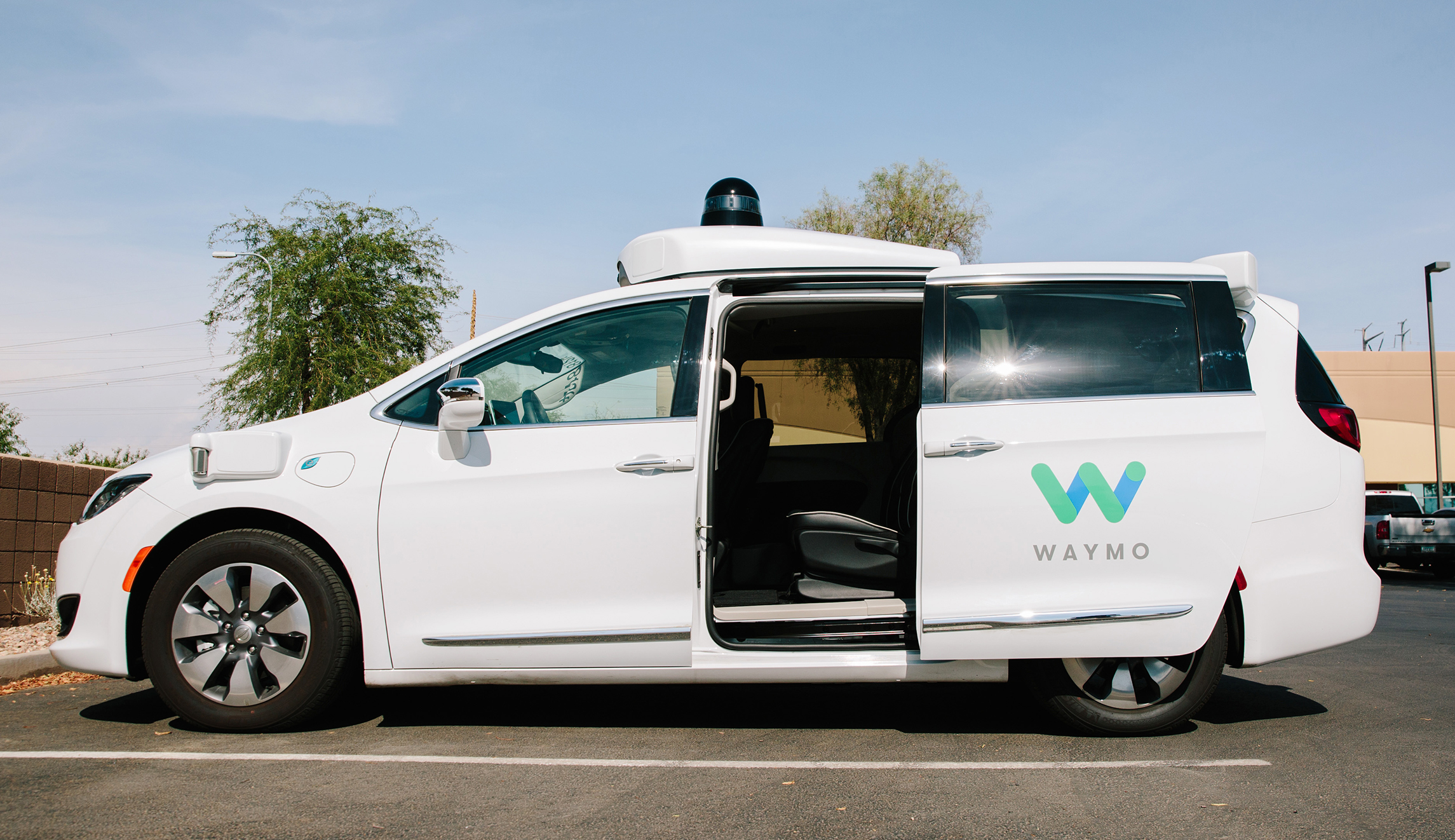
Car manufacturers are hoping autonomous-driving technology will spur a revolution among consumers, igniting sales and repositioning the U.S. as the leader in the automotive industry.
Companies like General Motors and Ford are shifting resources away from traditional product lines and — alongside tech companies like Google’s Waymo — pouring billions into the development of self-driving cars. Meanwhile, the industry is pressuring Congress to advance a regulatory framework that gives automakers the confidence to build such vehicles without worrying whether they’ll meet as-yet-unspecified regulations that might bar them from the nation’s highways.
Recommended Stories


Supporters say the technology holds immense promise in reducing traffic deaths and giving elderly individuals and other population groups access to safe and affordable alternatives to driving themselves. Achieving those benefits, however, will come with trade-offs.
GM announced this week it will free money for investing in such self-driving technology by shedding thousands of jobs and halting production in five North American plants, a decision that elicited backlash from President Trump as well as lawmakers from both sides of the political spectrum.
Other critics question the value of spending billions to develop the technology, which ranges from assisted driving to fully computer-controlled, without knowing the full investment cost.
“Software development for driverless cars is like a big black hole,” Mary Cummings, professor at Duke University’s Pratt School of Engineering, told the Washington Examiner. “How much longer can companies like GM and Ford keep putting money down this black hole? Their margins are not as fat as Google’s.”
While it will likely be years before customers can purchase a self-driving car for themselves, ride-sharing fleets of completely autonomous vehicles may reach roads in select U.S. cities as early as this month.
Below is a look at where the top companies stand on development:
Waymo
The firm, owned by Google parent company Alphabet, is widely viewed as the leader in the self-driving industry. It reportedly plans to begin commercial deployment of an autonomous ride-sharing fleet around Phoenix in December.
Waymo has been testing Chrysler Pacifica minivans outfitted with the technology since 2016, and Fiat Chrysler previously said it was providing the company tens of thousands of vehicles in advance of the launch.
A Waymo spokesperson didn’t respond to request for comment.
General Motors
The Detroit-based carmaker’s overhaul of North American operations this week is the latest in a series of steps to shift its focus towards developing autonomous-driving technology.
GM announced Thursday that Dan Ammann, the current No. 2 at the company, would lead Cruise, its self-driving subsidiary, signaling the manufacturer is moving past the development stage as it prepares to launch its commercial fleet in 2019.
GM hasn’t yet said where it will deploy its autonomous ride-sharing services — it has conducted on-road testing in San Francisco — and is still awaiting federal approval after filing an application in January 2018.
Cruise has drawn a $2.25 billion investment from Japanese-owned SoftBank Investments and $2.75 billion from Honda, bringing its total valuation to nearly $15 billion.
Ford
Ford isn’t planning to launch an autonomous ride-sharing and delivery fleet until 2021and said earlier this week it would recalibrate its workforce to accommodate growing demand for sport-utility vehicles and trucks — categories on which GM is also focusing.
“We’re not concerned with making marketing claims or being in a race for the first autonomous car on the road,” a spokesman said previously.
Ford is currently testing autonomous technology in its mid-size Fusion in the Detroit area, Pittsburgh, and Miami — where it partnered with Walmart and Postmates to test a grocery delivery service — and is planning to expand its efforts to Washington, D.C., in early 2019.
The carmaker has pledged to invest $4 billion in its autonomous-vehicle unit through 2023 and is in “active talks with various entities” on potential investments or partnerships.
Uber
The ride-hailing company is still dealing with fallout from a March accident involving its semi-autonomous vehicle that killed a pedestrian in Tempe, Ariz. Republican Gov. Doug Ducey later revoked the company’s permission to test in the state, and Uber laid off employees and halted operations in other cities.
Since then, the company has sought approval to resume testing in Pittsburgh. Toyota also announced it would invest $500 million in Uber, and its Sienna minivans will be equipped with Uber’s technology for use in a ride-sharing fleet.
Uber expects to begin receiving shipments in 2019 of the 24,000 self-driving sport-utility vehicles that it ordered from Volvo.
Tesla
The electric carmaker has been plagued with scandals in 2018, many centered around founder Elon Musk’s personal behavior, but the billionaire inventor is confident his company will be the first to perfect a fully self-driving car in 2019.
“I would be very surprised if any of the car companies exceeded Tesla in self-driving, in getting to full self-driving,” he said recently. “They’re just not good at software. And this is a software problem.”
Tesla already offers an autopilot feature on its vehicles, but the technology has been scrutinized in several accidents, including one involving the death of an Apple engineer.
