<mediadc-video-embed data-state="{"cms.site.owner":{"_ref":"00000161-3486-d333-a9e9-76c6fbf30000","_type":"00000161-3461-dd66-ab67-fd6b93390000"},"cms.content.publishDate":1655731222221,"cms.content.publishUser":{"_ref":"00000162-07c2-d172-a563-4fead0ed0000","_type":"00000161-3461-dd66-ab67-fd6b933a0007"},"cms.content.updateDate":1655731222221,"cms.content.updateUser":{"_ref":"00000162-07c2-d172-a563-4fead0ed0000","_type":"00000161-3461-dd66-ab67-fd6b933a0007"},"rawHtml":"
var _bp = _bp||[]; _bp.push({ "div": "Brid_55731212", "obj": {"id":"27789","width":"16","height":"9","video":"1034104"} }); ","_id":"00000181-8145-db25-adf7-f95f6d3d0000","_type":"2f5a8339-a89a-3738-9cd2-3ddf0c8da574"}”>Video Embed
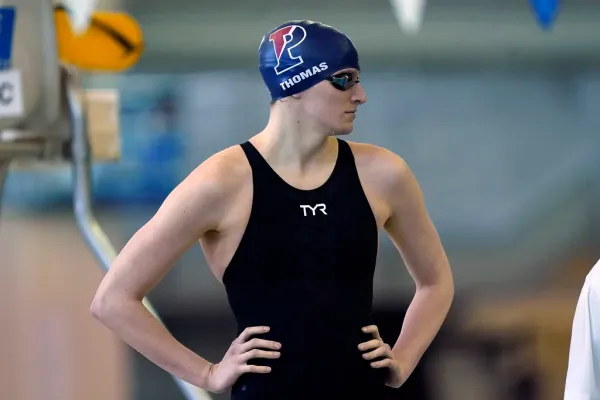
It took a while, but common sense finally prevailed about transgender female athletes as world swimming’s governing body voted on Sunday to protect female athletes’ right to fair competition. FINA adopted a new policy that stipulated that any transgender women who wanted to compete in women’s swimming must transition before age 12 to avoid the biological advantages of male puberty. This rule change comes after Lia Thomas, the former University of Pennsylvania transgender swimmer, dominated the women’s Ivy League swimming season this year and won a national championship.