Once upon a time, the main job of university presidents was to provide intellectual leadership. Before Woodrow Wilson became governor of New Jersey and rose to the presidency, he was the president of Princeton University, known for his scholarship on Congress. Kingman Brewster, Jr., was an anti-war activist and isolationist who volunteered for the Navy after the Japanese attack on Pearl Harbor. He served as a diplomat and administrator of the Marshall Plan before returning to an academic career, ultimately becoming Yale’s president. Succeeding him was A. Bartlett Giamatti, who distinguished himself as a renaissance man at Yale University, before moving on to run first the National League and then Major League Baseball.
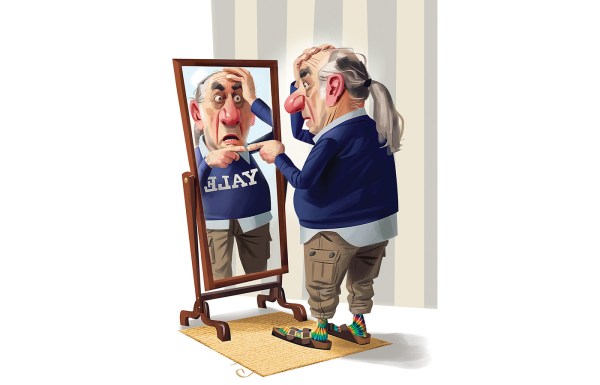
In recent decades, however, fundraising supplanted intellectual leadership among university presidents. University presidents have basically become CEOs, responsible for the bottom line. They measure their success in donations and endowment growth; intellectual leadership is often secondary, and with every year becoming less so as administration becomes its own career track distinct from a career producing academic scholarship. Indeed, one of the reasons why University of Chicago President Robert Zimmer’s declaration of commitment to free speech received so much attention was that it stood in such sharp contrast to the attitudes of so many other universities.