

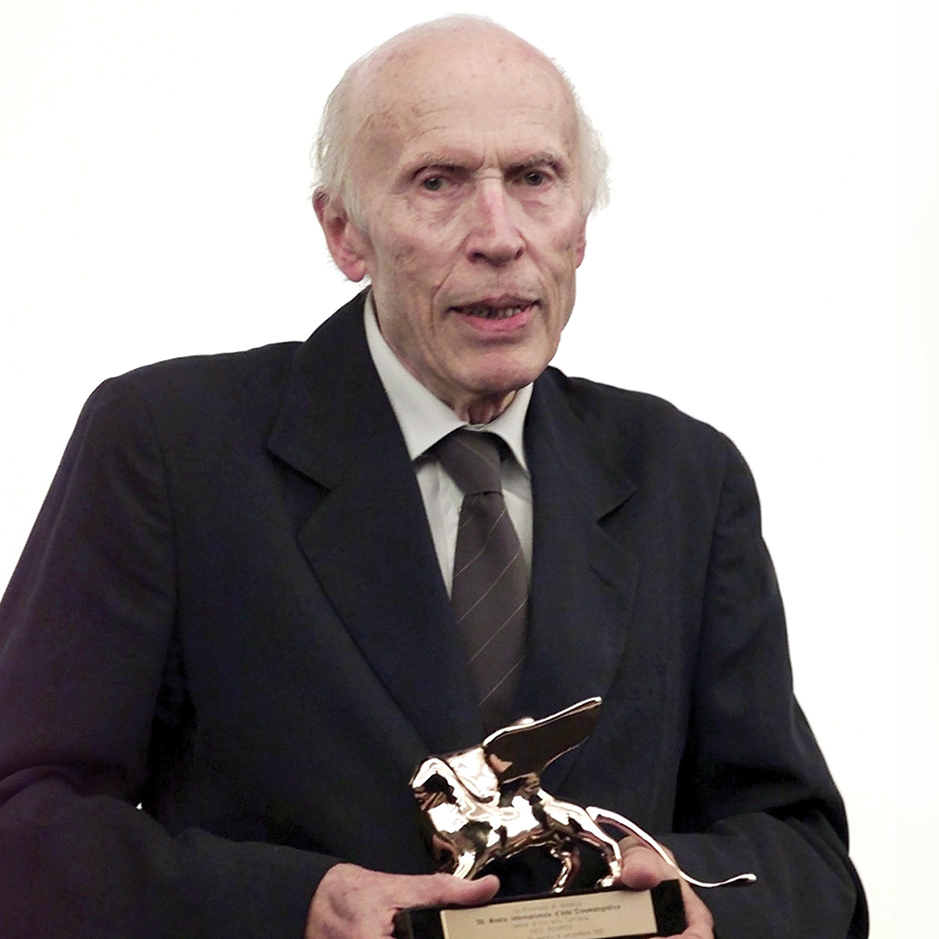
Eric Rohmer was 50 when his mother died in 1970. They were in regular contact, and he often took his two sons from Paris to see her at her home in Tulle. But she went to her grave convinced that her eldest child was a classics teacher at a provincial lycée. She had no idea that he had been editor of the world’s most influential magazine of film criticism, Cahiers du cinéma, or that he had recently directed the Academy Award-nominated film My Night at Maud’s. This is one of the many curious aspects of Rohmer’s life, and one of the revealing aspects of his impressive but peculiar character that comes up in this definitive biography of the writer-director.
It’s safe to say that Éric Rohmer (1920-2010) must rank either first or second among postwar French filmmakers. When you consider how many remarkable movies he made, and that his name has been turned into a widely used adjective in France—rohmérien—it’s hard to argue that anyone other than his friend François Truffaut can be regarded more highly. But it wasn’t only his mother who initially disregarded him: His tenure at Cahiers had ended with his dismissal, and he found himself, in 1963 at age 43, in the position of a failed moviemaker with a wife and two young children. Consequently, he spent the next few years making educational documentaries for the French government.
Stay informed.Stay ahead.
Join Washington Examiner for unlimited access to the news, analysis, and commentary that matter most.
Already a member? Log in
