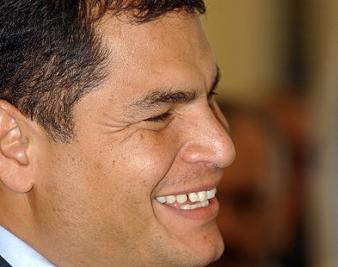
Like Hugo Chávez, Ecuadorean president Rafael Correa has used vast oil wealth to boost his personal popularity and camouflage the effects of his disastrous economic policies while steadily weakening his country’s democratic institutions. Correa has not gone as far as Chávez in his erosion of political freedom, but he has been quite aggressive in his persecution of independent journalists. Last July, for example, a columnist for El Universo, the main opposition newspaper, and three of its executives were sentenced to three years in jail for libel, after they published an article that called Correa a “dictator” and accused him of ordering soldiers to open fire on a Quito hospital during a 2010 police protest. The four men and El Universo were also told to pay $42 million in damages. On February 16, the Ecuadorean Supreme Court upheld this verdict.
Less than two weeks later, however, Correa announced that he was pardoning the men and their newspaper and forgiving the massive fines, which would easily have bankrupted Ecuador’s chief opposition media outlet. Insisting that he “never wanted this trial” and “never wanted anyone arrested,” the Chávez acolyte nonetheless hailed the case as a great victory over the “dictatorship of the media,” declaring that “the abusive press has been defeated.”