

It was a dichotomous moment in the 2016 race: Hillary Clinton, from the safety of a back room somewhere in New Jersey, told CNN’s Jake Tapper over the phone that she was eager to engage the media even as she dodged his questions as to why she had not, up to that afternoon at the end of May, held a press conference in 179 days.
“I believe that it’s important to continue to speak to the press as I’m doing right now,” the Democratic front-runner said as the network ran stock images of her past campaign appearances. She had not appeared on camera for an interview in weeks despite facing fierce criticism for her refusal to meet with a government watchdog that had spent more than a year probing her private email practices.
Recommended Stories


Hours earlier, Clinton’s likely Republican opponent had stood before a swarm of reporters and discussed allegations that he had withheld promised donations from veterans’ charities. Every cable news channel broadcasted the scene.
The contrast between Donald Trump’s raucous press conference and Clinton’s cloistered phone interview that day could hardly be more stark. Faced with multiple investigations into her decision to set up a private server, Clinton has ducked inquisitors at every turn.
But when a handful of reporters raised relatively minor concerns about the fruits of a fundraiser Trump held last year, the presumptive Republican nominee faced the media. It’s a juxtaposition that has fueled Trump’s improbable popularity with voters from both parties while dragging down Clinton’s already low favorability numbers.
In an election year marked by frustration with the political elite, Clinton’s insider ability to evade the press, law enforcement agents, an inspector general inquiry and several congressional probes has been thrown into sharp relief by Trump’s outsider aggressive tack. It reinforces the notion that the Washington elite are afforded protection that others don’t get.
Clinton’s years in power have been marred by controversy, from Whitewater to her more recent friendliness toward Clinton Foundation donors. She has often teetered on the line between genuine victim of partisan targeting and actual perpetrator of corrupt dealings, never fully succumbing to either label.
But Trump’s candidacy has harnessed the incredulity of voters who have watched lawmakers escape punishment for actions that would land an average citizen behind bars. In the context of a race driven by outrage, Clinton’s legal woes may become an even heavier weight around her neck.
“People in government politics do things all the time that ordinary people can’t get away with, and that’s part of the reason why voters are so angry out there,” said Brad Bannon, a Washington D.C.-based Democratic strategist.
‘Getting away with murder’
The perception that people in power are protected from judicial scrutiny festered long before Clinton’s email controversy surfaced in March 2015. Voters have witnessed years of stalled or precluded corruption probes, leaving many with the impression that the system is stacked in politicians’ favor.
In a July 2014 brief filed in district court, congressional attorneys argued lawmakers should not be investigated for insider trading related to the Affordable Care Act because doing so would violate the separation of powers that exists between the legislative and executive branches.
An attorney appointed by then-House Speaker John Boehner cited the Speech or Debate Clause in his attempt to block the insider trading investigation. That clause shields lawmakers from being investigated for any actions taken in the course of legislating, such as floor speeches or committee work.
Andrew Herman, a government ethics attorney at Miller & Chevalier, said the reach of the Speech or Debate Clause is still a matter of debate.
“It’s what makes prosecution of elected officials so difficult,” Herman said. “You could have a videotape of somebody taking money, but as a prosecutor, you’re not allowed to offer evidence that, say, they received that money and [then] they voted on the House floor. They are protected from that.
“It makes it difficult to prove a case when you can show the quid, but you can’t show the quo,” he added.
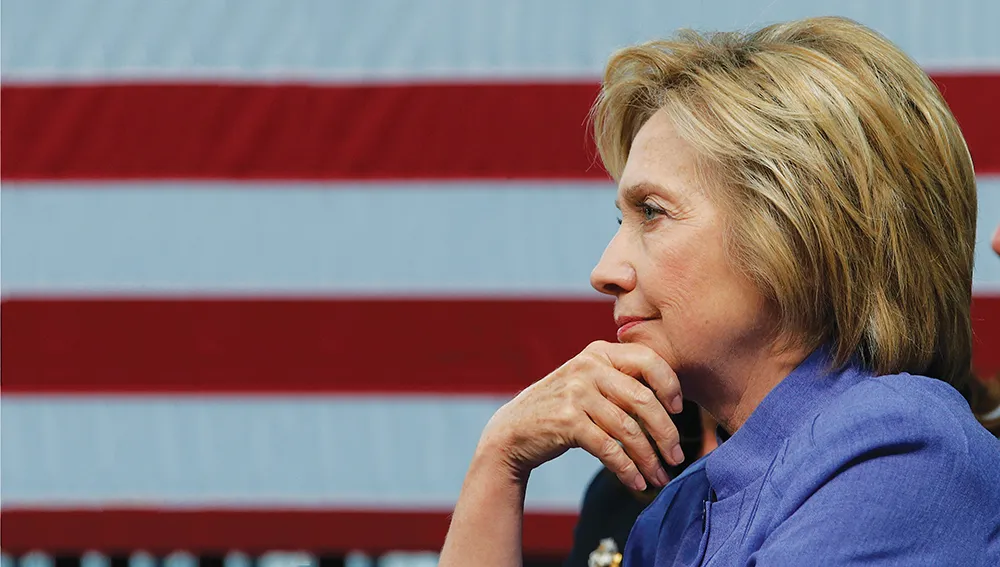
Hillary Clinton’s years in power have been marred by controversy, from Whitewater to her more recent friendliness toward Clinton Foundation donors. (AP Photo)
For example, Rep. Peter Visclosky, D-Ind., was accused in 2009 of helping secure contracts for clients of a well-connected lobbying firm, PMA Group, in exchange for campaign cash. Investigators raided the firm’s headquarters but were stopped cold by the Speech or Debate Clause when they sought to search Visclosky’s congressional office.
The late Rep. John Murtha, D-Pa., nicknamed by critics the “King of Pork,” was also closely linked to the lobbying group.
The PMA Group lobbyist accused of peddling campaign donations for earmarks was charged with a crime and sentenced to prison time, but Visclosky, Murtha and their aides never faced any legal consequences for their actions.
The earmarks Visclosky offered lobbying clients who then donated to his campaign were considered legislative actions protected by the Speech or Debate Clause, according to Taxpayers for Common Sense. Visclosky remains in Congress today, and then-Speaker Designate Nancy Pelosi launched an unsuccessful bid to secure Murtha the majority leader position in 2006 despite longstanding concerns about his ethical conduct.
“[People] think a lot of government officials are getting away with murder, and they feel laws are applied unfairly,” said Bannon, the strategist.
Matthew Whitaker, former U.S. attorney and director of the Foundation for Accountability and Civic Trust, noted corruption cases are handled by the public integrity wing of the Justice Department.
“The fact that these types of cases are treated differently than other types of cases could lend itself to preferential treatment if the wrong people are in charge,” Whitaker said.
The public integrity section of the Justice Department boasts “exclusive jurisdiction” over federal judges and presides over all election-related investigations, allowing the office to wield significant influence over the outcome of corruption probes.
“To some extent at the national level, many of these people that are investigating are politicians themselves,” Whitaker said. “You have, essentially, politicians investigating politicians, and that I think could be a place in the system that has a tacit bias toward not going after their own.”
At the top of the Justice Department, the attorney general is a politically charged appointment and a visible figure within any administration. Critics have raised concerns that Attorney General Loretta Lynch may have a vested interest in protecting Clinton from legal harm given her position as the likely standard-bearer of their shared party.
Lynch’s predecessor, Eric Holder, took heavy fire for investigations into IRS misconduct and an alleged gun-running scheme that went nowhere in the face of what seemed to be convincing evidence.
Herman said special prosecutors are sometimes appointed to mitigate the risk of conflict when the subject of a probe is political.
“I think it’s very messy for any administration to be investigating conduct that took place within its own administration,” Herman said.
Investigating their own
Calls for a special prosecutor to assume responsibility for the Clinton email investigation have fallen on deaf ears at the Department of Justice, where the FBI began conducting a careful investigation of the former secretary’s records management in August 2015.
Sen. John Cornyn, R-Texas, has led a limited Republican push for the appointment of a special prosecutor in the months since.
“The recent contradictions are just outrageous and indicate that rather than cooperation, [Clinton’s] intention has been to obstruct the public’s right to know,” Cornyn said in May 26 remarks on the Senate floor of what was then Clinton’s latest defense of her private email server.
Following a scathing report by the State Department inspector general that revealed, among other things, Clinton’s refusal to meet with federal investigators, the Democratic front-runner’s campaign argued she was not aware at the time that her personal email use broke agency rules.
“This report underscores why I believe we need an independent investigation into this matter,” Cornyn said. “I’ve called for the appointment of a special counsel, because it’s clear that the attorney general, who serves at the pleasure of President Obama, is going to have very little incentive or intention to pursue the appropriate investigation.”
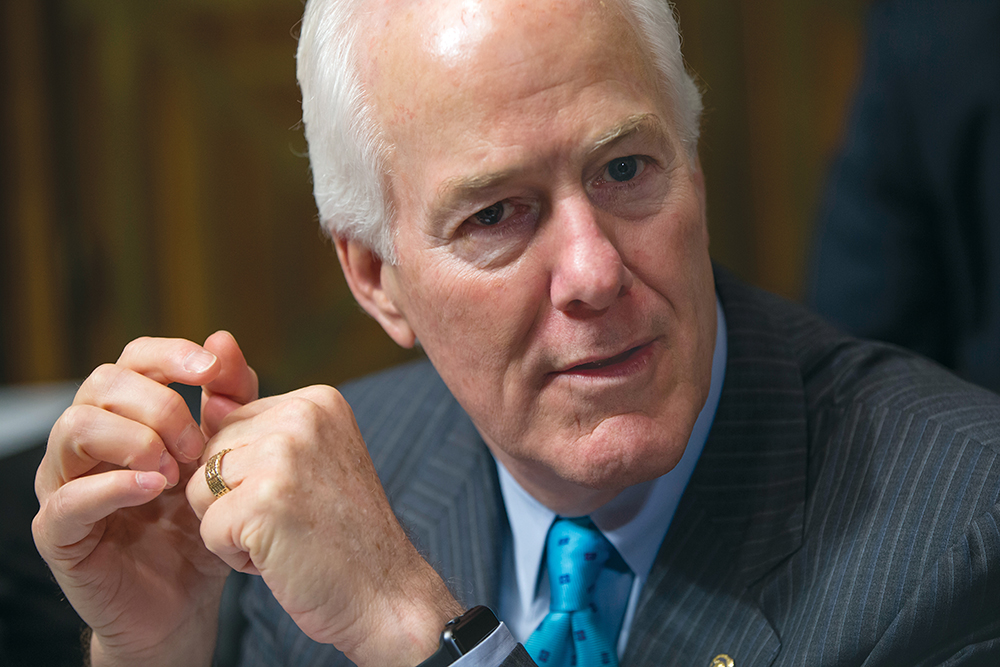
Sen. John Cornyn, R-Texas, has led a limited Republican push for the appointment of a special prosecutor in the months since. (AP Photo)
Grant Reeher, a political science professor at Syracuse University, said he doubts Justice Department officials have engaged in any “overt squelching or soft-pedaling” of the Clinton email probe.
But Reeher noted the bar for recommending an indictment is likely higher in this case given Clinton’s position.
“My sense also would be that, given the very high profile of the person and the extreme political sensitivity of the timing of all of this, I would have to assume that the standards for going forward with anything are, ‘You need to be sure,'” Reeher said. “It’s a different axis of decision-making and of behavior.”
FBI Director James Comey has repeatedly said his agents will not be swayed by political winds to alter the substance or the pace of the Clinton investigation. Many observers have wondered if the probe has stretched so long, despite consuming significant agency resources, because agents feel pressure to craft an airtight case before considering an indictment recommendation.
Kevin Sheridan, Republican strategist and former senior adviser to the Romney-Ryan campaign, said the email controversy will inflict damage to Clinton’s campaign regardless of the FBI’s ultimate conclusion.
“Either way, you’re either going to get a recommendation for a prosecution or you’re going to get some insidery look of protection,” Sheridan said.
Clinton’s coronation
The dynamics of the Democratic primary have further cemented Clinton’s image as a member of the entrenched political class. Insulated by the support of superdelegates from Bernie Sanders’ unexpectedly robust challenge, Clinton has invited criticism from the ranks of her own party for closing in on the nomination without progressive support.
“To me, I think it plays in the backdrop of what’s fueling the candidacy of Trump: the system being rigged,” said Gianno Caldwell, a GOP strategist.
Caldwell said the perception that Democratic National Committee Chairwoman Debbie Wasserman Schultz is “protecting Hillary at all costs” has added to populist anger over the primary process. Sanders has stoked dissatisfaction with Wasserman Schultz’s stewardship of the party by advocating for her congressional primary opponent and indicating he would remove her from power were he to win the nomination.
Controversies surrounding Clinton’s emails and her family’s foundation have loomed over the rocky Democratic race. Both have served as rich sources of political fodder for Republicans, who have used the federal investigations to characterize Clinton as corrupt.
“I think it reinforces that she’s the worst kind of insider,” Sheridan said of her email scandal.
The Romney campaign alum argued Clinton’s perception plight is made worse by the fact that her opponent is someone campaigning on the destruction of everything she represents.
Mark Alderman, a Democratic strategist and former member of the Obama-Biden transition team, said the problem with running against Trump is rooted less in his self-professed outsider status than his personal willingness to exploit Clinton’s weaknesses.
“Charges not being brought will trigger the assault from Trump about her being a member of the protected elite,” Alderman said of the FBI investigation. “If nothing comes of it, he will absolutely stir that pot.”
President Obama began suggesting in October that the Justice Department would clear Clinton of wrongdoing, dismissing the security concerns at the heart of the investigation during an interview last year with “60 Minutes.”
Caldwell said Obama’s decision to weigh in gave skeptics further reason to question the integrity of his Justice Department’s probe.
“He’s making comments on it presuming her innocence before any investigations can be complete, signaling to people like the attorney general and others within the Justice Department that this is the direction the investigation should go,” Caldwell said. “And I think that it is really horrible that our commander in chief is speaking this way on an open investigation.”
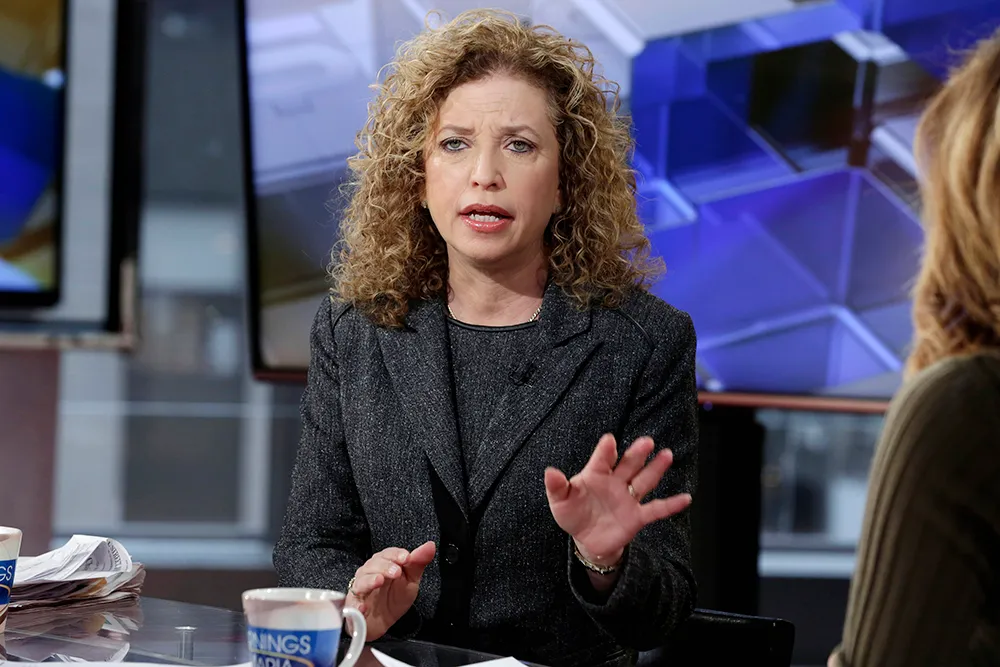
Democratic candidate Bernie Sanders has stoked dissatisfaction with DNC Chair Debbie Wasserman Schultz’s stewardship of the party. (AP Photo)
Right-wing conspiracy or ‘crooked’ corruption?
Clinton’s most dogged critics will likely continue hounding the former first lady regardless of whether she escapes charges for her improper handling of sensitive records.
“I just think that … her problem at this point is that there’s a whole series of behaviors and statements that go back to at least Bill Clinton’s first term as president,” Reeher said.
The political science professor argued Clinton’s authenticity problem has been “a long time in the building” and is therefore nearly impossible to fix.
“It’s a combination of both the attacks that she has received and some of the behaviors that she has engaged in,” Reeher said.
Whatever the source of the public’s mistrust in her, Clinton has long accused Republicans of drumming up controversies for which there is no basis.
In the 15 months since news of her private email use first became public, Clinton has in turn blamed the House Select Committee on Benghazi, Republican staffers in the inspector general’s office, overzealous members of the intelligence community, conservative watchdog groups and other GOP figures for implying wrongdoing where there was none.
“Hillary Clinton has been the most intensely scrutinized candidates for public office in the history of the republic,” Alderman said. “Whether that’s a vast right-wing conspiracy or not, I don’t know, but she has been intensely scrutinized like no other candidate.”
Clinton’s struggle to explain her preferential treatment of Clinton Foundation donors while serving as secretary of state, as well as her silence on the reasons behind her private email server, have earned her the nickname “Crooked Hillary” from her likely general election opponent.
It’s a monicker that could cause trouble for Clinton in the coming months if it proves as stubborn as Trump’s “low-energy” label for Jeb Bush or his “Lyin’ Ted” epithet for Ted Cruz.
Bannon argued the constant storm of scandal surrounding Clinton could actually be considered an asset to her candidacy.
“She’s always getting beat up, and many times voters think she’s getting beat up for good reason, but she always manages to come back,” Bannon said. “She is remarkably resilient.”
The Democratic strategist said Clinton could use her perennial brushes with the law to her advantage by pointing to her ability to survive them as evidence that she is “tough.”
But even if Clinton can convince voters that her decision to use a personal server to shield her official communications was a simple error in judgemnt, she will still face an uphill battle against the insurgent sentiment that has swept the electorate this cycle.
“This is clearly the year of the outsider,” Alderman said, “and there’s no one more inside than Hillary Clinton.”
