

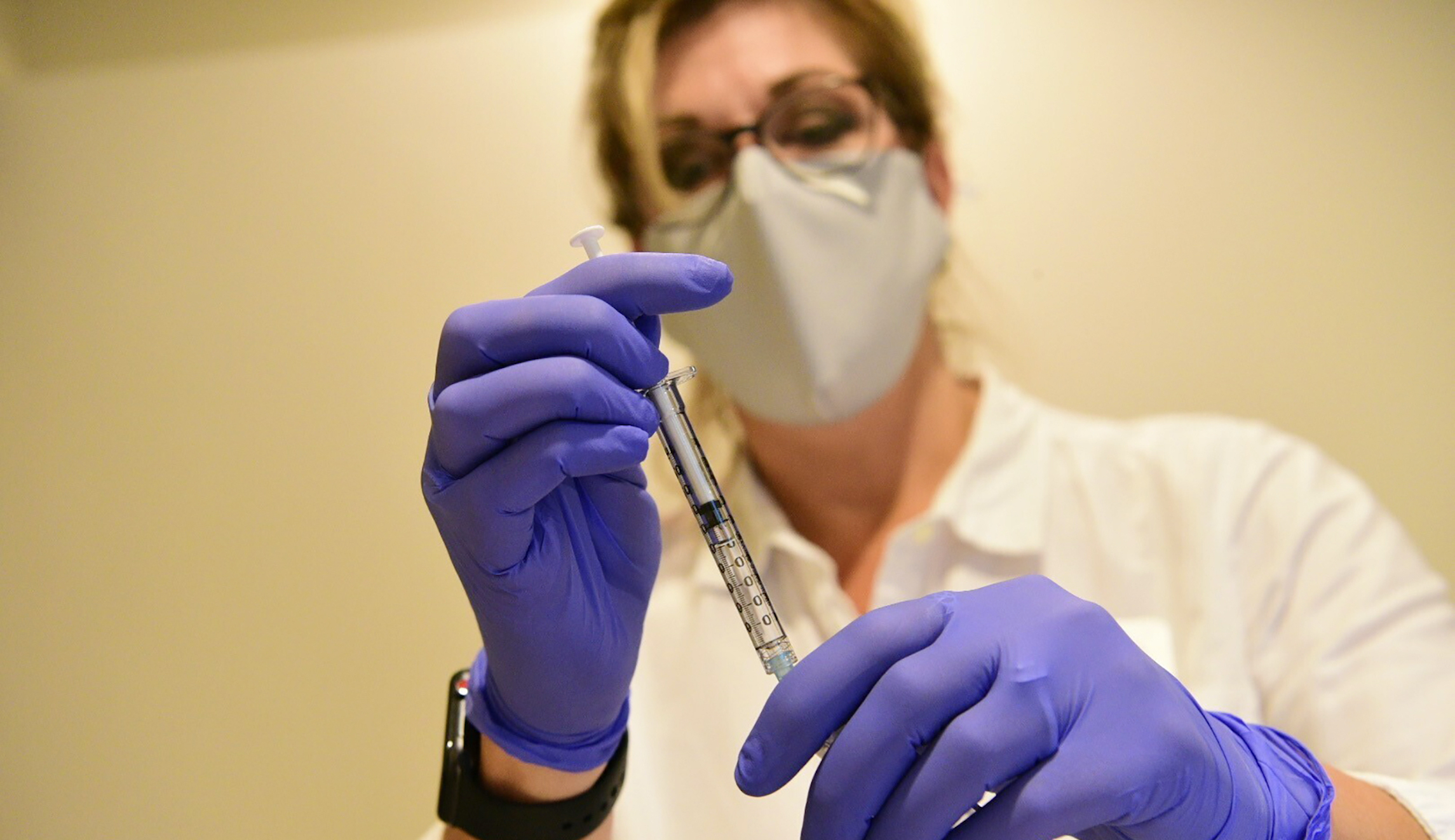
The Food and Drug Administration granted emergency use authorization for the single-shot COVID-19 vaccine from Johnson & Johnson on Saturday, an addition to the national supply that will further accelerate the immunization rate.
“The authorization of this vaccine expands the availability of vaccines, the best medical prevention method for COVID-19, to help us in the fight against this pandemic, which has claimed over half a million lives in the United States,” said acting FDA Commissioner Janet Woodcock. “The FDA, through our open and transparent scientific review process, has now authorized three COVID-19 vaccines with the urgency called for during this pandemic, using the agency’s rigorous standards for safety, effectiveness and manufacturing quality needed to support emergency use authorization.”
Recommended Stories


The vaccine is the third to be authorized by the FDA for public use and will be added to a growing national stockpile. The U.S. is now on track to have a surplus of vaccine supplies by the end of the year.
Nearly 4 million of the single-shot vaccines developed by Johnson & Johnson’s pharmaceutical arm Janssen will be shipped out to states immediately. The distribution process for this latest vaccine will be similar to that of the Pfizer and Moderna vaccines, according to White House COVID-19 response coordinator Jeff Zients.
About 2 million doses, or possibly “a little more,” of the shipment will go to pharmacies and community health centers, Zients said in a Wednesday press briefing.
The panel of vaccine experts at the FDA reached a consensus on Friday to recommend emergency use authorization, after a marathon day of deliberations. The authorization processes for the Pfizer and Moderna shots were just as quick. Both were authorized for public use hours after the panel disbanded.
WHAT YOU NEED TO KNOW ABOUT THE JOHNSON & JOHNSON CORONAVIRUS VACCINE HEADED TOWARD APPROVAL
The J&J shot was shown to be 72% effective in the U.S. and 66% effective overall when taking into consideration the efficacy rates reported from other test sights in South Africa and Latin America. The shot was also 85% effective in preventing hospitalization and 100% effective in preventing death.
The Biden administration is poised to blow past its goal to administer 100 million shots in 100 days, a goal that was considered unambitious by many public health experts. The vaccine distribution process was disrupted by snowstorms and extreme temperatures in the past few weeks, but executives from Pfizer and Moderna told House lawmakers Tuesday that they expected to make up for delays with ramped-up production in the coming weeks.
Moderna and Pfizer executives also said that they are on track to deliver 300 million doses each by the end of July, enough to immunize 300 million people. With the addition of a third vaccine, provided that the companies meet their targets through next month, the U.S. will have enough shots to vaccinate 130 million people by the end of March. Further, the U.S. will have the capacity to administer about 4 million shots per day by April, according to an analysis from Bloomberg.
Other vaccines are likely to enter the U.S. market this year, such as those from Novavax and AstraZeneca. Health authorities in the United Kingdom, Mexico, India, the European Union, and more, as well as the World Health Organization, have already authorized the AstraZeneca vaccine for public use. The U.S. is still waiting.
AstraZeneca’s clinical trials were disrupted in September after a British participant suffered a severe adverse reaction and was placed on pause for a month. The company still has not petitioned the FDA for emergency use authorization, saying it needed to complete its large phase 3 U.S. trial. The FDA likely won’t get the application until April.
With such a wealth of shots, the U.S. will likely send surplus doses to other countries, according to former FDA Commissioner Scott Gottlieb.
“The U.S. market will frankly be oversupplied with vaccine, and we’ll be donating vaccine to other countries,” Gottlieb said.
CLICK HERE TO READ MORE FROM THE WASHINGTON EXAMINER
At the current rate of vaccinations, about 1.3 million on average over the last week, it will take roughly 10 months to immunize 75% of the U.S. population, according to Bloomberg. To date, 68.3 million doses have been administered in the U.S.
