

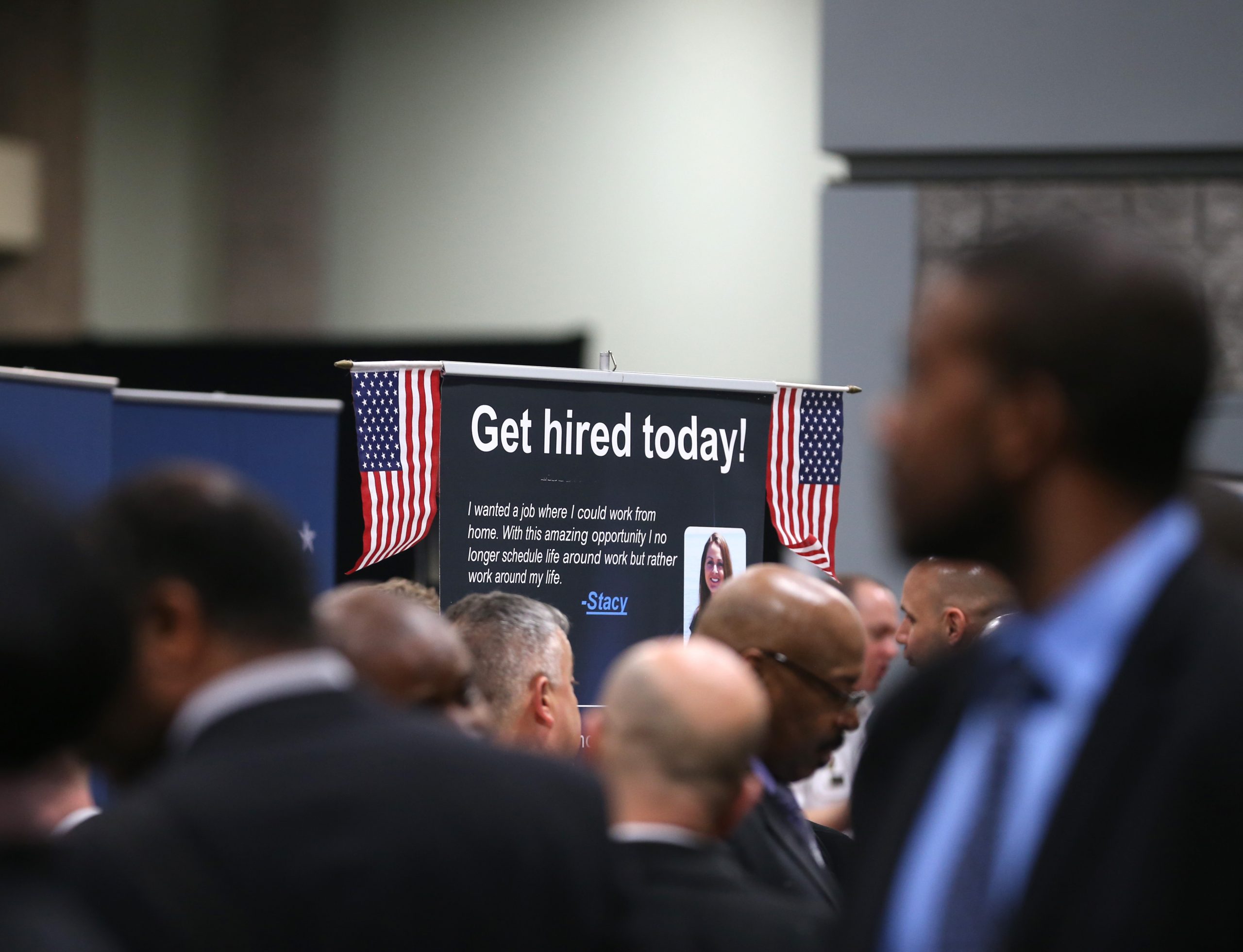
Payroll gains keep on coming, buoying expectations about U.S. economic growth.
The Labor Department reported Friday that U.S. workers gained 280,000 payroll jobs and the unemployment rate inched up to 5.5 percent in May.
Recommended Stories



The jobs report exceed expectations. Analysts had projected roughly 220,000 new jobs in the month.
Federal officials and investors have been looking to news from the jobs market for reassurance about the health of a U.S. economy that appears in other data to have lost strength over the early part of 2015. In particular gross domestic product shrunk in the first quarter.
So far, job growth has been strong enough, if only just, to allay fears that the country is headed toward another recession.
“This is a good report,” House Ways and Means Committee chairman Paul Ryan said in a statement on Friday’s release of jobs statistics.
Revisions to the March and April surveys of businesses added 32,000 job gains to those months.
With those changes, job gains have averaged 207,000 over the past three months. While disappointing relative to the nearly 260,000 average over 2014, that number is rising, and is more than enough to keep the unemployment rate trending down.
The unemployment rate has fallen from 6.1 percent a year ago and from a maximum of 10 percent at the height of the recession in 2009. The jobless rate appears to be on track to reach the range that the Fed sees as healthy by the end of the year.
Federal Reserve chairwoman Janet Yellen and other top policymakers, however, have expressed concern that the unemployment rate understates the true difficulties people are facing in finding work, in part because over the course of the recession millions of workers have had so much trouble getting jobs that they’ve quit searching and dropped out of the official calculation of unemployment.
Friday’s report contained some news on that score, with the labor force participation rate ticking up by a tenth of a percentage point to 62.9 percent, representing an increase of about 400,000 people in the survey of households. Since the start of the recession, labor force participation has fallen to the lowest levels it’s been since the late 1970s, both because of the retiring of the Baby Boom generation and because of workers giving up on the job hunt. In recent months, however, the decline has mostly stopped.
The growth in the labor force in May means that the unemployment rate rose slightly because of a larger denominator, not because of lost jobs.
Other aspects of Friday’s report yielded mixed news.
Earnings rose slightly faster than expected, and average hourly earnings were up 2.3 percent over the course of the past year, to $24.96. Hours worked were not significantly changed.
Although wage gains are still relatively weak, they have also been given a boost, in terms of purchasing power, by falling prices 2015, and in particular low gas prices. Consumer prices were down 0.2 percent annually through April, according to the Bureau of Labor Statistics.
Less encouraging was the news that there was a slight increase in the number of people forced into part-time work in May. The total number of such workers, however, has fallen from 7.3 million a year ago to 6.7 million today.
Similarly, May saw little reduction in the 2.5 million workers who have been looking for a job for over more than 26 weeks, even though the ranks of the long-term unemployed have thinned by nearly 850,000 over the past year.
Altogether, a broader measure of underemployment that counts unwilling part-time workers and marginally involved workers, the U-6 rate, stayed at 10.8 percent in May.
The strongest job growth in the month came in business support services, leisure and hospitality, and health care.
Mining jobs fell for the fifth straight month, as the fallout from oil prices tumbling by nearly half over the past year continued to work its way through the economy. The category of employment that includes support for oil rigs fell by 17,000 in the month, and altogether mining employment has declined by nearly 70,000 this year.
The White House on Friday touted the fact that May marked the 63rd straight month of private-sector job growth, extending a record streak. “Our businesses created more than 200,000 jobs in fourteen of the past fifteen months — the first time that has happened since 1995,” wrote Council of Economic Advisers chairman Jason Furman.
After falling below 10 percent for the first time since the financial crisis in April, the unemployment rate for black Americans rose to 10.2 percent in May.
