

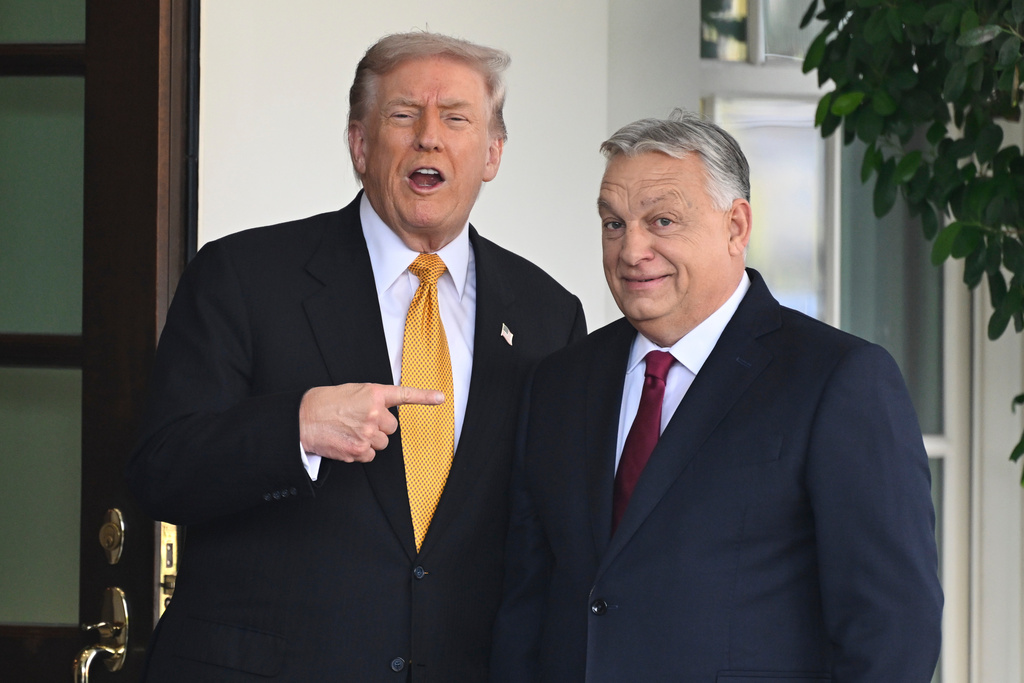
The leaders of Slovakia, Hungary, and Serbia have long touted their loyalty to President Donald Trump, courting Washington’s conservative wing. But when Trump launched his war with Iran, the mask came off.
Trump has backed Prime Minister Viktor Orban to the hilt as the Hungarian strongman seeks to cling to power in an upcoming election. But that didn’t stop Orban from quickly raising concerns about Trump’s war. Within hours, he raised Hungary’s terrorist threat level, warning that a prolonged Middle East conflict could trigger new waves of migration from Iran through Turkey and the Balkans. “Hungary must prepare and make sure the dam holds,” Orban emphasized.
Recommended Stories


Orban also complained about the conflict’s impact on Hungary’s energy security, despite the fact that Trump had granted Orban a sanctions exemption so Hungary could keep buying Russian oil. The U.S. and Israeli strikes on Iran, he noted, add a “double danger” to an already strained energy sector, halting oil flows from Iran and LNG deliveries from Qatar while prices climb. The Hungarian leader discussed this further in a phone call with Russian President Vladimir Putin, who thanked him for his “principled” and “sovereign” foreign policy.
Prior to the war, Hungary had maintained friendly relations with Iran, with officials from both countries describing their diplomatic ties as being on the “right track.” Economic cooperation forms a key pillar of this relationship. The two countries hold Joint Economic Committee meetings and, in 2024, signed a memorandum of understanding aimed at facilitating trade and investment. Cultural and academic links are also expanding. In 2025, the countries signed an educational cooperation MOU covering science, technology, medicine, and agriculture.
Turning to Slovakia, Prime Minister Robert Fico was more strident in his criticism. “The big and powerful do whatever they want,” the Slovakian leader lamented, warning that the world order is in “total breakdown.” After Iran retaliated to the U.S.-Israeli attack by launching missiles and drones at other Middle Eastern countries, Fico excused the Iranian response as “natural.” Never mind the fact that prior to the war, in February, U.S. Secretary of State Marco Rubio met Fico and pledged to “build on our strong partnership with Slovakia.”
Like Hungary, Slovakia has pursued economic engagement with Iran, including energy, medicine, and agriculture. In 2025, Iranian and Slovak deputy foreign ministers held talks in Bratislava, covering cooperation in the political, economic, cultural, academic, and consular fields. The Iran Chamber of Commerce proposed forming a joint trade committee with Slovakia to deepen economic collaboration.
Finally, Serbia stands out as Tehran’s closest European partner. Prior to the war, Rubio met with Serbian President Aleksandar Vucic to strengthen the partnership through a strategic dialogue. Also, the U.S. Treasury Department extended a sanctions waiver for the Petroleum Industry of Serbia, where Russia’s Gazprom and Gazprom Neft own more than half the shares, allowing the Balkan country to continue importing crude oil. The United States originally imposed sanctions as part of broader measures targeting Russia’s energy sector in response to Russia’s war in Ukraine.
But when Trump launched his operation against Iran, Vucic also did not provide his support to Washington. Instead, he whined about the end of “international law.” Vucic then compared the U.S. strikes on Iran with the NATO intervention against Yugoslavia, an operation which he claimed was not truly intended to halt Serbian President Slobodan Milosevic’s ethnic cleansing of Kosovar Albanians but rather for “regime change.”
Belgrade has repeatedly expressed gratitude for Iran’s stance on Kosovo, a core foreign policy issue for Serbia, as Tehran continues to refuse to recognize Kosovo’s independence. In 2025, Serbian and Iranian foreign ministers held bilateral political consultations to deepen cooperation. That same year, Serbia and Iran signed a memorandum of understanding on information security and the development of artificial intelligence, demonstrating that their partnership is evolving beyond traditional diplomacy into security arenas.
ALL POLITICS IS LOCAL — EVEN IN WAR
For years, these self-described allies of Trump have sought to cozy up to the president when it suited them. But when the chips are down, their true colors come out, and their loyalty fades.
Trump would do well to remember that the next time they ask him for a favor.