

The Trump-Xi summit in Beijing ended without any renewed disruptions in trade. Trump held back on new tariffs while China’s endorsement of “strategic stability” means, for now, it will continue to export rare earth minerals — elements China dominates to the tune of 90-plus percent and that are crucial to the electronics in your pocket.
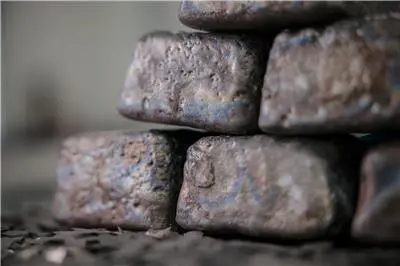
But putting a tourniquet on exports of lanthanum, europium, and gadolinium, among 17 rare earths, remains an option for Beijing. Coping with this threat means renewed rare earth mining in the United States. And, surprisingly, it also means changing what we put out in those blue recycling bins each week on our curbsides. We need to “mine” the waste stream of old iPhones, iPads, CD players, microwave ovens, and other “e-waste” to salvage valuable rare earths and reuse them. Doing so can save cities money and help neutralize China’s advantage in rare earths.
Stay informed.Stay ahead.
Join Washington Examiner for unlimited access to the news, analysis, and commentary that matter most.
Already a member? Log in
A raft of studies has identified the possibility of doing so. A February 2020 United Nations’ electronic waste monitor analysis of the e-waste stream identified as many as 56 elements in electronic devices routinely sent to dumps. Per the report, just one kilogram of mixed e-waste can be worth $168 if separated from the general waste stream. The resources in a similar amount of hard drives were valued — again, if isolated for recovery — at $454. Yet the World Health Organization has estimated that only a quarter of “e-waste” is put to new use.
To its credit, the Trump administration’s Department of Energy is alert to this opportunity and is trying to encourage it. In March, its Office of Critical Minerals and Energy Innovation announced a $500 million “funding opportunity” for research on the processing of domestic critical minerals, battery manufacturing, and recycling. In other words, it’s hoping researchers will come forward to figure out how to make better use of the e-waste we are currently sending to landfills. Per Assistant Secretary of Energy Audrey Robertson, “Critical minerals processing is a vital component of our nation’s critical minerals supply base. Boosting domestic production, including through recycling, will bolster national security.”
All well and good — and a hopeful sign. But such recycling can’t go forward without a reliable supply chain — that is, electronic waste that’s separated from other garbage, rather than being sent to landfill, as typically happens right now. That will mean that local governments across the country will have to change what they ask residents to put in their recycling bins.
As matters stand, too many cities and counties continue to give priority to plastic, often put out separately but hardly ever actually recycled. Environmentalists have become increasingly alert to this “wish-cycling,” and California has just taken a key step in calling attention to this. As of this coming October, state law will prohibit “manufacturers and others from selling products or packaging labeled as recyclable unless the items are regularly collected and processed for recycling in the state.” As it currently stands, as little as actually six percent of plastic is actually recycled. The California law, typical for the Golden State, also mandates that manufacturers convert their containers to a form that can be composted by 2032.
California may not like the fact that it currently makes sense to simply include plastic in the general trash stream and send it to landfill. But that’s a better use of local taxpayer dollars than separate truck pickups for useless plastic.
It would be far better for localities to begin calling on residents to put aside old computers and cellphones filled with rare earths for dedicated collection — for which there is already a robust market, led by private firms specializing in what is currently a complex process. What’s more, municipalities might stockpile discarded electronics and sell them, offsetting local costs and taxes. The DOE is clearly hoping that a federal investment can make the e-waste recycling process cheaper, easier and more common.
A 2023 Department of Energy study highlights the possibility of extracting rare earths from “incinerator bottom ash.” It turns out that what’s left over after incineration might be “mined” magnetically. Doing so could literally be a gold mine, as circuit boards actually contain gold.
Since Earth Day began, the U.S. has been taken with the idea that our everyday trash can be recycled to both environmental and economic benefit. The current recycling system, however, remains inefficient. Focusing on electronic waste can change that calculation, and, in the process, take the boot of the Chinese Communist Party off the U.S. electronics industry.