

Of all the European leaders who, publicly or quietly, relished the political demise of Viktor Orban — the autocratic leader who for over 16 years methodically dismantled the checks and balances of Hungary’s relatively young democracy to consolidate his power — probably none was more hopeful than Ukrainian President Volodymyr Zelensky.
While leading a NATO nation, Orban was more closely aligned with Moscow than Brussels. And he was a constant thorn in the side of Zelensky.
Recommended Stories



Earlier this month, Hungarian voters — disenchanted with rampant corruption and an underperforming economy — swept Orban from office. They handed a landslide parliamentary election victory to the center-right Tisza party, created by Peter Magyar, who is in line to be the next prime minister.
Zelensky was quick to congratulate Magyar on his party’s “convincing victory.” He said Ukraine was ready for “meeting and joint constructive work” with his government once it’s formed.
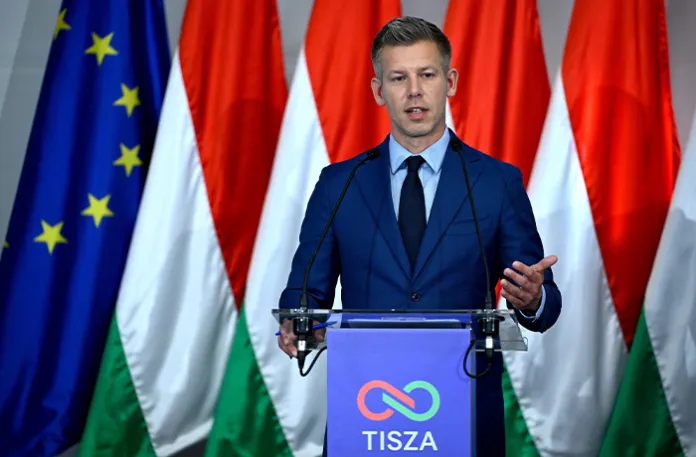
Magyar has criticized Orban’s coziness with Russia and his willingness to be bullied by President Vladimir Putin. Yet, in his campaign, he largely avoided mentioning the war in Ukraine.
But in his first news conference after his election victory, Magyar’s comments on the Ukraine war were music to Zelensky’s ears. And a dramatic U-turn from Orban’s open hostility to Kyiv.
“Everyone in Hungary knows that Ukraine is the victim of this war,” Magyar said in response to a Ukrainian reporter. “And it is the job of any Ukrainian government to protect its territorial integrity and sovereignty.”
“No one should tell them that, hopefully, at the end of a four-year war, under what conditions they should enter peace or sign a peace treaty,” Magyar said, in rebuke to Orban, who sided with Putin’s demands that Ukraine give up all of its eastern Donbas region. “I would like to ask them … what would you do if Russia attacked Hungary? Which Hungarian counties would you be willing to give up?”
“So, if Vladimir Putin calls me, I will pick up the phone. But I will not call him myself,” Magyar said. “But if we were to speak, I can say, I will ask him to please stop the killing after four years, stop the war that has no point at all for them either.”
“I think that will be a very brief discussion,” he added. “I’m afraid that he will not stop, acting on my advice, but I hope that he will be forced to end the war soon.”
A Ukraine-Hungary reproachment
Zelensky is anxious to restore good relations with a NATO ally that shares a border with western Ukraine. Yet, a lingering dispute from the Orban era threatened to undermine any goodwill.
It involved the reopening of the Druzhba pipeline, which runs through Ukraine and carries oil from Russia to Hungary and Slovakia. Both are landlocked countries without easy access to energy.
The pipeline had been closed by what Zelensky said was damage from a Russian attack.
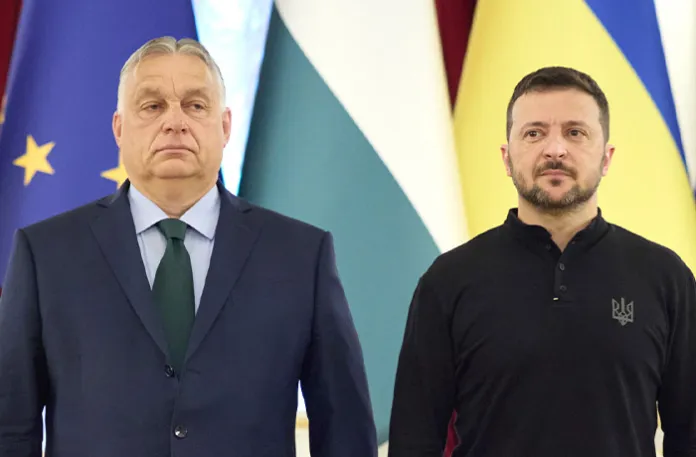
In response to what Orban saw as intentional foot-dragging, the soon-to-be former prime minister blocked a 90 billion euros ($106 billion) loan from the European Union. Ukraine desperately needs it to fund its fast-growing domestic weapons manufacturing industry.
Magyar warned Zelensky not to play games. And said he would not submit to blackmail.
“We don’t know each other, we’ve never spoken on the phone,” Magyar said at a press conference. “This is not a game. If the Druzhba friendship pipeline is operational to deliver oil, be kind to follow your promises and open the pipeline.”
Druzhba is Russian for “friendship.”
Zelensky announced a few days later, “There are no grounds for further delays. Repairs are complete. We now expect the EU to uphold its side of the agreement and do what was promised.”
Hungary dropped its opposition to the loan, and the European Union approved it along with a 20th round of sanctions against Russia. Ones that had also been blocked by Hungary, allegedly at the behest of Putin.
“Viktor Orban was Putin’s guy inside the EU,” says Bill Browder, a financier and political activist who is now persona non grata in Russia. “For many years, any type of policy that was tough on Russia, that would help Ukraine, anything that Putin didn’t want, he could ask Victor Orban to veto.”
Zelensky is eager to meet Magyar face to face, and German Chancellor Friedrich Merz has offered to host a meeting in Berlin.
But Magyar seems to be in no rush to meet his next-door neighbor, citing unresolved issues.
“I would like to say that we will strive to be friendly with all neighboring countries, but with Ukraine, it will be a condition precedent to resolving the situation is to ensure the rights of the Hungarian minority living in Ukraine,” Magyar said.
“Linguistic rights must be restored,” he said, “so that Hungarian kids don’t have to leave the country if they wish to use their mother tongue. I think this is not such a great ask, and I hope that we will be able to resolve those disputes.”
“Hungary-Ukraine relations have a new start, but don’t expect a full embrace,” writes Andras Simonyi, a nonresident senior fellow at the Atlantic Council. “[Magyar] has characterized Russia as an aggressor and a threat to Europe, but he also made known his opposition to Hungary’s participation in military assistance to Ukraine. He can hardly be expected to be supportive in Ukraine’s movement to EU membership.”
A Hungarian center-right leader who values democracy
Magyar is neither a liberal nor an illiberal politician. Rather, he is a staunch conservative who has pledged to enforce Hungary’s tough immigration laws and limit legal immigration to those of Hungarian descent.
On the other hand, Magyar has indicated that he will rejoin the International Criminal Court, even vowing to arrest Israeli Prime Minister Benjamin Netanyahu, who has been indicted on war crimes charges.
Magyar also went on state TV — which unofficially banned him during the campaign — to announce to a shocked interviewer that once in power, he will shut down what he called “the deceitful news service that is going on here,” which he labeled a “factory of lies.”
“While he, in many ways, resembles an old version of Viktor Orban, who’s very charismatic, who has this center-right Christian approach to governance that is very popular in Hungarian society, he is, at heart, a democrat,” says Ivan Nagy, a reporter for the Columbia Journalism Review based in Hungary.
Magyar is under a lot of pressure to deliver on his promise to bring Hungary back into the ranks of healthy democracies, Nagy said. Based on “how much faith people put in him,” and “how much people expect of him. He can’t let the country down.”
“If he wins, he’s going to have a lot of expectations,” Nagy told NPR’s On the Media in the days before the historic vote. “That alone should guarantee some sort of democratic fortune for Hungary in the coming years.”
FORMER PRESIDENTS UNITE WITH HOPEFUL MESSAGE AHEAD OF AMERICA 250: ‘AMERICA HEALS ITSELF’
Magyar’s Tisza party won a parliamentary supermajority, 141 seats out of 199, which gives Magyar the two-thirds margin he needs to amend the Constitution to overhaul Orban’s “rule-of-law” reforms.
“An unprecedented majority, an unprecedented mandate, and at the same time, responsibility,” Magyar said in a statement, after it was clear he won by a margin that was uncontestable.
Jamie McIntyre (@jamiejmcintyre) is the Washington Examiner‘s senior writer on national security.
