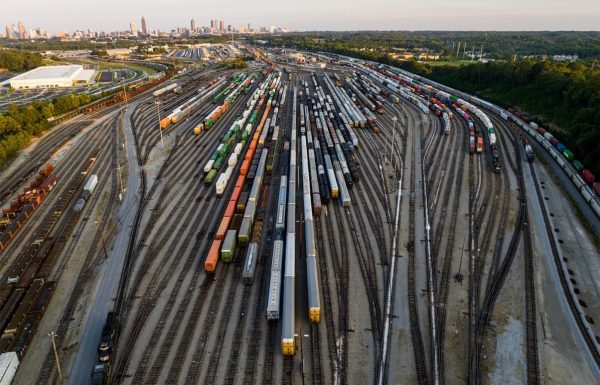
In 1869, the first-ever American transcontinental railroad was completed at Promontory Summit, then in the Utah Territory. Passengers and cargo from the industrial cities of the Northeast could make the steam-powered one-week journey toward the West Coast, stretching the American frontier and settling the West.
Nearly 160 years later, highway systems and airplanes have taken over as the primary means of transportation for passengers across the nation, but a significant amount of cargo and freight still moves by rail, albeit through a complex system of network changes and handoffs. Over time, the myriad of rules, regulations, and competing rail lines have grown more complex, leading to a status quo that covertly costs households at the grocery store, the hardware aisle, and the gas pump every day.