

“Albanianism,” wrote the 19th-century poet Pashko Vasa, was his country’s one true faith. Not many outsiders will get the reference, but Albania’s troubled history seems to have produced a particularly rugged and enduring national identity. British pop star Dua Lipa once incited a minor social media furor by posting a map of “Greater Albania” that included large chunks of the country’s neighbors. Lipa was born in Britain, but her parents are ethnic Albanians. Loyalty to the mother country evidently runs deep.
Recommended Stories



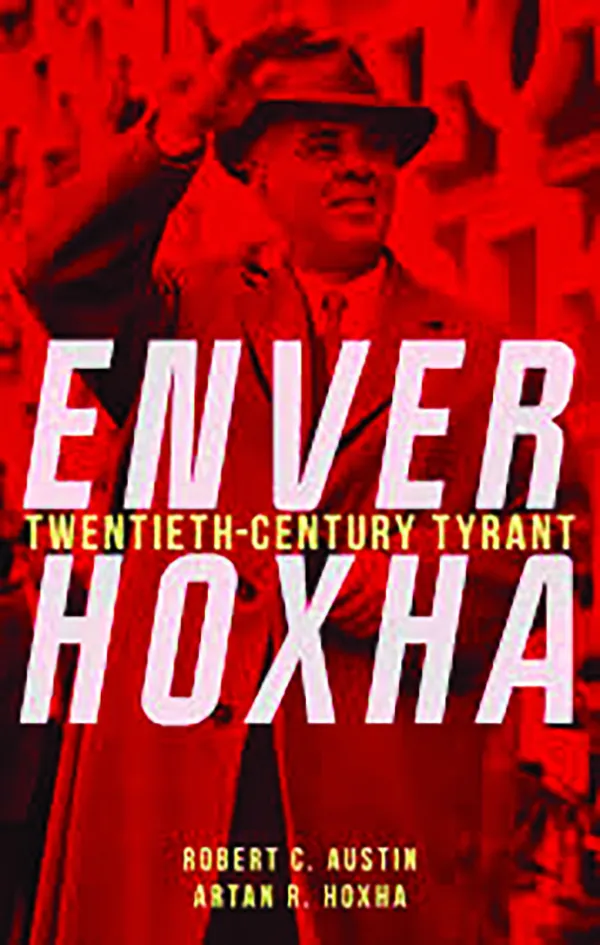
From the end of World War II to 1985, the Albanian strongman Enver Hoxha simultaneously cultivated and profited from this national siege mentality. Originally a protege of Tito and Stalin, Hoxha developed a unique (and uniquely dysfunctional) brand of Albanian Marxism to cement his one-man rule. In so doing, he created a European hermit kingdom, the closest the continent has ever gotten to modern North Korea. The story of Hoxha’s rise to power, his bizarre cult of personality, and the lingering influence of his regime is told in Enver Hoxha: Twentieth-Century Tyrant, a capable but somewhat plodding biography of the only Albanian most foreigners would have heard of before Miss Lipa’s ascent to stardom. The book was written by University of Toronto professor Robert C. Austin and historian Artan R. Hoxha (no relation to the subject of the biography).
Albania’s past is troubled even by Balkan standards. Although the Albanians have a distinct language and a history stretching back to the Middle Ages, modern Albania did not gain independence until 1912. The collapse of the Ottoman Empire left the country a lonely and impoverished Muslim enclave in a dangerous neighborhood. Aside from a few poems from Byron and a colorful Georgian travelogue entitled High Albania, the country left almost no imprint on Europe or the wider world.
After independence, Albania experienced an almost comical progression of failed political experiments. The country was briefly ruled by a German princeling before trying parliamentary democracy and then a presidential system. This last attempt at representative government was overthrown in 1928 by the self-proclaimed King Zog I, whose own dynastic ambitions were cut short by an Italian occupation during World War II.
Zog was the first in a succession of tyrants who shaped Hoxha’s political imagination, but he was far from the worst of the bunch. Even before the occupation, Albania had effectively become an Italian protectorate, and Mussolini’s shadow loomed large over the country’s political and intellectual life. When Hoxha and his communist partisans occupied the capital of Tirana after the war, they moved into the fascist ruling class’s recently vacated neighborhood.
Ultimately, Zog and Mussolini were supplanted by Tito and Stalin as the major influences on Hoxha’s ideological trajectory. The young Albanian guerrilla embraced Marxism in World War II and was advised and supplied by Tito’s acolytes. Meanwhile, Uncle Joe kept a distant but watchful eye on the communist parties of the Balkans and Eastern Europe. Hoxha would stay loyal to his memory and fashion a similar cult of personality even after the Soviet Union had disavowed Stalinism’s worst excesses.
The figure who emerges in the pages of Enver Hoxha: Twentieth-Century Tyrant is a brutal cipher. Compared to most Albanians of his era, Hoxha was relatively privileged, studying abroad in France and getting appointed to a minor diplomatic post during the interwar period. After returning home, he ran a successful tobacco business before heading for the hills to fight the fascists.
Nothing about these early years suggests that Hoxha was destined for greatness, but war and ideological upheaval often provide opportunities for violent, cunning men. Postwar Albania may have lacked infrastructure, an industrial base, or a functioning education system, but it was fertile ground for a budding autocrat. Show trials quickly dispensed with the country’s old elite, who were guilty (or found guilty) of collaborating with the Italians. The first postwar election was conducted with rubber balls, boxes, and pictures representing the Albanian Communist Party and a single non-communist alternative. Under such conditions, the emergence of an authoritarian government was probably inevitable.
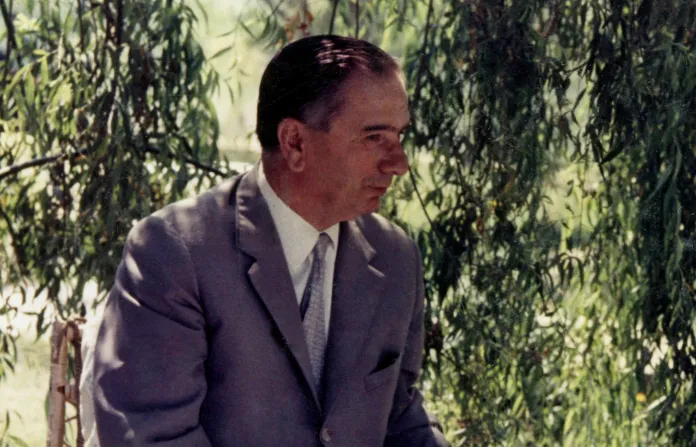
Despite Hoxha’s careful censorship and later mythmaking, Twentieth-Century Tyrant unearths a few intriguing biographical details. The young partisan was apparently tall and handsome, which probably imbued him with an aura of command in a country that was still patriarchal, semifeudal, and mostly illiterate. Hoxha also had certain intellectual pretensions: His wartime codename was lifted from the pages of Gogol, and he claimed to have written for the French communist daily L’Humanité. He was quick to grasp the value of brutality, condemning his own brother-in-law to death in the purges that followed World War II.
Although these details are interesting, Hoxha lacks the sinister appeal of a Hitler, a Mao, or a Stalin. His early career suggests that luck and happenstance played a more important role in his rise than planning or strategic aptitude. During the war, the future dictator became a key conduit to the better-organized Yugoslav partisans because he happened to speak French, and the Yugoslav advisers didn’t speak Albanian. Perhaps Hoxha was simply in the right place at the right time with the right capacity for violence.
What sets Hoxha apart from your run-of-the-mill dictator was his bizarre cult of personality, which developed as Albania steadily alienated its foreign patrons and closed itself off from the outside world. Tito was the first to go — a proposed Balkan federation subordinating Tirana to Belgrade was nixed, and Yugoslavia quickly transformed from a fraternal socialist ally to an enemy of the Albanian people. The Soviet Union was a useful counterweight to Yugoslavia, at least until Stalin died and the regime loosened its grip, at which point Hoxha decided the Russians had gone soft. Eventually, even Mao’s China was deemed insufficiently Marxist.
By the 1970s, Hoxha had effectively cut Albania off from both the West and his former allies while formulating baroque Marxist theories to justify his rule. The paranoia of the regime is exemplified by the thousands of bunkers Hoxha constructed that still dot rural Albania, built to resist a massive foreign invasion that never materialized. Hoxha’s ideological fixations, meanwhile, produced some striking brutalist architecture and strange ideological pronouncements. In 1967, he declared Albania the only atheist country in the world.
DOES HUNGARY’S OPPOSITION HAVE ORBAN ON THE ROPES?
This is a carefully researched book, but the co-authors have an unfortunate habit of using 21st-century language to write about their 20th-century subject matter. After World War II, Hoxha’s wife is described as dealing with “unresolved trauma,” a term best left to modern self-help gurus. Earlier, the authors write that “in the fire of war . . . [Hoxha] found the focus and discipline to pursue his goals,” which makes him sound less like a Marxist guerrilla and more like a disciple of Jordan Peterson.
A CIA report from 1947 described Hoxha as “tall, handsome, athletic, ostentatious, aggressive, ambitious, cunning, insincere and lacking in fundamental ideals” and claimed that he was a communist “for pragmatic, rather than ideological reasons.” The co-authors of the present volume disagree, arguing that Hoxha’s personal ambitions and ideological convictions merged until they became indistinguishable. Decades after the collapse of the old regime, Albania is still one of the poorest countries in Europe. The memory of Hoxha and Hoxhaism is another reminder that brutality and ideological fervor make for a dangerous combination.
Will Collins is a lecturer at Eotvos Lorand University in Budapest, Hungary.
