An Inconvenient Truth at 20: A hoax in hindsight

Published May 26, 2026 2:27pm ET | Updated May 26, 2026 2:27pm ET


In Focus delivers deeper coverage of the political, cultural, and ideological issues shaping America. Published daily by senior writers and experts, these in-depth pieces go beyond the headlines to give readers the full picture. You can find our full list of In Focus pieces here.

In July 2006, while still a relatively young columnist at the Denver Post, I published a piece headlined, “Chill out over global warming.”

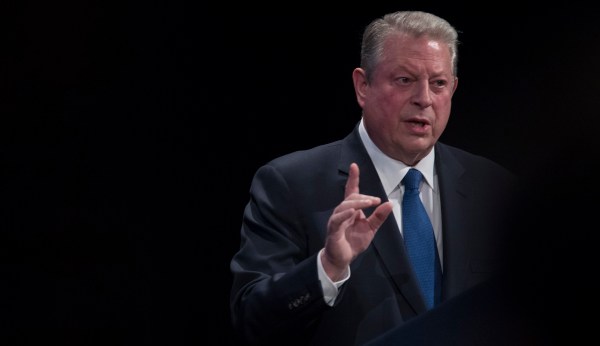
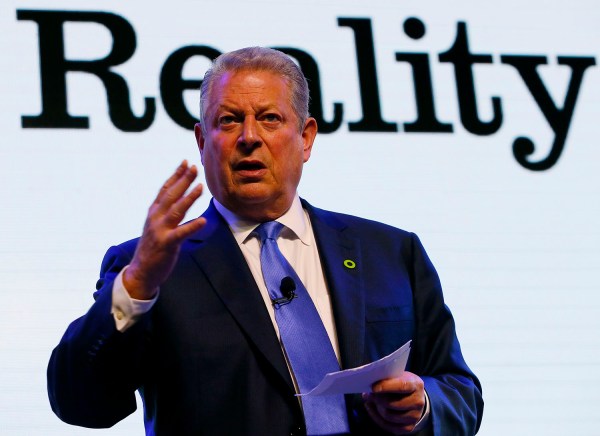
The column was exceptionally unpopular with readers. Rewardingly so. Yet, I hadn’t merely been mouthing off. In it, I interviewed meteorologist Roger Pielke Sr., a professor at the University of Colorado, and Colorado State University’s Bill Gray, perhaps the world’s foremost hurricane expert at the time. Both were skeptical of the doomsday predictions offered by climate change activist Al Gore in his recently released film, An Inconvenient Truth

“They’ve been brainwashing us for 20 years,” Gray told me. “… This scare will also run its course. In 15-20 years, we’ll look back and see what a hoax this was.”

Well, here we are. Gray might not have been right about everything, but he looks like a prophet compared to Gore. It has never been more obvious that the pseudoscience and emotional manipulation of An Inconvenient Truth were, as Gray promised, little more than agitprop.

“I was skeptical that my slideshow about the climate crisis could become a successful movie,” Gore posted the other day, humble-bragging about the success of the movie. The film pulled in around $50 million domestically and over $76 million worldwide, making it one of the highest-grossing documentaries of all time at that point. It won two Academy Awards.

Gore’s Malthusian ramblings, delivered in a robotic and moralizing tone, also won him a Nobel Peace Prize. Worse, over the next decade, teachers across the country played the movie, crammed with pseudoscientific charts and cartoonish satellite images — water transformed into fire — to terrify children. Miami and New York would be submerged under the ocean, the movie warned. The Arctic ice cap would disappear by the summer of 2014. Glacier National Park? It would be glacier-free by 2020. It told us that there would be no more Snows of Kilimanjaro. None of which came true.

Yet, today, Gore says we’re “already feeling the rapidly worsening impacts of a warming planet. Those impacts are evidence that our cause is even more urgent than it was 20 years ago.”

They aren’t. Gore predicted a massive increase in weather-related disasters. But fewer people than ever perish in climate-related disasters. By every quantifiable measure, in fact, we’re much safer, despite the climate change activist’s cataclysmal framing of every weather-related event.

All extreme weather accounts for only about 0.1 deaths for every 100,000 people in the United States each year. More people die mining cobalt for electric car batteries in Africa.

Yet, the claim that destructive super hurricanes might wipe out cities and make life unbearable was a central theme of An Inconvenient Truth, as well as climate change hysteria in 2006. One of these deadly hurricanes is seen unfurling from an industrial smokestack on the cover of the movie poster.

Partly due to the ineptitude and corruption of local politics, 1,016 Americans perished due to Hurricane Katrina in 2005. In the 20 years following the release of An Inconvenient Truth, 301 Americans died due to hurricanes, an average of 15 a year. As it happened, Florida didn’t get hit with another major hurricane for over a decade, and Louisiana didn’t see one for 14 years.

Even if they had been more common, of course, we have always lived with hurricanes. From 1851 to 1860, the year the first combustion engine was sold, 16 hurricanes made landfall in the U.S., four of them major. From 1860 to 1960, we experienced anywhere from four to seven major hurricanes making landfall every decade. From 1960 to 2024, we experienced anywhere from four to seven major hurricanes making landfall every decade. Last year, for the first time in a decade, not a single hurricane made landfall in the U.S.

Jeffrey Energy Center coal-fired power plant.
The Jeffrey Energy Center coal-fired power plant operates at sunset near Emmett, Kansas, on Jan. 3, 2026. (AP Photo/Charlie Riedel)

Alarmists will tell you that the “hurricane drought” was also caused by climate change, because for a while there, everything was blamed on climate change, including heart disease, asthma, substance abuse, mental wellness, prostitution, war, diabetes, migraines, dementia, Islamic terrorism, crime, and income inequality.

What remains inarguable is that Gore’s “documentary” got it very wrong.

It shouldn’t escape our attention either that the 20-year anniversary of An Inconvenient Truth coincided with the United Nations panel on climate change dropping RCP 8.5, the worst-case scenario offered on global warming, because it is now “implausible.”

The contention that we were fast approaching an existential cliff has been embedded in virtually every major media story regarding climate change. And virtually every alarmist in politics has warned that this apocalyptic precipice is the reason we have a duty to remake the entire economy and destroy our energy sector.

Forgive me for being skeptical about the good-faith motivations of the U.N. dropping RCP 8.5. But modern climate doomsayers are constantly resetting their red lines because their predictions have been embarrassingly wrong since Paul Ehrlich published The Population Bomb. In 2007, Rajendra Pachauri, head of the same U.N. climate panel, said, “If there is no action before 2012, that’s too late.” In 2018, U.N. General Assembly President Maria Espinosa told 22,000 delegates attending the climate conference that “mankind” was “in danger of disappearing” if the world didn’t act on an 11-year window to take decisive action.

Now, the U.N. claims that the rise of “renewable energy” and other factors has helped avert the fiery disaster they were incessantly warning about. The problem with this contention is that global carbon dioxide emissions from fossil fuels are running higher than was predicted in climate models of the early 2000s. China now emits more carbon dioxide than the U.S. and European Union combined.

And the leading reason greenhouse gas emissions have declined in U.S. is the transition from coal to natural gas, a policy that environmentalists, including Gore, opposed.

Before journalists had moved on to other trendy progressive causes such as Black Lives Matter or “Free Palestine,” they were happy to regurgitate every unhinged claim of climate fanaticism. CNN and others stopped calling the phenomenon “climate change” and started referring to it as a “climate crisis” to stifle any dissent on the matter. During the 2020 primaries, CNN held a seven-hour town hall on the topic, where everyone more or less agreed on everything.

Why? Because the science was allegedly “settled.” That turned out to be nonsense. But it was never just about science. It was about economic trade-offs and adaptability, topics that were rejected as unworthy of debate. After all, global warming was an existential threat to humanity, and we only had a handful of years to act.

Since my column in 2006, like many others, I’ve argued that capitalistic ingenuity and human acclimatization were preferable to the Luddism that gripped the Left. Doing so got a lot of us smeared as oil-drenched anti-science nihilists and put on lists of “climate deniers,” a phrase meant to frame a person as morally akin to Holocaust deniers.

Gray spent years being depicted as a wild-eyed crank and shill of the fossil fuel industry. In September 2005, he had predicted that global surface temperature would experience a “quite small and likely insignificant” warming of 0.3 degrees Celsius. According to virtually every major climate organization, the global surface temperatures have risen by around 0.35 degrees on average from 2006 to the present.

THE AMERICAN WILDLIFE MIRACLE

Rest in peace, professor.

There are surely many good-faith scientists trying to decipher the vagaries of climate. But the alarmist industry, the one lifted by the media and academia and often funded by the government, was always a hoax. And Gore, its leading voice for years, was always a fraud.