
Democrats are still soft on crime

Published June 4, 2026 5:00am ET | Updated June 4, 2026 7:41am ET


There is perhaps no better example of Democratic Party dysfunction than what one sees when visiting the aisles of an urban retail store.

What you find is merchandise, some of it everyday items such as toothpaste and razor blades, locked away behind plastic cases. This is to prevent retail theft, which has become an epidemic in many, if not most, cities across the country. It is necessary for stores to stoop to this level of inconvenience for law-abiding citizens because thieves are not held accountable. Rather than passing and enforcing laws that punish criminals accountable for their crimes, governments have adopted a conscious policy sacrificing the quality of life of 99% of citizens so the remaining 1% can commit crimes without consequences.
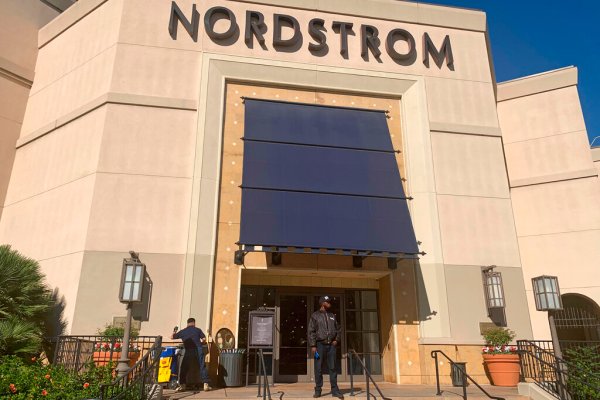

One would hope that after the 2024 elections, in which Democrats were punished by voters for their lax policies on crime, the party of the Left would have learned its lesson and adjusted so it was representing voters more accurately on criminal justice troubles. Voters uniformly rejected soft-on-crime candidates nationwide. 

But Democrats appear incapable of choosing order over chaos. It is a classic example of that distortion on the Left, which means its adherence to their policy theories rather than doing what works in practice. Not only did 60 House Democrats vote against the Combating Organized Retail Crime Act last month, but now left-wing activist groups are gearing up to spend hundreds of thousands of dollars fighting this commonsense anti-crime bill in the Senate. The fight is a reminder of just how fragile all progress on lowering crime is. If Democrats are put in charge again, crime will rise because criminals will be given a pass.

The Combating Organized Retail Crime Act strengthens federal criminal law against organized retail theft and makes it easier for stakeholders to coordinate anti-crime efforts. It would create a new federal coordination center to help federal, state, and local law enforcement work with retailers and shipping companies to identify organized theft rings. It would also make federal prosecution easier in three key ways. Prosecutors could add related thefts over a 12-month period to meet the $5,000 federal threshold, more theft-by-fraud schemes would fall under federal stolen-goods law, and money-laundering charges would be easier to bring when stolen goods are turned into cash, prepaid cards, gift cards, or store credit.

The bill is needed because organized retail crime is more than ordinary shoplifting. Criminal networks steal large amounts of merchandise from stores, warehouses, trucks, and rail lines, then resell it online or through other channels. These rings often operate across city and state lines, which makes them difficult for local police and prosecutors to stop. A stronger federal role would help law enforcement target the larger criminal organizations behind the thefts, not just the individual thieves caught at the store.

Yet a significant bloc of House Democrats and their radical allies are against all this. The Vera Institute of Justice claims the Combating Organized Retail Crime Act would “only criminalize poverty and disproportionately impact black communities.” Dream.org warns that the legislation will lead to “racial profiling, aggressive raids, secret watchlists, community terror.” Instead of strengthening prosecution, these left-wing activists want Congress to spend taxpayer money on “community navigator programs” that they say “can connect someone to stable housing, jobs, treatment, and other services to break the cycle of crime.”

The Vera Institute of Justice and Dream.org recently announced they would spend $500,000 on a media campaign fighting the Combating Organized Retail Crime Act in the Senate. Incidentally, the Vera Institute of Justice is funded almost entirely by taxpayer dollars to provide community navigator programs, such as the ones mentioned above, to Democratic cities and states.

GOVERNMENT UNION ENVIRONMENTAL LAWSUIT EPITOMIZES CALIFORNIA DYSFUNCTION

Democrats say they care about black communities, but those communities suffer most when stores close, prices rise, and neighborhoods lose access to basic goods. They are the ones who have to wait for an employee to open a plastic case because politicians have decided that prosecuting theft is more offensive than allowing it.

The Combating Organized Retail Crime Act is not extreme. It is a modest, practical bill aimed at serious criminal networks. Democrats and their co-radicals are fighting it. The party’s soft-on-crime instincts remain intact.