

The Trump administration’s first oil and gas lease sale in Alaska’s virtually untouched wildlife refuge secured less than 10 bids from just two companies, indicating that businesses are hesitant to develop resources there.
The Interior Department‘s Bureau of Land Management held its first lease sale under the second Trump administration for the Coastal Plain of the Arctic National Wildlife Refuge Friday afternoon, garnering nine bids on five tracts of land across more than 70,000 acres.
Recommended Stories


Just two companies accounted for the nine bids: natural gas producer Hex Energy LLC and the state-owned Alaska Industrial Development and Export Authority. Both companies successfully bid, with the Alaska Industrial Development and Export Authority as the highest bidder in securing three tracts.
Overall, the lease sale generated more than $6 million, with the total high bids for successful bidders exceeding $3 million. Half of this will go toward the state of Alaska by law, officials said.
This total is far smaller than the amount collected by a similar lease sale held in the National Petroleum Reserve of Alaska in March, which garnered a quarter of a billion dollars.
“While the history of this area is long on policy, a new era of active leasing and exploration is just beginning to unfold,” Kevin Pendergast, the state director for BLM in Alaska, said following the bid readings. “We look forward to learning more about the subsurface of the area as leaseholders pursue exploration and ultimately to the next phase, when, like the NRP-A to the west, this area’s full potential begins to be revealed and responsible development takes shape.”
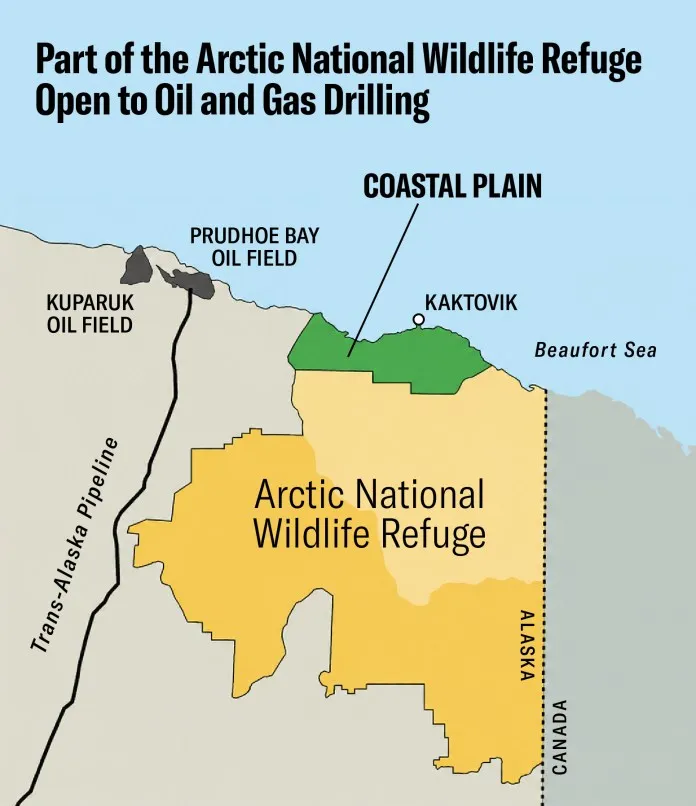
Under the One Big Beautiful Bill Act passed in July of last year, BLM is required to hold at least four lease sales in the Coastal Plain by 2035.
Friday’s auction was announced in April, offering 58 tracks across the Coastal Plain.
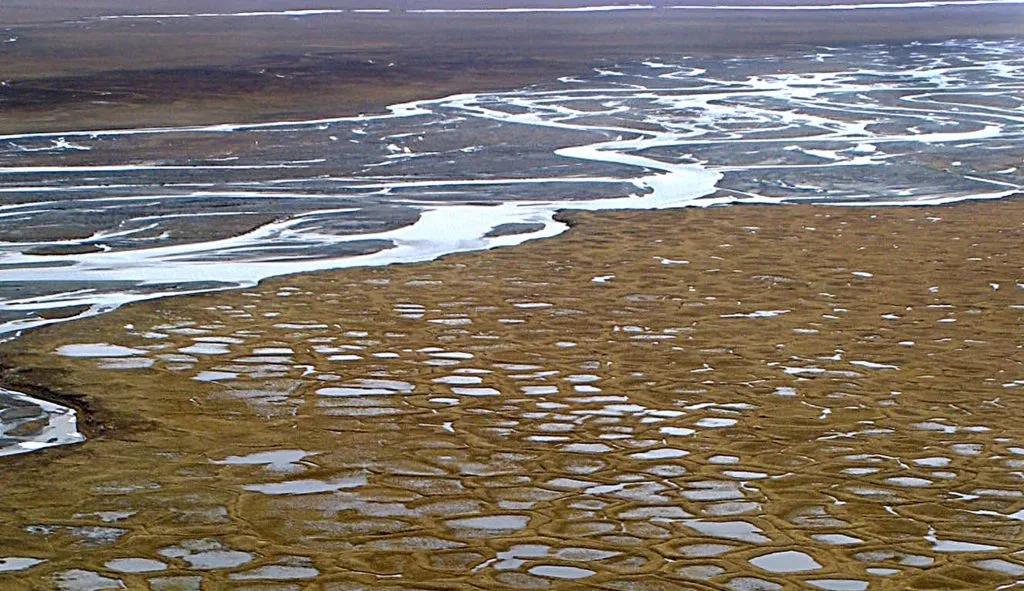
The remote region is more than 600 miles from Anchorage, Alaska, with the broader refuge bordering Canada. ANWR is considered one of the most biodiverse regions on the planet, home to hundreds of species of birds, caribou, polar bears, and completely untouched ecosystems.
There are no established roads, trails, or facilities of any type in the refuge, with only one established village, Kaktovik, to be found in the Coastal Plain.
Drilling has only been authorized in the region since 2017, when Congress passed the Republican Tax Cuts and Jobs Act.
While seismic studies estimate there could be up to nearly 12 billion barrels of recoverable oil in the Coastal Plain, little action has been taken in the last nine years to develop fields.
In his first administration, Trump approved nine lease sales in the refuge, seven of which were suspended under former President Joe Biden. The remaining two were later canceled by bidding companies.
Environmentalists, climate activists, and some native communities have long pushed back on developing fossil fuel resources in the region, citing concerns that the projects would pose risks to the surrounding wildlife, natural habitats, and fragile ecosystems.
However, residents of Kaktovik, which would be the only village directly affected by new drilling in the Coastal Plain, have broadly come out in support of fossil fuel development. Native leaders have said increased tax revenue from oil and gas projects would greatly increase their ability to lower the cost of living and upgrade their infrastructure to better support their communities.
“Now we’re not trying to get rich off this, we’re just trying to have the ability to make sure that we’re able to take care of our families and the future of the land and resources that we have been for generations, for millennia,” Charles Lampe, who is Inupiaq and was born and raised in Kaktovik, told the Washington Examiner.
The Biden administration sought to increase environmental protections in the region, blocking drilling on 1.2 million acres of the Coastal Plain and imposing strict leasing requirements on the remaining areas.
While the administration was legally required to hold another auction for oil and gas drilling rights in the remote refuge, the sale failed to garner any bids. State officials blamed the failed auction on the strict leasing requirements, claiming the administration was purposefully blocking development by making available acreage impractical to develop on.
The Trump administration has repeatedly advocated increasing energy production in Alaska to increase domestic supplies of oil and gas, support broader energy needs for artificial intelligence, and expand U.S. energy exports to foreign nations.
In order to unleash resources, the Trump administration walked back Biden-era protections for the Coastal Plain and the NPR-A.
BLM held its first lease sale in the NPR-A in March, garnering nearly a quarter of a billion dollars in bids. Administration officials described the auction as “historic,” as it garnered 430 bids for nearly 200 tracts of land spanning more than 1 million acres.
The Trump administration has also moved to make more offshore oil and gas drilling rights in Alaska available to the industry, holding a lease sale in the state’s Cook Inlet this spring.
The auction, however, failed to receive a single bid.
TRUMP TRIES TO BOOST OIL AND GAS DRILLING IN REMOTE ALASKA, WHERE LOCALS SEE OPPORTUNITY
While this week’s auction saw five successful bids, it does not guarantee any drilling will occur.
The last seismic testing conducted in the area occurred in the 1980s and 1990s, and local leaders in Kaktovik hope new studies will take place in the coming winter to determine what resources actually lie beneath the surface.
