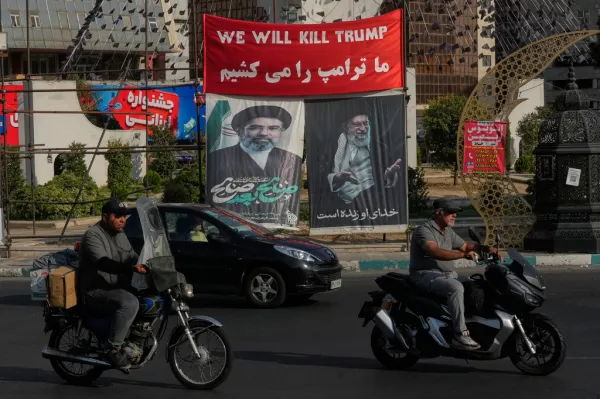
Iran’s leaders call survival a victory. After a year in which the United States and Israel dismantled the Islamic Republic’s military, gutted its nuclear program, and killed its supreme leader, the regime’s surviving officials insist that merely enduring is triumph enough.
But surviving is not the same as living, and what Tehran has preserved is a ruin. The tragedy, and the thing its rulers refuse to see, is that they had a choice and still do. A small nation on Iran’s northern border confronted a version of the same choice and answered it the opposite way. Armenia is the standing rebuttal to everything the Islamic Republic tells itself about why it cannot change.
Recommended Stories
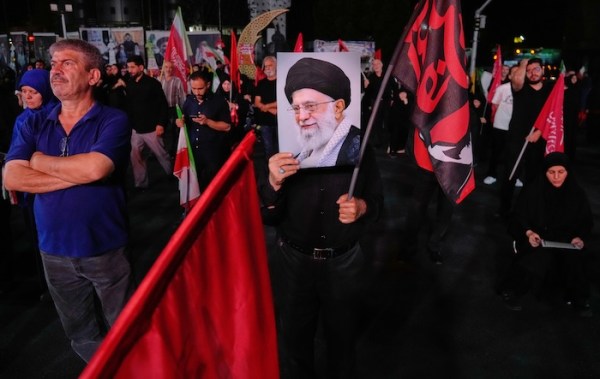
Consider first what “victory” has bought. In little more than a year, Iran has lost two wars: the Twelve-Day War of June 2025 and the far larger conflict that began in February 2026, which killed Ayatollah Ali Khamenei and left his son Mojtaba atop what is now an Islamic Revolutionary Guard Corps military dictatorship. Its economy is in free fall, with inflation approaching 70%, the highest since the 1979 revolution. And in January, when Iranians, exhausted by that misery, staged the largest uprising since the revolution, the state answered with the deadliest two-day massacre of protesters in modern history.
This is what the regime calls winning.
Some argue that the men who run Iran, the Guard commanders and the clerics, are insulated from all this. But even they are worse off than before. They preside over a poorer, angrier, more isolated country; they live under the same missiles that killed their supreme leader; and they sit atop a population whose fury guarantees that the next eruption is a matter of when, not if. A siege economy and a seething nation beneath you is not security.
Above all, survival has come at the price of the one thing the Islamic Republic claims to prize most: its independence. For decades, Tehran styled itself the great anti-imperialist power, bowing to no one. It now survives as a client. China buys more than 80% of its exported oil and holds over $100 billion in Iranian energy and infrastructure — leverage that makes Beijing, not Tehran, the real arbiter of Iran’s economic fate. Russia, itself hollowed out by Ukraine, has been reduced to feeding Iran targeting intelligence. And when the bombs fell, neither lifted a finger to defend it. Iran has engineered the worst of both worlds: the dependency of a vassal without the protection of an ally.
For a generation, Armenia was a Russian client for the same reason: because it clung to a territory it could not hold. To keep its grip on Karabakh, an Armenian separatist enclave inside internationally recognized Azerbaijan, Yerevan mortgaged its foreign policy to Moscow, which was happy to keep the quarrel alive as an instrument of control. Armenia broke free not by winning, but by letting go. Iran is now walking into the cage that Armenia just left.
The deepest irony is that Iran already possesses everything it would need to become the regional power it seeks to be: among the world’s largest gas reserves, a commanding position astride the Persian Gulf, and one of the most educated populations in the Middle East. It has chased hegemony through exported revolution, proxy militias, and the promise to wipe Israel off the map — and reduced itself to a bombed-out client state. The path it despises, peace and integration, is the only one that could actually deliver the greatness it craves.
Some insist the Islamic Republic simply cannot change, that a state born in revolutionary fervor is condemned to it forever. For a rebuttal, its rulers need only look to Armenia. After the crushing defeat by Azerbaijan in the 2020 Karabakh war, Prime Minister Nikol Pashinyan faced the same fork now confronting Tehran. He could keep fighting for a lost cause — sink deeper into vassalage to Russia, trading his people’s future for martyrdom and endless war — or he could accept the loss, surrender the claim, and build. He chose to build.
Pashinyan called it “Real Armenia” versus “Historic Armenia”: The country that exists set against the romantic, maximalist one that had cost Armenia its independence. He recognized his enemy’s sovereignty and absorbed being branded a traitor. The reward was a U.S.-brokered peace with Azerbaijan, the opening of a long-isolated economy, and, this June, reelection by a people who had decided that a normal future was worth more than a glorious grievance.
The work is not finished. Armenia’s constitution still carries a claim to Karabakh, and removing it, the last obstacle to a final peace, requires a new constitution ratified by referendum, a politically perilous step Pashinyan has yet to complete. But he is attempting it because he grasps that a peace is real only once a nation’s founding documents stop preparing it for the next war.
AZERBAIJAN ISN’T ARMING TO INVADE ARMENIA — IT’S ARMING TO SURVIVE RUSSIA AND IRAN
What ultimately separates Yerevan from Tehran is neither capability nor circumstance. It is a choice between a love of life and a worship of death. Iran’s leadership built a state on the latter. Khamenei, to the end, preached that martyrdom was not a tragedy but rather that “a calculated death” that brought “the most and the best blessings” a life could earn. Pashinyan speaks a different language entirely. The message of Real Armenia, he told his citizens, is a plea to focus instead on “building freedom, happiness and welfare” in the Armenia that exists.
That is the whole of the difference, and it is available to Iran’s rulers the moment they want it. They could swallow a bitter defeat, abandon the fantasy of Israel’s destruction and of domination by force, and turn their country’s real wealth toward their own people. Nothing but their own ideology prevents it. Until that changes, Iran’s leaders will go on calling catastrophe a victory — and it is ordinary Iranians, not the men who rule them, who will keep paying the price of the difference between surviving and living.
Joseph Epstein is the director of the Turan Research Center, which is hosted by the Washington, D.C.-based Yorktown Institute.