Stop calling it ‘Trump’s war.’ America just did the world’s dirty work

Published July 24, 2026 7:00am ET


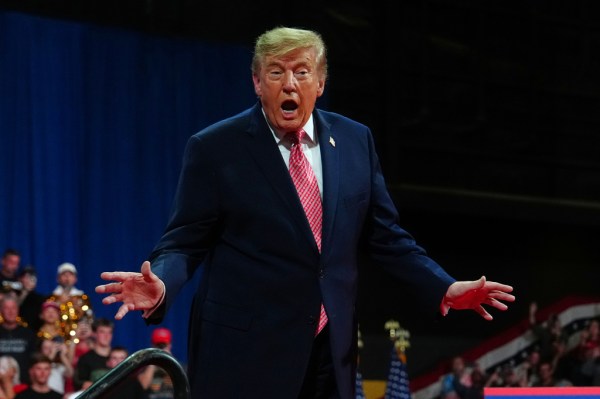
The war with Iran has acquired a possessiveness. It is President Donald Trump’s war, in the headlines and in the polling questions, the way Vietnam eventually became Lyndon Johnson’s and Iraq became George Bush’s.

Presidents own the wars they order, and that is as it should be in a republic that holds one person accountable for the use of force. But the possessive has quietly done a second job, and that one deserves scrutiny. It has converted a threat that endangered a large part of the world into the personal project of a single American politician, and in doing so, it has let every other government that faced the same threat walk away from the bill.

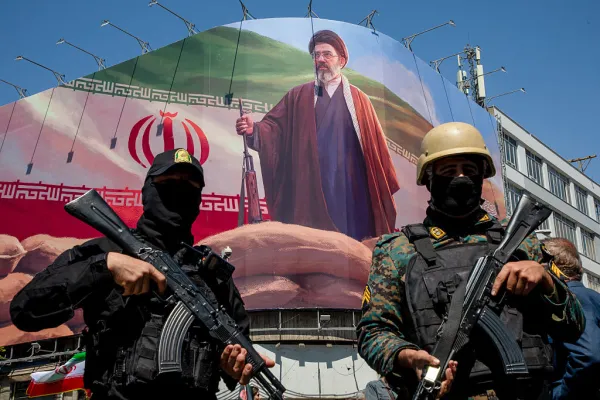
Consider what was actually at stake, and to whom. A nuclear-armed Iran was not primarily an American problem. The United States sits an ocean away, produces more energy than it consumes, and has the deepest missile defenses on Earth. Iran’s missiles reach Europe; they do not reach Ohio. Its proxies, from Hezbollah to the Houthis, sat astride the shipping lanes that carry European manufacturing inputs and Asian energy, not American ones. When the Houthis attacked commercial vessels in the Red Sea, the ships were mostly not American, the cargo was mostly not American, and the insurance premiums that followed were paid mostly by others. The threat was distributed. The exposure was concentrated in Europe, the Gulf, and East Asia.

TRUMP’S IRAN WAR IS PREVENTING A NORTH KOREA CRISIS

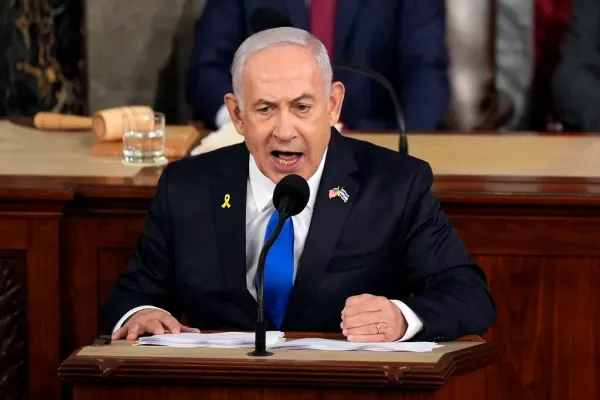
Now consider who showed up. When Washington moved, Spain closed its airspace to American aircraft involved in the operation and barred the use of the jointly operated bases at Rota and Morón. Italy denied American military aircraft permission to land at Sigonella en route to the theater, and France refused overflight for supply aircraft. When the administration asked allies to help reopen the Strait of Hormuz, the waterway through which a fifth of the world’s oil moves and through which almost none of America’s does, NATO members declined to take part. “We’re not supporting the blockade,” the British prime minister said. “We’re not getting dragged into the war.”

The other side of this ledger deserves a fair hearing because the record is not uniform. NATO’s secretary general has pointed out that as many as 5,000 American military flights launched from bases inside NATO territory during the campaign, and that Italy and Romania provided real logistical support even as other capitals balked. Basing and overflight are not nothing. Britain reversed its initial refusal. Allies are entitled to weigh their own publics, their own exposure to retaliation, and their own judgment about whether a war is wise. Sovereign states are allowed to say no.

But they are not entitled to say no and then send the invoice back to Washington. That is the part the possessive obscures. If this were Trump’s war, a personal adventure undertaken for personal reasons, then declining to join it is principled restraint. If it were a war to prevent a nuclear-armed Iran and to reopen a waterway the global economy runs on, then declining to join it while banking on the result is something less flattering. The label does the moral work that the argument cannot. It converts free-riding into conscience.

Americans should notice the same sleight of hand in the domestic argument, where the war’s unpopularity is being measured against its costs, with nothing on the other side of the scale. The costs are real and countable: money, casualties, gas prices, the strain on an economy that voters already felt was mismanaged. The benefit is a nuclear program that did not reach the finish line and a proxy network that did not get to operate under a nuclear umbrella. One of those things can be put in a chart. The other one is a war that did not happen, an attack that was not launched, a weapon that was not finished. Prevention leaves no wreckage to photograph, and a public that sees only the bill will conclude, reasonably enough, that the bill bought nothing.

This is the oldest trap in democratic security policy, and it punishes precisely the decisions that worked. The threat that is successfully eliminated becomes invisible; the cost of eliminating it stays on the books. So, the retrospective debate focuses on what can be seen. Whatever one concludes about the strategy, the sequencing, or the price, the structure of the argument is tilted before anyone opens their mouth, and it is tilted against action.

None of this makes the war above criticism. The costs deserve hard scrutiny, the strategy deserves hard questions, and the conduct of the campaign, including the strikes that killed civilians, calls for the investigations that members of Congress have demanded. Accountability for the use of force is never optional in a democracy, and the president who ordered it should answer for it. That is what ownership means, and Americans are right to insist on it.

What Americans should not accept is a framing in which they alone are asked to answer for it. The countries whose energy security, shipping lanes, and cities sat within Iran’s range were not passengers in this story. They were the primary beneficiaries of the outcome and the smallest contributors to achieving it, and they have been rewarded for that arrangement with a vocabulary that makes their absence look like wisdom. When the next threat arrives, and it will, the precedent now on the books is that the United States can be relied upon to act alone, absorb the political damage alone, and then be told it was a personal project all along.

That is not a sustainable basis for an alliance, and it is not a sustainable basis for American public support either. The way out runs not through fewer hard questions about the war but through insisting that the accounting be honest on both sides of the ledger: what the action cost, what the inaction would have cost, and who was standing where when the decision had to be made. Call it Trump’s war if the label fits the constitutional fact. Just stop pretending it was only ever his to worry about.

JD VANCE HANDED IRAN $6 BILLION — AMERICAN SOLDIERS PAID THE PRICE

There is one more entry in that ledger, and it belongs to people who never appear in the polling. Months before the first strike, Americans in uniform left their families and deployed to the region. Some of them fought. Some came home injured. Some did not come home. They did not choose the war, they do not own the possessive, and they have no standing in the argument now being conducted over whose adventure it was.

When a war is allowed to be recast as one man’s political property, which it never was, their service is quietly recast along with it, into a line item in someone else’s fight. Whatever Americans conclude about the decision, they owe those men and women an accounting that does not treat what they did as a footnote to a headline.

Burak Oktenli researches the governance of autonomous and AI-enabled systems and holds an MBA and a Master of Professional Studies in Applied Intelligence from Georgetown University. His writing has appeared in the Washington Examiner, RealClearDefense, RUSI Commentary, and West Point’s Modern War Institute.