From ‘audit the fed’ to ‘trust me, it’s there’: Rand Paul’s Fort Knox fumble

Published August 12, 2026 8:00am ET


Americans have long demanded real answers about U.S. gold holdings. Year after year, they receive only vague political half-answers that raise more questions than they answer.

The latest example is this week.

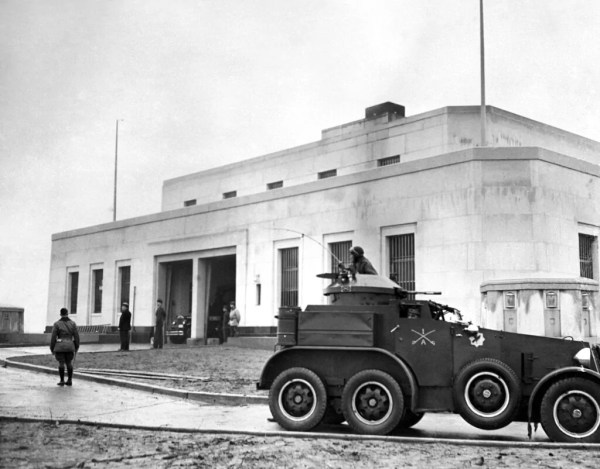
On August 10, Sen. Rand Paul (R-KY), son of sound money hero Dr. Ron Paul, announced an unexpected visit to the United States Bullion Depository at Fort Knox, Kentucky. Paul mishandled the opportunity. 

Current official treasury records state that the U.S.’s gold hoard is comprised of 261.5 million troy ounces of gold. That gold is stored in various depositories across the country, with 147 million troy ounces of the reserve stored at the vaults in Fort Knox.

The senator posted two figures that conflict with these counts. In his pinned tweet (as of this writing) and in the accompanying video, Paul wrote that the United States holds roughly 147 million ounces of gold, with roughly half of that held at Fort Knox.

Later that day, Paul posted that the government owns about 477 million ounces, again with half of it at Fort Knox.

These are massive errors. One understates the total by more than 100 million ounces, the other overinflates it by more than 200 million ounces. Neither matches official public records.

A third tweet later that day took the cake.

Paul’s tweet can be summed up as saying, “the gold is there, you can take my word for it.” He publicly reported that he went deep underground, saw the gold, and now people can rest easy. 

Only three hours had passed between his arrival announcement and his tweet guaranteeing the status of the 147 million ounces purportedly stored there. 

No credible audit of 147 million ounces could take place in three hours. Even if an audit could magically take place that quickly, it would not address critical questions regarding ownership claims and encumbrances of the gold. 

Has the U.S. Treasury or the Exchange Stabilization Fund swapped, leased, pledged, or otherwise encumbered America’s gold reserves in any way? No eye test could reveal any accounting entanglements. 

Nor can a walkthrough address the problem of liquidity. Government records show roughly 83% of the gold bars are only about 90% pure, making them unsuitable for trade on the world market. 

Upgrading the purity of the gold reserves to today’s 0.9999 fine standards would take literally years of refining.

Credible audits require independent third-party verification, weighing, assaying, matching of serial numbers, confirming the presence of seals, and a full chain of custody review. Paul’s social media field trip met none of these standards.

Paul had a chance to use his visit to highlight the problem itself: a politician walking through the vaults is not an audit. 

“Why is a politician even allowed in these vaults without having to reaudit the whole thing?” he could have asked. 

Instead, his trip was framed as reassurance and ultimately adds another layer of government assurance instead of real transparency.

Adding to the confusion is the fact that Paul is a cosponsor of the current Senate version of the Gold Reserve Transparency Act. This bill, sponsored by Sen. Mike Lee (R-UT) and Rep. Thomas Massie (R-KY) in the House, exists precisely because “trust me, it’s all there,” has been the posture of the U.S. government for many decades. 

Prior audits have been insufficient, or “one-and-done” rather than ongoing. The Gold Reserve Transparency Act, whose language the Sound Money Defense League and Money Metals Exchange helped shape, aims at the heart of this issue.

Taxpayer-owned assets deserve rigorous standards for transparency and safekeeping, and the U.S. has fallen well short of professional depository auditing standards for decades. Ron Paul understood this when he first pressed the issue in the 1980s. 

Instead, by opting for further government guarantees rather than a comprehensive audit and accounting, Paul has taken the legs out of his own legislative effort.

RAND PAUL CHOSE CLICKS OVER ACCOUNTABILITY — AND FAUCI WALKED AWAY SILENT

No individual, not even one with the last name Paul, can substitute personal guarantees for a robust verification process. 

The correct path is not another politician walkthrough (or even a livestream, as Elon Musk has suggested), but passage and full implementation of the Gold Reserve Transparency Act.

Jp Cortez is the executive director of the Sound Money Defense League, a national project working to promote and defend gold, silver, and sound money policy at the state and federal level. He is a graduate of Auburn University and a resident of Charlotte, North Carolina. Jp is the lead author of the Sound Money Index. Follow him on X (Twitter) @JpCortez27.