Restoring America

Conservative values, National renewal

Menu

When did a bad grade become a mental health problem?

Published August 17, 2026 6:00am ET


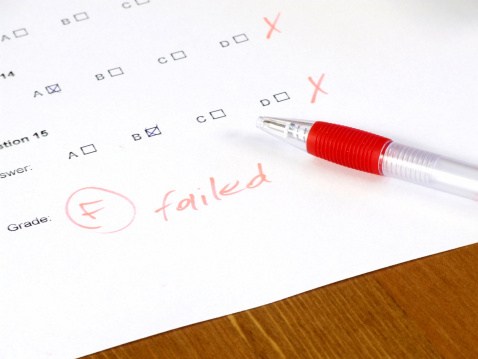
The University of Michigan wants to help address the mental health struggles of college students by making first-semester grades matter less. The policy raises a question that extends well beyond Ann Arbor: When did feeling anxious about something become a reason to make that thing less consequential?

Treating anxiety over grades as a mental health problem gets something important wrong. Getting a C can be disappointing. It can be embarrassing. And it can make a student anxious about his GPA or his future. But none of those reactions means the grade is psychologically harmful. Feeling bad isn’t the same thing as being unwell.

Beginning in fall 2027, first-semester students in the College of Literature, Science, and the Arts will have their grades converted to Pass or No Credit on external transcripts and generally excluded from their GPA. Students will still receive letter grades. The college says the change is intended, in part, to help curb “the mental health crisis unfolding among college-aged individuals.”

I understand the impulse. College students are struggling, and universities have good reason to take their mental health seriously. But anxiety isn’t always evidence that something is wrong. Sometimes it’s a normal response to something that matters. A student who worries about failing chemistry isn’t necessarily showing signs of a psychological problem. He may simply understand the consequences of failing chemistry.

A bad grade can also be useful. Getting a C on a chemistry exam may tell a freshman that the study habits that worked in high school are no longer good enough. It may send him to office hours or force him to ask for help. A student who always imagined becoming a doctor may discover that chemistry isn’t a strength. Someone accustomed to being the smartest person in the room may discover that college is filled with people just as capable.

One of the basic lessons of treating anxiety is that making someone more comfortable doesn’t necessarily make them less anxious. Avoiding something that scares you can bring immediate relief, but it can also strengthen the fear. Sometimes you have to face what makes you anxious to discover that you can handle it.

The block M logo for the University of Michigan is displayed at the school's NCAA college football stadium in Ann Arbor, Mich., Nov. 10, 2023. (AP Photo/Paul Sancya, File)
The block M logo for the University of Michigan is displayed at the school’s NCAA college football stadium in Ann Arbor, Mich., Nov. 10, 2023. On Monday, Jan. 29, 2024, the National Science Foundation announced that it has named the Great Lakes ReNEW group, which includes the University of Michigan, as one of 10 regional innovation engines across the country. Each will receive $15 million, with a chance to earn $160 million over the next decade if they can show progress. (AP Photo/Paul Sancya, File)

A college grade isn’t a phobia, and Michigan students will still see their grades, so this isn’t avoidance in the clinical sense. But the principle is worth considering. If something makes young people anxious, our first response shouldn’t always be to make that thing matter less. Sometimes the better response is to help them discover that they can handle the anxiety.

There’s an irony in Michigan’s rationale. The Healthy Minds Study, based at the university, has found declines in depression, anxiety, and suicidal thoughts among college students for three consecutive years. One Michigan researcher called the improvement “not a blip.”

That doesn’t mean college mental health problems have disappeared. But it does raise a question about describing the situation as an unfolding crisis while Michigan’s own researchers are documenting meaningful improvement.

Michigan isn’t the first university to ease freshmen into traditional grading. MIT has long used pass/no-record grading during the first semester, and there are reasonable academic arguments for doing so. But Michigan has made mental health part of its justification. That raises a different question: When did the normal stress of being evaluated become a problem colleges should try to reduce?

It shouldn’t mean never feeling anxious, disappointed, or embarrassed. Those feelings are part of life. More importantly, learning that you can experience them and still function is part of growing into adulthood. College is where students should learn to take criticism, recover from disappointment, and discover that working hard doesn’t always guarantee success.

Those lessons matter even more after graduation. Bosses give bad performance reviews. Graduate schools reject applicants. Promotions go to someone else. Adulthood is filled with judgments and consequences that don’t disappear because they make us anxious.

THE CREATION MYTH BEHIND THE CAMPAIGN TO ABOLISH AMERICA

Students with serious mental health problems need appropriate treatment, and universities should provide counseling and academic support. But helping students handle difficult experiences is different from making those experiences less consequential. Michigan’s policy may make freshman year less stressful. It may have academic benefits. But less stress and better mental health aren’t necessarily the same thing.

Students don’t need to enjoy getting bad grades. But they need to learn that they can get one, feel bad about it, and know that they will be fine.