
JD VANCE, HUEY LONG, AND 2028. You might have missed it, but Vice President JD Vance delivered a rousing populist manifesto in a midterm campaign appearance last week at a steel plant in Middletown, Ohio.
The location was carefully chosen. Vance’s grandfather, James Vance, worked there as a welder for nearly 40 years when it was known as Armco Steel. Today, it is owned by Cleveland-Cliffs and is called the Middletown Works. Part of Vance’s purpose was to announce a new $1 billion private/public investment “in transformational manufacturing, right here in our home.”
Recommended Stories
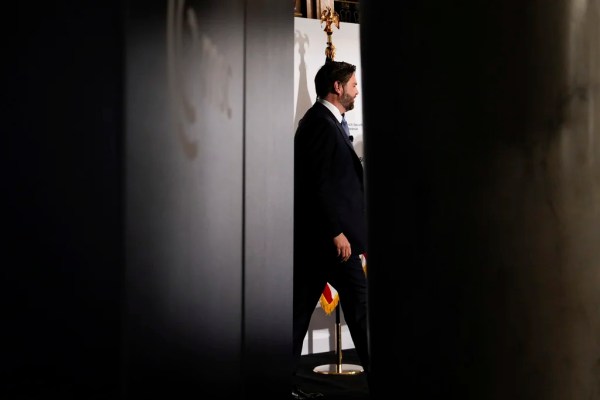
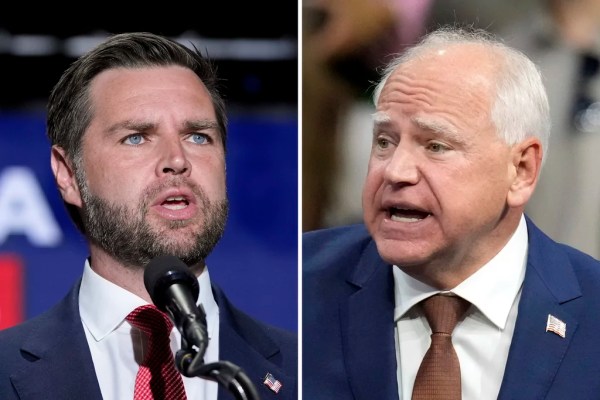
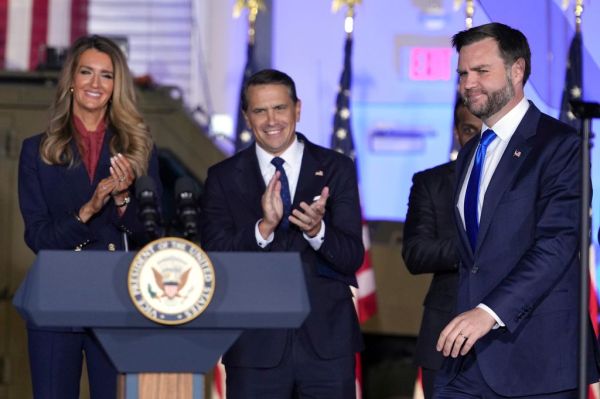
But Vance had other purposes, too. “I can’t help but think about the last time a James Vance stood in this very place,” said the vice president, who, in a reflection of his family’s turbulent history, was born James Donald Bowman, was renamed as a boy James David Hamel, and as an adult in 2013 changed his last name to his grandfather’s, Vance.
“He was not an educated man by any means, but he was a brilliant one,” Vance said of his grandfather. “He was a complicated man, a man of faith who never went to church. He was an alcoholic since middle school, but he quit cold turkey as a grandfather … He was a man with very simple ambitions. He didn’t want to get rich. He had no desire to build a business … His American dream was well-fed kids [and] a car engine to tinker with.”
For years, Vance said, the workers who followed his grandfather into the mill suffered from a massive influx of illegal immigrants and free trade policies pushed by successive administrations and by corporate interests looking for cheap labor. “One month before I was born [in 1984],” Vance said, “the Wall Street Journal, the voice of big business in the United States of America, proposed, and I quote, a five-word constitutional amendment: ‘There shall be open borders.'” Indeed, the Wall Street Journal editorial board did just that. “They weren’t joking,” Vance added, as the crowd booed.
Vance linked the immigrant incursion to falling wages, lost jobs, and increasing drug addiction among displaced workers. And then there was a free trade orthodoxy moving jobs overseas — the work of corporate leaders “who would sell out their country for a cheap bottom line.” That, too, had devastating consequences: “Economists have measured the ways in which the opioid crisis exploded in the very locations where jobs were shipped overseas,” Vance said.
Together, it all helped produce a terrible increase in crime and a corresponding decrease in the public’s sense of safety. And that is when Vance got to the most notable, and certainly the most startling, moment in the speech.
“I want you to have the real freedom that comes along with knowing that you are the lord of your own manor,” he told the plant’s workers. “The great southern populist, probably most of you in the room don’t know who I’m talking about — but he’s an interesting guy, kind of a crazy guy. His name was Huey Long, and he once said every man a king was the goal of his political program.”
“But no man is a king if their castle is under siege by criminals,” Vance continued. “No man is a king if they can’t take their family out to dinner without being mugged or having their car jacked. And of course, ending the Biden border invasion was a big part of why we have changed that over the last 18 months. For four years, the Democrats invited millions of illegal immigrants into this country to take over our communities and compete with us for jobs and housing.”
Have you heard any contemporary politician make a positive reference to Huey Long? First, Vance was probably right when he suggested many people have not heard of Long, the governor of Louisiana and later senator, often referred to as a fiery populist, demagogue, and political rival of President Franklin Delano Roosevelt. Long was indeed a fiery presence on the political scene until his assassination in 1935 as he prepared to run for president.
When Long has been mentioned in the last 10 years or so, it has been to suggest similarities between his “Share Our Wealth” program — he wanted confiscatory taxes on the rich — and socialist/progressive icon Sen. Bernie Sanders (I-VT). Take this NPR report from the 2020 Democratic primary race. It featured a recording from the 1930s in which Long said, “Four percent of the American people own 85% of the wealth of America, and over 70% of the people of America don’t own enough to pay the debts that they owe.” Long compared the American economy to a big barbecue in which one man takes 90% of the food and the rest have to take their share back from him.
“This is basically the Bernie Sanders agenda, but for the Great Depression,” said NPR’s Laine Kaplan-Levenson. “[Long] wanted a limit on how much wealth an individual could hold — $5 million, about $60 million in today’s money. Anything made beyond that, you’ve got to give away.”
Given that — and there’s much more along those lines in the Huey Long story — it was striking that Vance, a Republican vice president, would invoke Long when discussing the Trump administration’s efforts to help working-class Americans. A source familiar with Vance’s thinking said he simply liked Long’s “Every man a king” theme and thought it fit into his message. But Vance is a smart man; he knew the reference would raise eyebrows and lead some critics to suggest that Vance was endorsing everything Huey Long ever said — which he wasn’t. It’s not unfair to say that Vance was stirring the pot.
But the Huey Long reference did one other thing, especially in the context of Vance’s tribute to the working class: it said that JD Vance is a different sort of Republican politician.
Look at the portion of the speech when Vance referred to his grandfather as a man with “very simple ambitions” who “didn’t want to get rich” and had “no desire to build a business” and whose American dream did not extend beyond feeding his children and tinkering with car engines. In addition to connecting with some working Americans who do not have college degrees, Vance was drawing a sharp contrast with GOP leaders of the past.
BYRON YORK: DEMOCRATIC VOTERS REJECT RESISTANCE STARS
Think back to the last Republican presidential campaign before Donald Trump. Nominee Mitt Romney — who came from GOP royalty and made a fortune in private equity — spent his time on the stump touting entrepreneurship and wealth creation. Romney talked about his friends who founded big businesses and signed the front of paychecks. Vance’s message is a world away from that. It is directed to the (much larger) population of voters who work for someone else and don’t think of the economy in terms of building their own companies.
One message of the Middletown speech is that if you’re one of those Republicans who would like to see the party return to the pre-Trump days of Romney and Paul Ryan, of George W. Bush and John McCain, JD Vance is probably not your guy. And a key question of the 2028 Republican presidential race will be whether voters want a candidate who looks forward into an uncertain future or one who looks to the GOP leaders of years past.