There is only one nation in the world whose identity, whose very existence, is based on a book. That nation is Israel, and the book is the Bible.
The Bible makes the astounding claim that God himself gave the land of Israel to the Jews, to the descendants of Abraham, approximately 4,000 years ago.
Recommended Stories


The Bible chronicles how the Jews have lived in their ancestral homeland for thousands of years, before being scattered to the ends of the earth. Thus, of all groups in existence today, the Jews are the earliest inhabitants of the land of Israel.
IN WAR ON BIBLE, PASTOR CONVICTED FOR PREACHING GOSPEL
Of course, the Jews didn’t leave voluntarily. They were driven out. But the Bible also predicts that those same people would return to reclaim their land and reestablish their nation. These predictions were made thousands of years ago. In 1948, they came true.
The Bible is also the moral foundation of Western civilization, and of the principles that made America. Without the Bible, Western civilization would not be what it is, which is to say, we would not be who we are.
The philosopher Leo Strauss says that Western civilization is constructed on two pillars: Athens and Jerusalem. Athens represents classical reason: philosophy, free speech, the scientific outlook, and the origins of democracy.
Jerusalem represents the Bible and the fruits of the Bible. Those fruits include: the idea of divine creation, the story of liberation reflected in the Book of Exodus, the Ten Commandments, the wisdom of the Psalms and the Hebrew prophets, and the influence of Jesus, whom the Christians call “messiah.”
If Athens represents reason, Jerusalem represents divine revelation. And divine revelation is more vulnerable to attack because the Bible does not prove things — it declares them. “In the beginning, God created the heavens and the earth.” Who’s talking? We don’t know. Who could it be? No one other than God was there. Yet the Bible claims to be inspired by God, the closest we can get to God himself speaking.
We live today in a world where the claims of the Bible are under attack, or at least skeptical scrutiny. The criticism is both political and historical. Many in the Islamic world, and also in the West, regard Israel as a colonizer and the Arabs of that region — the so-called “Palestinians” — as the colonized.
Throughout the world, many regard the Bible as a mythical or fictional account of people who never existed and events that never happened. Something similar to the Homeric epics or Greek mythology.
Are the foundations of America and the West based on fiction and myth? We now have a unique way to test the claims of the Bible, through biblical archeology. Biblical archeology is a full-fledged scientific field, sometimes called Near Eastern archeology. Yet little of this archaeology makes sense without the Bible. It operates with the Bible in one hand and the tools of archeology in the other, comparing the claims of Scripture with the artifacts found in the field.
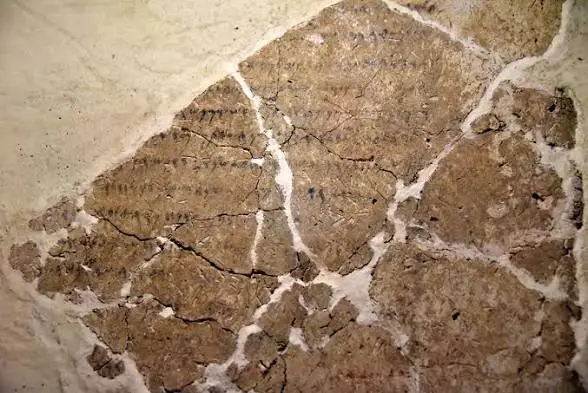
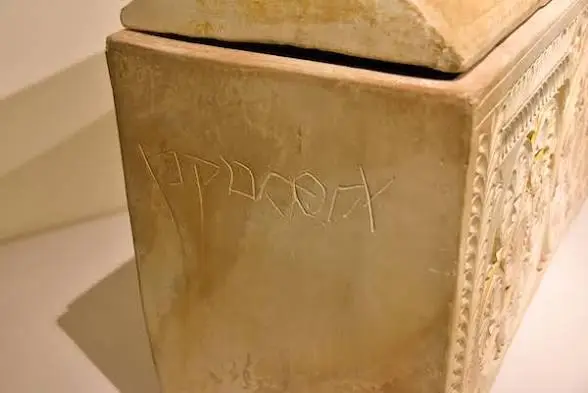
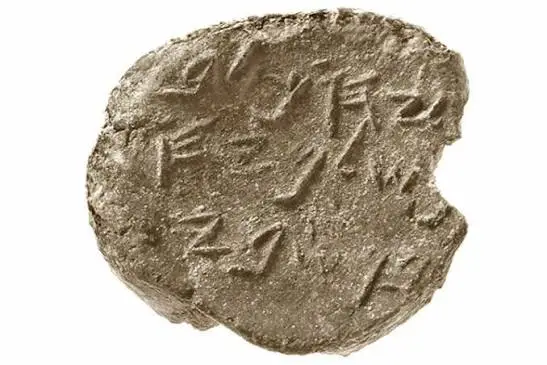
Biblical archeology relies on material objects that come out of the ground — coins, stone inscriptions, ostraca or writings on pottery, clay seals once used to secure correspondence, ruins of ancient civilizations, bone fragments and skeletal remains, and other artifacts — to confirm or refute, and in some cases supplement and illuminate, the biblical narrative.
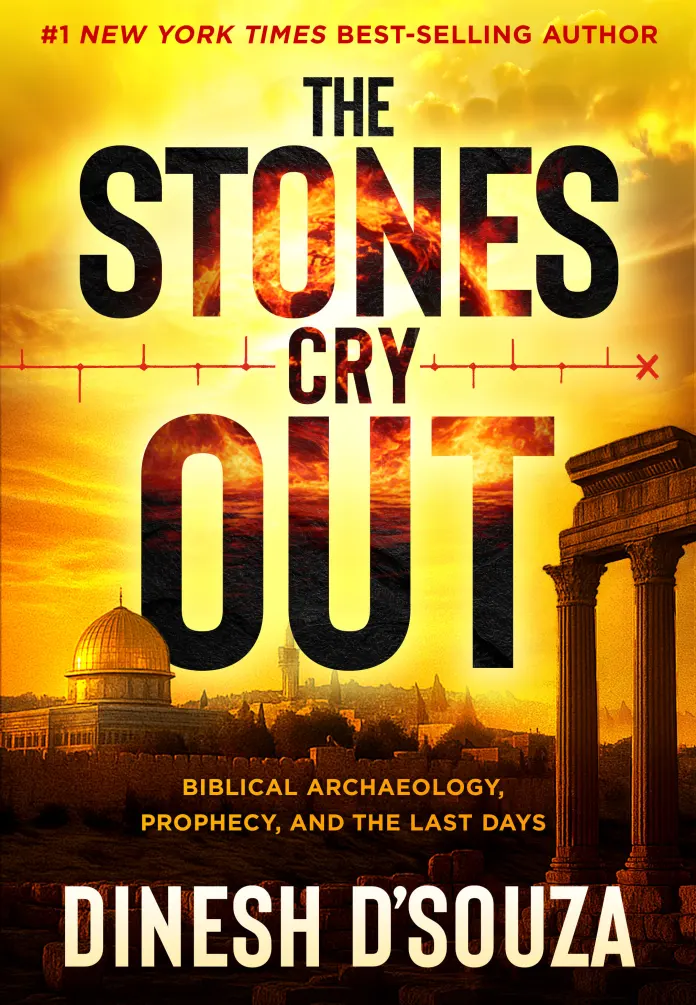
In my new book, The Stones Cry Out, I embark on a journey to discover the latest findings in biblical archaeology and to verify whether the Bible is an account of real people and true events. Here are some key questions and conclusions.
The original patriarchs — Abraham, Isaac, and Jacob — were nomads who lived around 4,000 years ago. Have they left any trace of their existence? As it turns out, yes.
The Bible says Sodom and Gomorrah were destroyed through “fire and brimstone.” Can we find the ruins of those so-called “sin cities” and confirm the biblical account? Almost certainly, yes.
There is no direct evidence of the Exodus, “when Israel came out of Egypt.” It’s in the Bible and in Hollywood films like The Ten Commandments. But is there indirect evidence for this crucial narrative of oppression and liberation, some 3,500 years ago? Absolutely!
Did Joshua lead the ancient Israelites into the Promised Land, and did the walls of Jericho fall in the way that the Bible records? With some minor qualifications, yes.
King David is a central figure in the Bible who is said to have ruled around 1000 B.C. and founded a dynasty, the “House of David.” Prior to 1990, if you were asked to prove the existence of David without relying on the Bible, you could not do it. Can we do it now? For sure!
David’s successor, King Solomon, is portrayed in Scripture as a wise and powerful king who ruled over a large and wealthy Israelite kingdom. Was he? Indeed, he was.
The prophet Isaiah lived in the 8th century B.C. under the rule of King Hezekiah, one of the righteous kings of the Bible. Can we authenticate the historicity of both men? One of them, for sure; the other, almost certainly.
Prior to the Babylonian conquest of Israel and the destruction of Solomon’s temple in the early 6th century B.C., King Zedekiah clashed with the prophet Jeremiah over his warnings of imminent invasion and impending doom. Has biblical archeology thrown light on these events, validating them down to their minor details? Indeed, it has.
While Jesus, as a historical figure who lived in the early 1st century A.D., is not open to doubt, is it possible to “walk in his footsteps” by retracing the actual places where he was born, lived, and taught? Yes, it is.
For centuries, figures like Pontius Pilate and the high priest Caiaphas have inhabited the pages of the Bible, but without reliable historical attestation from outside it. Can we prove they were real? Absolutely.
Biblical archeology has the power to take people and events that have for centuries been regarded as matters of faith and now establish them as matters of fact. For the first time, we do not merely believe — we know. And many of the most astonishing discoveries have occurred recently, with new discoveries continually being made.
Sure, lots of things in the Bible, such as the miracles, cannot be corroborated. Other things, such as Noah’s Ark or the Tower of Babel, remain enshrouded in mystery. But if the people and events in the Bible can be verified, and verified moreover from sources hostile to the biblical figures themselves, that counts for a lot.
Even more significant is the question: Are there any significant archeological findings that contradict or refute the Bible? If the answer is no, then our confidence in the overall truth of the Bible is greatly strengthened. And I’m here to report that in 150 years of biblical archaeology, covering a biblical timescale of more than 2,000 years, there are no such findings.
JAMES TALARICO SAID HE ‘HATES CHRISTIANITY.’ HERE’S WHY
This is not a theological investigation, but rather a scientific and archeological one. The project aims to establish and validate the historicity of the Bible. If the Bible is true as history, we can draw our own conclusions about the theology. But certainly the biblical foundation of Israel, and of Western civilization, would be more secure.
In that case, the American founders’ vision of a society modeled on Jerusalem and Zion, a “city on a hill,” would seem less utopian and more historically grounded. The familiar attacks on Israel as a usurping or colonizing power would be discredited, since it is not really possible for a people to colonize their own ancestral homeland. The contemporary project to revive America and the West, to recover the original sources of the vitality of our civilization, would be fortified and vindicated.
Dinesh D’Souza is an author and filmmaker whose book, The Stones Cry Out: Biblical Archaeology, Prophecy and the Last Days, will be published by Charisma Books in October 2026 and is available for pre-order now. This article is adapted from D’Souza’s forthcoming book.